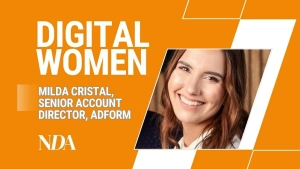
Carly Activille is an advertising professional with 22 years of experience working across digital, print, magazines, newspaper, demand gen, programmatic, podcasts, and events and Managing Director of AudienceQ, an audience segmentation and targeting company.
What is the biggest opportunity for women in your sector of the digital industry today?
Having a seat at the table and challenging the status quo. The opportunities are endless, believe you can and you will! As a young and evolving industry, we have the chance to break away from the outdated ‘men first’ mindset that has held other sectors back. Women bring fresh perspectives, diverse leadership styles, and a more inclusive approach to building teams and driving success. Any business that overlooks this is missing out on a huge competitive advantage!
What is the biggest challenge to you as a woman in the digital industry, and how are you overcoming it?
One of the biggest challenges I face as a woman in digital advertising I think is being taken as seriously as any male in a similar role and also in some cases having to navigate women in leadership who have had to adopt male archetypes as their way achieving success I’ve conquering many of the biggest challenges already, growing a start-up business, managing work-life balance, being a mum, and trying to do it like a boss lol. A lot of the time my biggest challenge is myself and believing I can. I’ve focused on proving to myself I can do it, I deserve to be part of our fantastic industry, and I can drive success in whatever I do.
What three things could employer companies do to make the digital industry better for women?
- Ensure equal pay for equal work,
- Create more inclusive workplace cultures,
- Invest in development, promotion, and network.
There are so many things that can be done within the workplace, but by taking these steps, companies can build a fairer and more inclusive digital industry that values and benefits from women’s skills and ideas. Let’s be clear—the key word here is ‘invest’. It’s not just about tweaking policies or handing out promotions to balance the numbers. True change comes from putting in the time, resources, and effort to create a workplace that drives both financial success and employee well-being.
What support structures and organisations are most important and effective to you as a woman in the digital industry?
Networking groups such as The Women in Programmatic Network, WACL, Bloom, and Women In Trading to name a few offer women a network and platform to support, share, and gain experience from like-minded women who want to support each other’s growth. I’ve gained knowledge and confidence from being part of some of these groups and simply seeing how women I have networked with have excelled with the support they have had. Wider industry initiatives such as Digital Women by NDA in partnership with The Advisory Collective, are a great way for women to be championed and showcased to the industry.
What is the biggest misconception about women and by women in the digital industry?
I think one of the biggest misconceptions about women in the digital industry is that we lack technical expertise or leadership skills compared to our male counterparts. Despite the increasing number of women who have and continue to excel in tech, data, and digital strategy, this stereotype still exists.
A major misconception among women in the industry is that our work will speak for itself. Many women, including myself, underestimate the importance of self-promotion, networking, and visibility. While knowledge is fundamental, success in the digital industry—like any other industry—also relies on building influence, advocating for oneself, and seizing opportunities rather than waiting to be given them.
When it comes to leadership, all the evidence shows that women excel. Companies with women in leadership perform better, benefiting from key skills like empathy, collaboration, and a more inclusive approach to problem-solving. Women naturally foster teamwork and innovation, yet the outdated belief that leadership is a “male trait” still lingers. Empowering women to lead isn’t just the right thing to do; it’s smart business.