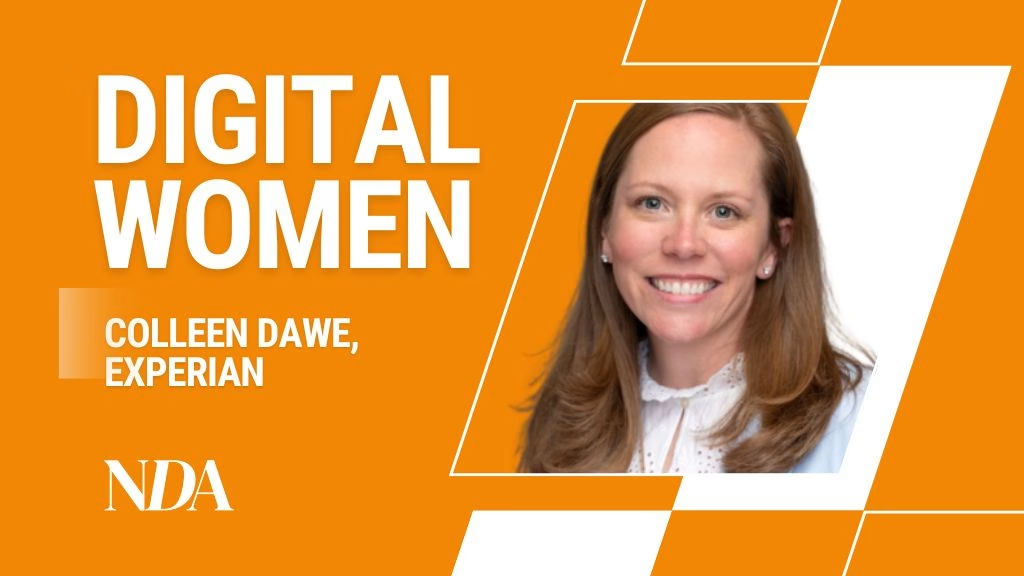
New Digital Age recently spoke with Colleen Dawe, VP, Advertiser Partnerships, Experian to find out about her experiences and opinions on life as a woman inside the digital marketing and media industries…
What is the biggest opportunity for women in your sector of the digital industry today?
One of the biggest opportunities for women in digital advertising today is the growing demand for diverse, authoritative voices at the forefront of the industry. Historically, many women have been the strategic force behind the scenes, leading the work, nurturing client relationships, and driving outcomes without receiving the same level of external visibility.
Today, there is a real shift toward elevating women on stages, in press interviews, on thought-leadership panels, and in high-profile cross-industry conversations. Clients and partners want leaders who bring both credibility and relatability, and women are uniquely positioned to meet that moment. The opportunity now is not just to contribute to the industry’s direction but to shape it publicly, representing the innovation, leadership, and decision-making women have long delivered behind the scenes.
What is the biggest challenge to you as a woman in the digital industry and how are you overcoming it?
A consistent challenge has been navigating the expectations placed on women regarding communication style and emotional labor. In an industry that relies heavily on influence, negotiation, and constant context-switching, women are often expected to be simultaneously approachable, authoritative, empathetic, and decisive – an impossible combination to always maintain. Overcoming this has required me to redefine what effective leadership looks like for me, rather than trying to meet every external expectation. I focus on clarity, authenticity, and consistency, even when that challenges assumptions about how women “should” show up. This shifts the conversation from style to substance. I’ve also built a strong network of mentors and peers (both men and women) who provide honest feedback, champion my growth and help normalize ambition rather than penalize it. Finally, I prioritize lifting other women up because the more of us who show up fully and visibly, the stronger and more equitable our industry becomes.
What three things could employers do to make the digital industry better for women?
First, employers must build transparent, structured pathways for advancement, eliminating the ambiguity that can disproportionately disadvantage women.
Second, they should invest in sponsorship – not just mentorship – so women have champions who advocate for their visibility and trajectory in high-impact areas.
Third, employers should design flexible, equitable work environments where outcomes matter more than optics. Hybrid work, autonomy, and trust give people the space to excel without constantly negotiating trade-offs in their personal lives, something that benefits all employees, not just women.
What support structures and organisations are most important and effective to you as a woman in the digital industry?
The most impactful support systems in my career have been informal ones: trusted colleagues, peer circles, and authentic relationships built over time. These are the people who offer real-time advice, share lived experiences, give honest feedback, and normalize the challenges that come with leadership. Having a network of women (and male allies) who understand the pace, pressure, and nuance of the industry has been invaluable. It’s the spontaneous text, quick coffee catch-ups, the “sanity checks,” and the shared problem-solving that truly move the needle. While formal organizations can be helpful and are certainly worth being involved in, it’s these informal micro-communities that have provided the resilience, confidence, and perspective I rely on most.
What is the biggest misconception about women and by women in the digital industry?
A major misconception about women is that they prefer to remain in supportive or operational roles rather than stepping into positions of visibility, influence, or executive ownership. The truth is that ambition and leadership style can look different across individuals, but that doesn’t equate to women wanting smaller roles. Many women are fully ready for bigger platforms; they just haven’t always been invited to the party.
A misconception by women is the belief that they must be fully prepared, fully credentialed, or fully confident before taking the next step. The industry evolves too quickly for perfectionism to be the standard. Women who raise their hands early, stretch themselves, and trust their capability often outperform even their own expectations.