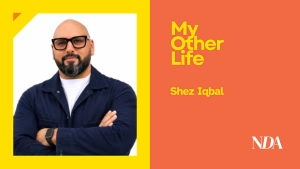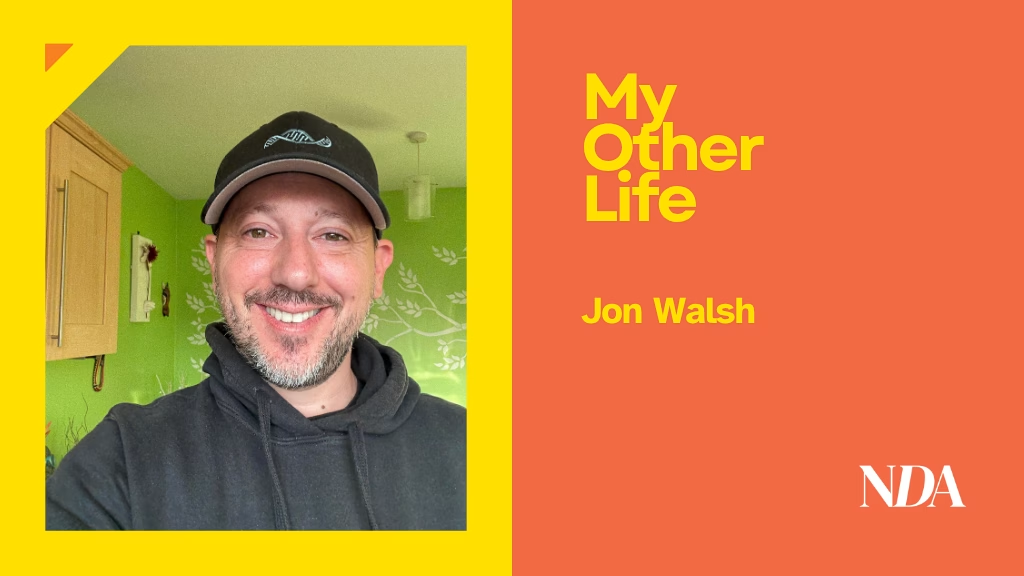
My Other Life is a new NDA column that steps outside the day job. In each column, we ask someone from across the digital media space about the hobby, passion project or side hustle they pursue when they’re not in the office.
What is your day job?
My day job is running various Adtech industry companies, including The Adtech Chat Community WhatsApp groups and JobsInAdtech.com. Helping people connect, learn, share, and find their next role in the space. I also created the Linked Band which is the first wristband with NFC chip programmes exclusively for events to make connecting on LinkedIn much easier in real life. I enjoy creating products and businesses that people in Adtech genuinely want, need, and use.
What’s the “other life” you lead outside the industry?
I have a strange but ultimately positive for society hobby of exposing large-scale Ponzi schemes and scams, in order to reduce investor losses and hopefully bring the fraudsters to court to account for their crimes.
How did you get into it, and how long have you been doing it?
I was at a party 14 years ago when a lady I vaguely knew from outside of the industry approached me to ask me to invest in an online advertising network called Banners Broker. She told me how it would pay me 100% returns every 23 days! She was annoyed with me at the time for calling it a straight up scam, but ultimately I was proved right when at the end of 2015 the Toronto police shut it down and arrested the ringleaders. I genuinely thought that would be the end of it and I’d never think about scams again until I saw more popping up and victimising a new slew of people who were at low points in their lives and needed to believe in the impossible returns on offer when being invited to invest via friends or family. It’s now been 14 years and I’ve worked on well over 100 scam exposés to various levels.
It’s about more than just financial losses. There’s real human damage with these scams. Divorces happen because of them, families are torn apart, and in a number of cases people take their own lives. Anything I can do to help make these numbers less is a good thing.
“Bad men need nothing more to compass their ends, than that good men should look on and do nothing.” John Stuart Mills
How much time does it take up in a typical week?
More than I would like to admit. I listen to their sales seminars on YouTube as a way to help myself fall asleep, and infiltrating and posting in their private social media groups to attempt to get people to wake up and realise they’ve been lied to. Probably a few hours every day!
What’s the biggest misconception people have about it?
I think most people think it’s a waste of time and some kind of Sisyphean task. In many ways I know they’re right, but if I can prevent some people from investing any more, or warning potential investors to give these scammers any money at all, then I feel it’s worth it and my time has been spent well.
Has it taught you anything that’s actually useful in your day job?
Mostly that extraordinary claims require extraordinary evidence. I have an extreme dislike of hyperbolic marketing statements.
What’s the proudest moment you’ve had doing it?
I have many including getting the Sunday Times to run a double page spread exposing one of the major scams I worked on, being featured on a Channel 4 documentary for the work I did to expose OneCoin, which is possibly the world’s largest ever Ponzi scheme (investor losses pegged between $4billion and $15billion). But ultimately the moment I enjoyed the most was receiving a cease and desist from a law firm acting for a crypto Ponzi scheme, and seeing news stories that the SEC was openly investigating them for fraud on the Monday.
Does anyone at work know about it — and what was their reaction when they found out?
Some people know, but it’s an odd thing to talk about. I’ve had a number of people randomly message me after they saw me in the C4 documentary too.
I think many people just think it’s odd, and that’s okay too.