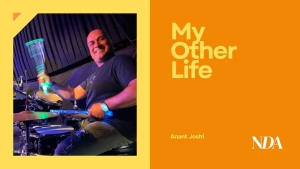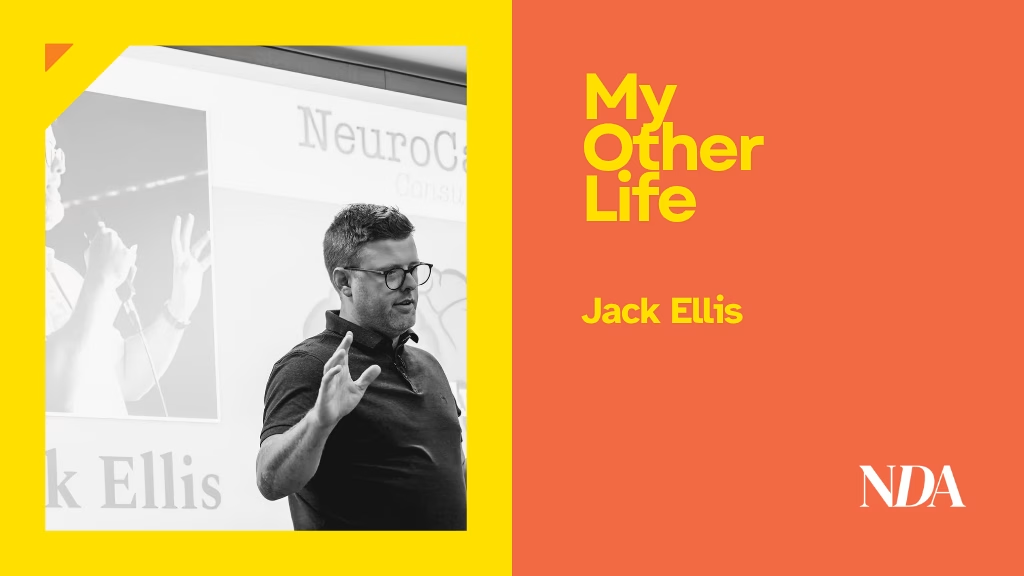
My Other Life is a new NDA column that steps outside the day job. In each column, we ask someone from across the digital media space about the hobby, passion project or side hustle they pursue when they’re not in the office.
What is your day job? I’m the Sales Director for UK & EMEA at Mogl, helping brands and publishers navigate the programmatic media space.
What’s the “other life” you lead outside the industry? I am a public speaker and neurodiversity advocate, delivering unfiltered, high-energy live talks, keynotes, and workshops on lived experience, crisis management, and cognitive resilience. As a natural extension of that advocacy, I also run NeuroCandy.com—an online store I founded in 2023 selling everyday fidget and sensory tools to help kids and adults regulate focus and relieve stress.
How did you get into it, and how long have you been doing it? It started straight from personal experience. I was diagnosed with ADHD in 2019 at the age of 36 during a particularly intense crisis moment in my life. Going through that showed me how critical early recognition really is. I started speaking publicly to share the warning signs people often miss, how to seek diagnosis before hitting breaking point, and how to navigate real-world, high-stakes crises.
Audiences and businesses don’t want textbook theory; they want candid strategies on handling cognitive overload, de-escalating chaos, and harnessing non-linear thinking as a genuine operational strength. As the talks grew, NeuroCandy.com followed in 2023 as a practical toolkit to support what I was discussing on stage.
How much time does it take up in a typical week? Outside of actual speaking dates, no more than an hour or two a week. I run the NeuroCandy.com shop together with my wife, Liz, which keeps the day-to-day operations ticking over smoothly without eating into the day job. Because the speaking material is drawn straight from lived experience and frameworks I know inside out, the core content lives in my head. I don’t spend endless hours building rigid scripts—I can jump into any room, read the audience, and tailor the crisis management takeaways specifically to who I’m speaking to.
What’s the biggest misconception people have about it? That speaking about neurodiversity is purely “soft inspiration” and corporate box-ticking, or that sensory tools are just toys. On stage, my focus is highly pragmatic: live crisis navigation, spotting early burnout or cognitive overload before it spirals, and turning diverse ways of thinking into competitive advantages in the real world.
Has it taught you anything that’s actually useful in your day job? Massively. Holding a room from the stage sharpens your ability to read live dynamics, stay composed under fire, and communicate high-stakes ideas clearly. When major media deals hit turbulence or plans go off track, the crisis management reflexes honed through live speaking keep everything steady and grounded.
What’s the proudest moment you’ve had doing it? Any time someone comes up privately after a talk or drops me a note to say the session helped them recognise what was happening in their own head—or with a family member—and encouraged them to seek an assessment before reaching crisis point. It often turns into a genuine conversation where they want to explore their own experiences and compare notes with mine. Helping people realise that non-linear thinking isn’t a career flaw, but a strength, is the most rewarding part of it all.
Does anyone at work know about it — and what was their reaction when they found out? Yes, completely. My current employer and all my previous employers since my diagnosis have known, as I proudly share this publicly and online, on LinkedIn for example. It’s an integral part of my package and something that has been actively embraced and celebrated. I know I’ve been fortunate with progressive employers, but there’s still massive work to be done across the wider commercial world. That’s why keeping neuro-inclusion and lived reality front of mind for leadership teams everywhere remains so critical to me.