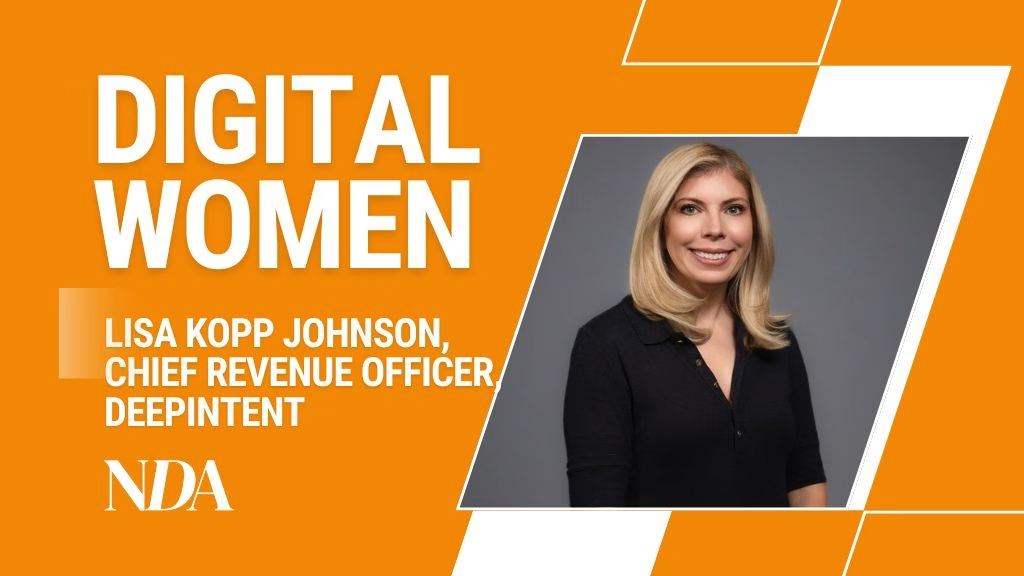
In our latest Digital Women interview, New Digital Age speaks with Lisa Kopp Johnson, Chief Revenue Officer at healthcare advertising platform DeepIntent…
What is the biggest opportunity for women in your sector of the digital industry today?
The biggest opportunity is that healthcare advertising is being rebuilt in real time, and I’ve had a front row seat to that transformation. Between AI, privacy-first data, rare disease marketing, and the shift to more precise, outcomes-driven media, the traditional playbook no longer applies.
What that creates is a rare moment where the rules aren’t fully set yet. In my experience, those are the moments where careers accelerate and leaders emerge. I tell women on my team all the time: you don’t need permission to lead in a space that’s still being defined. The opportunity is to step in early, build fluency in the technology, and help shape what the future looks like.
What is the biggest challenge to you as a woman in the digital industry and how are you overcoming it?
I’m a working mom, and I’ve learned that balance isn’t a static state. It’s a constant set of tradeoffs. Some weeks work requires more, and some weeks my family does, and the real unlock has been letting go of the idea that one has to come at the expense of the other.
What’s helped me navigate that is clarity. Being clear with my team about priorities and expectations, and being equally clear at home. More importantly, it’s choosing to be in environments that value performance over “face time culture” and offer real flexibility, not performative flexibility. The women I see thriving aren’t chasing balance, they’re operating in environments that support their ambition and life outside of work.
What three things could employer companies do to make the digital industry better for women?
First, offer real flexibility, not as a perk but as a way of working. People have full lives outside of work, whether that’s family, caregiving, personal priorities, or simply how they manage their time and energy. Companies that recognize that and build flexibility into how work gets done don’t lose productivity, they gain it. When people have the space to operate in a way that works for them, they show up more focused, more engaged, and ultimately deliver better outcomes.
Second, invest intentionally in development. If you want more women in leadership, the pipeline of leaders doesn’t build itself. Give women access to stretch opportunities, mentorship, and the tools, especially in areas like AI and data, where we still see underrepresentation.
And third, create space for women to lead. Women often bring a strong combination of intuition, empathy, and decisiveness. The opportunity for companies is not just to include that perspective, but to trust it in shaping strategy and outcomes.
What support structures and organisations are most important and effective to you as a woman in the digital industry?
The most impactful support structure for me has been building what I think of as a personal board of directors. It’s a small, trusted group of peers and mentors who I can call when I’m navigating complex decisions, pressure moments, or career inflection points. Each person brings a different perspective, and having that kind of real-time, honest input is incredibly grounding.
I’ve found that those informal networks are often more valuable than formal programs because they’re built on trust and candor. At the same time, industry communities like She Runs It and women’s programming at events like Advertising Week and AdLab play an important role. They create access, not just to conversations but to relationships and opportunities. The common thread across both is proximity to other women operating at a high level and a space to be honest about what it really takes to navigate this industry.
What is the biggest misconception about women and by women in the digital industry?
The biggest misconception about women is that we lead more cautiously. In my experience, women lead with conviction. We just tend to pair it with listening and context, which can be misinterpreted as hesitation.
The biggest misconception women hold about themselves is that we have to choose between being respected and being liked, or between ambition and warmth. That tradeoff doesn’t actually exist. Some of the most effective leaders I know are both highly empathetic and incredibly direct. Letting go of that false choice is one of the most important mindset shifts you can make.