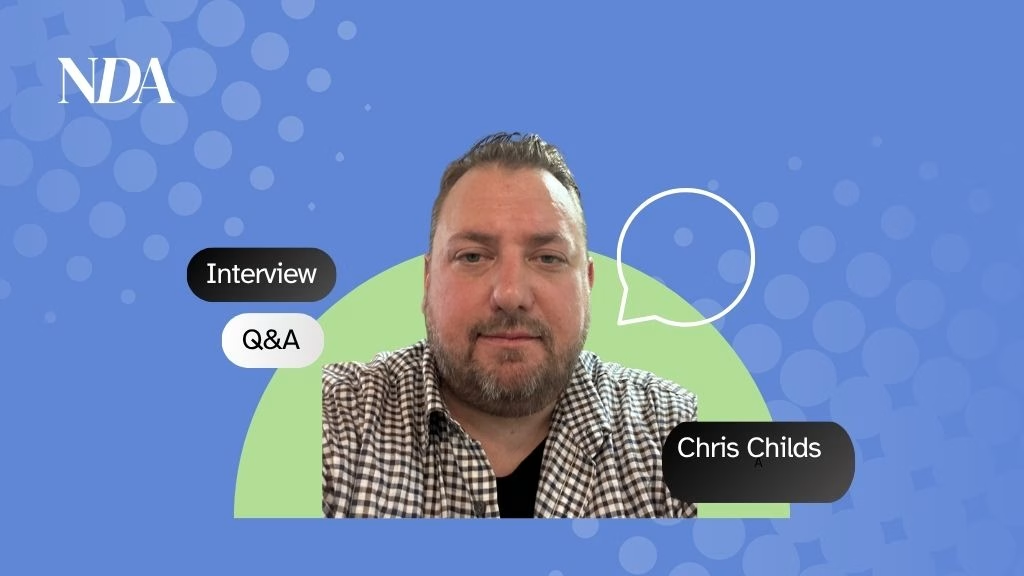
Industry veteran Chris Childs is back with a new business with a mission to deal with industry-wide issues of low quality inventory and wasted spend.
What inspired you to launch A8 Media after your time at Hawk?
When I reached the end of my journey with Hawk, particularly following the acquisition, I started to reflect on some of the challenges facing brands today.
The complexity of what’s now possible and what brands can achieve requires significant handholding and expertise, which is something we offer at A8 by providing a truly personalised service, along with access to a broader range of data, smarter planning and clearer, more actionable performance insights.
At the same time, there was a growing issue across the industry, which is still widely discussed, around low quality inventory and wasted spend.
There is simply too much poor quality media being traded programmatically, with made for advertising (MFA) environments flooding the ecosystem. That combination made me think there was an opportunity to build something more focused on quality, transparency and effectiveness.
What is the core mission behind A8 Media?
At its heart, A8 Media is about reducing wastage in media spend and helping brands get more value from every pound they invest. That means providing better transparency, deeper reporting and clearer insights so clients truly understand what their campaigns are delivering.
We wanted to build a model that prioritises effectiveness over volume.
We start with what we see as high-impact advertising moments, using premium channels that capture attention in a meaningful way. The idea is to engage audiences in a strong, memorable way first, then build smarter strategies around that initial interaction. It is about doing fewer things, but doing them much better.
Why has digital out of home become such a key focus?
Digital out of home has had a real resurgence, and rightly so, because it offers something very tangible in a fragmented media landscape. Unlike many digital channels, it does not follow people around, instead it captures attention in the moment, often in highly relevant locations.
It also provides a fantastic canvas for creativity, which is something brands are always looking for.
Another advantage is its ability to localise messaging, making it especially effective for brands targeting specific communities or regions. While it is not universally accessible everywhere, in the right environments it can be incredibly powerful. For us, it is a natural starting point for building high impact campaigns.
How does A8 Media approach measurement and insight?
Measurement has historically been a challenge for out of home, so we have focused heavily on improving that aspect. We work with data partners to analyse mobile device movement patterns, which helps us understand how people interact with locations and how campaigns influence behaviour.
This allows us to plan more intelligently and provide more meaningful feedback to clients.
For example, when working with retail brands, we can assess how exposure to specific screens correlates with store visits. While it is not perfect, as no dataset ever is, it provides strong directional insight that helps us refine campaigns and demonstrate impact. Ultimately, it gives brands more confidence in the role out of home plays in their media mix.
Can you tell us about the structure of the business and its early growth?
A8 Media was formed in collaboration with my former head of ad operations and a creative agency with strong community ties in East London. Initially, the idea was simply to help brands activate media more effectively, particularly those that had not traditionally accessed channels like out of home.
That quickly evolved as we saw the opportunity to build something more sophisticated.
We started by working with smaller brands and charities, many of which had never considered out of home as an option. By demonstrating its accessibility and effectiveness, we were able to deliver strong results and build momentum. From there, we have expanded to work with a broader range of clients, including larger brands looking for better measurement and insight.
How are you evolving beyond out of home?
While digital out of home remains a major focus, we are expanding into other high impact channels such as connected TV and premium publisher takeovers.
The principle remains the same, identifying those key moments where a brand can make a strong first impression. From there, we build retargeting strategies across display, audio and other formats.
We are also developing our own planning tool, which gives us a detailed view of screen locations and audience behaviour. This tool is constantly evolving and is central to how we deliver more tailored and effective campaigns. The ambition is to create a platform that works across multiple channels, not just out of home.
What are your ambitions for the next five years?
The long term goal is to continue developing our planning capabilities, particularly around understanding movement patterns and contextual signals. We are working on a concept called adaptive attention, which aims to score media placements based on how much attention they are likely to generate. This includes factors like dwell time, location context and even environmental signals.
As that develops, we believe it will become a genuinely unique offering that can scale to larger agencies and clients.
At the same time, we want to maintain our strength in working closely with smaller agencies and brands, where we can have the greatest impact.
Ultimately, the aim is not to reinvent the wheel, but to make it work far better for those who need it most.