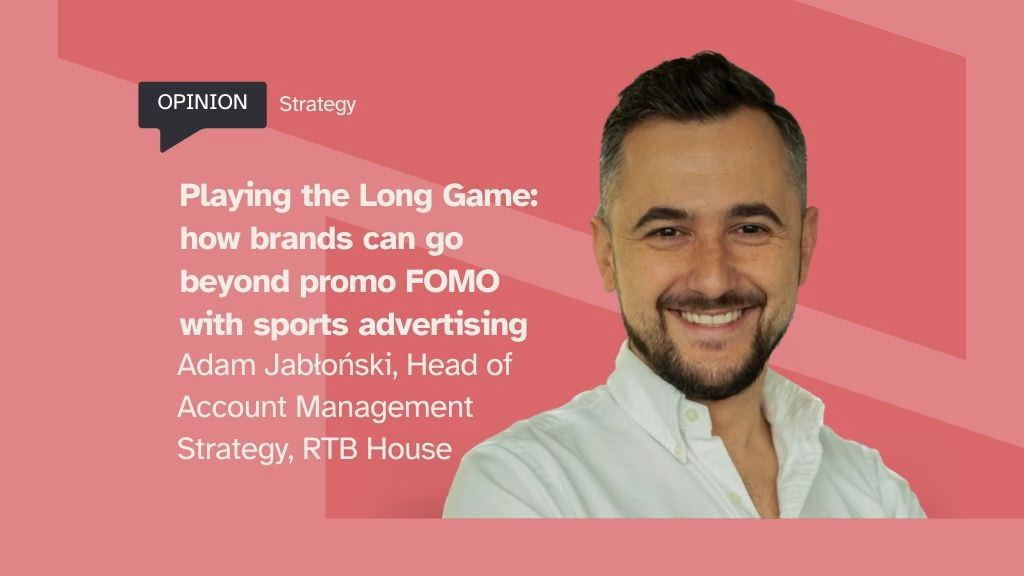
By Adam Jabłoński, Head of Account Management Strategy at RTB House
With the FIFA World Cup 2026 scheduled to kick off on 11th June, excitement around the world’s biggest festival of football is building fast. According to Nielsen, more than half of the global population identifies as football fans, guaranteeing that billions of eyes will soon be fixed on the tournament being played across Mexico, the USA and Canada.
For brand marketers, such a concentration of attention makes it difficult to sit on the sidelines. Major sporting events act as cultural accelerators, inspiring people to engage, participate and, crucially, spend. From purchasing replica kits to upgrading sportswear, equipment or even tech to enhance the viewing experience, these moments drive spikes in demand that ripple far beyond the final whistle.
What’s more, the World Cup is only the most visible example of what’s coming. In 2026, brands will face a packed calendar of sporting moments. Significant attention will be focused on events such as the Winter Olympics and the Commonwealth Games, as well as seasonal peaks associated with fitness, outdoor activities, or lifestyle changes.
These moments create natural waves of intent, but they also concentrate advertiser activity. As more brands pile in around the same tentpole moments, simply “showing up” is no longer enough. This year, cutting through the noise requires more than a bigger budget or louder messaging. It requires relevance, timing and an understanding of what consumers are actually trying to achieve at different points in their journey.
From interest to intent – and intent to sales!
In addition to creating demand, sporting moments can extend the consideration phase. Shoppers don’t wake up on match day and immediately buy a new pair of boots or training equipment. They research, compare and deliberate.
This is particularly true for sporting goods, where purchases are often higher value and more personal. The global sporting goods industry is expected to reach over £432 billion ($580 billion) by 2029. Consumers of sports products want to know that what they’re buying fits their goals, whether that’s improving performance, staying active or simply feeling part of the moment.
Sports fans also plan purchases around events throughout the year. Someone inspired by the World Cup might not buy immediately, but they may start thinking about upgrading kit ahead of the next season or joining a local league.
The brands that will maximise their success will be those that understand this critical phase. Being present early, relevant often, and consistent throughout the journey can turn inspiration into action.
Deep learning in action
Keeping pace with this behaviour is difficult without the right technology and partners in place. The sheer volume of signals, channels and moments makes manual optimisation unrealistic. This is where next-generation, deep learning-powered solutions come into play.
Adding deep learning to your marketing stack is like taking a sip of an energy drink before a workout. You become more alert, processing information faster and seeing patterns that were previously invisible. It doesn’t replace what you’re already doing; it enhances it.
Deep learning excels as an additive layer. Like any great player in a sports team, it raises the performance of those around it. Around 60% of our clients’ sales are attributed to retargeting activity somewhere in the path to purchase. It’s not about cannibalising other channels; it’s about making them work together more effectively.
Crucially, this approach drives incremental revenue without requiring brands to overhaul their entire marketing mix. It works alongside existing strategies, improving efficiency and outcomes while respecting increasingly strict privacy expectations.
Understanding intent without crossing boundaries
While consumers want relevance, they also want reassurance and respect. The ability to understand true user intent without relying on personal data is fast becoming a competitive advantage. Deep learning enables brands to analyse behaviour, context and engagement patterns in a way that reveals intent without exposing identity.
For brands hoping to ride the sporting wave this year, the biggest mistake they can make is wait until major events are already underway. By then, competition is at its peak, and opportunities are already being missed. By onboarding the right partners, investing in intelligence-driven solutions, and thinking beyond short-term promotional fear-of-missing-out, brands can capitalise on this sporting event.
Sporting moments are fleeting, but the relationships built around them can last far longer. By using the tech tools already available to their full potential, brands can put themselves in a winning position. Get it right, and these moments become opportunities to build meaningful, long-term connections rather than short-lived promotional wins.