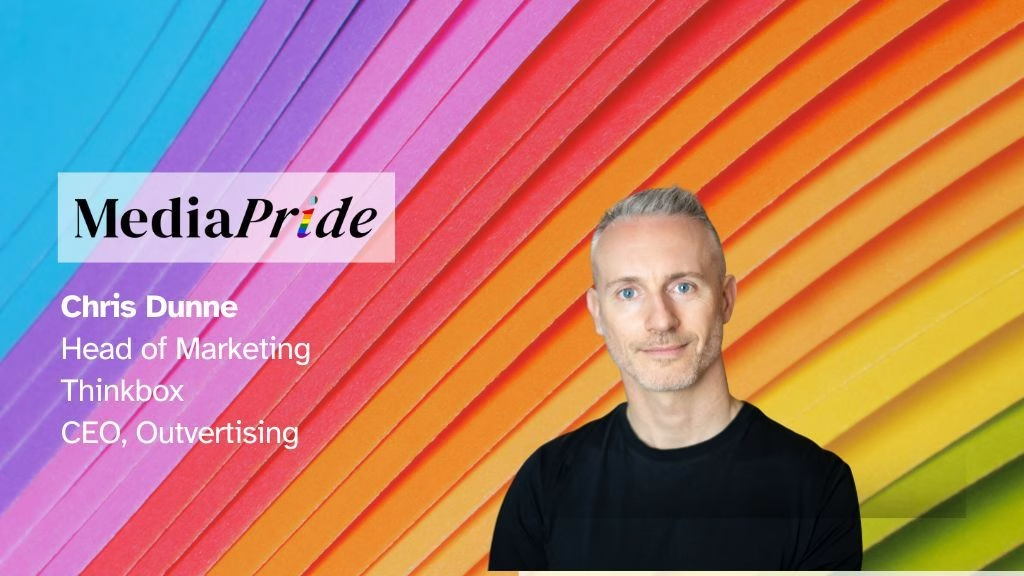
In a wide ranging conversation, Outvertising CEO Chris Dunne reflects on a turbulent year for inclusion in advertising, the commercial pressures facing the sector, and why “values safety” should now sit alongside brand safety on every marketer’s agenda.
It has been a while since we last caught up properly. Where are things now, and what has the past year looked like?
If I look back 12 months, we knew it was going to be a challenging year. That really started as soon as the Trump administration came into place in the US, which seemed to legitimise a lot of anti LGBTQIA+ sentiment that had been growing. Since then, there has been a huge amount happening globally, from legislation in the US to countries like Hungary banning Pride.
There is enough going on to give real concern, but it also reinforces why our work exists. Despite that backdrop, we pushed forward and delivered Outvertising Live independently for the first time, without relying on a tech giant partner. That was a big turning point for us.
It is a galvanising moment in the year. It gives us industry presence and credibility, which is critical when you are trying to have meaningful conversations with brands and partners.
You mentioned challenges. What are you seeing across the industry?
Through AMIC, the Advertising and Marketing Inclusion Collective, we bring together organisations like Bloom, WACL, NABS and others every six months. The idea is to share knowledge, avoid duplication, and support each other.
What will not surprise you is that many are struggling with sponsorship and revenue. Inclusion budgets are often seen as an easy cut, particularly in a market that has seen consolidation and redundancies.
Companies want to appear lean, and unfortunately inclusion can get lumped in with discretionary spend.
That is frustrating, because this work is not a luxury. It drives wellbeing, reduces churn, and improves creativity and productivity. Treating it like a “nice to have” misses the point entirely.
So where are your priorities now?
Mentoring is a big one. There is huge demand, particularly from younger talent experiencing redundancy for the first time and lacking the tools to navigate it. Our latest programme saw record numbers of mentees, and we are hearing the same across the sector.
Outvertising Live remains central, but we are also launching an Ad Index this year. The aim is to quantify LGBTQIA+ representation in advertising, not just in volume but in quality. We want a benchmark the industry can measure itself against.
Too often, a handful of campaigns create the impression that progress has been made. In reality, representation is still limited and often narrow, typically skewed towards people like me, white, cisgender gay men. We need to understand the full picture.
Have you also been thinking about the future more broadly?
Yes, quite seriously. We are looking at governance and long-term sustainability. What has happened in the US shows how quickly scrutiny can shift, with inclusion organisations facing external pressure and investigation.
We need to be watertight, transparent in how we operate, how we are funded, and how decisions are made. At the same time, we are building financial resilience, effectively planning for a scenario where we might have to operate for years without sponsorship.
It sounds extreme, but it is necessary planning.
How are you thinking about partnerships across the industry, particularly with adtech and platforms?
We welcome individuals from across advertising, media and marketing. But when it comes to formal partnerships, we have to be careful. We cannot align with organisations that are doing material harm to the community.
That might mean not partnering with certain publishers or platforms, even if individuals within those organisations are part of our community and welcome to engage. It is about consistency and credibility in what we stand for.
There was a lot of talk about a rollback in DEI investment last year. What are you seeing now?
There was an initial reaction, a pulling back, particularly influenced by what was happening in the US. But that has slowed. What is interesting is that the work has not disappeared, it has been reframed.
You are less likely to see the term DEI now. Instead, it is talked about as culture, belonging, or other language. So headlines about companies abandoning DEI can be misleading. Often, the work continues under a different name.
What about the role of platforms and the wider ecosystem, particularly around misinformation and harmful content?
Increasingly, we are framing this through effectiveness, what marketers care about most. Inclusive, representative work can drive stronger performance and resonate with wider audiences.
But beyond that, we need to think about where media investment is going. There is growing awareness of overinvestment in certain platforms, and a broader public backlash against some of the harms associated with them.
That brings us to what I call “values safety”. Brand safety is about not appearing next to harmful content. Values safety goes further, asking whether the platforms and partners you work with align with your organisation’s values.
If you are investing internally in inclusion, but funding platforms that cause harm, there is a disconnect. Everything should align.
Ending on a more positive note, are you seeing any green shoots?
Yes. Last year felt like a period of invisibility, there was very little visible LGBTQIA+ presence at major industry moments, even during Pride.
Now, there is a sense of mobilisation. The people and organisations that care are stepping forward. We are seeing more industry Pride activity, more engagement, and more willingness to act.
There is also an opportunity. If others step back, it creates space for brands to step in and lead. That is where real progress can happen.