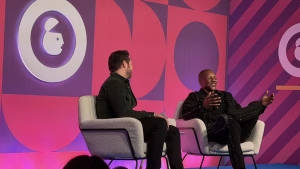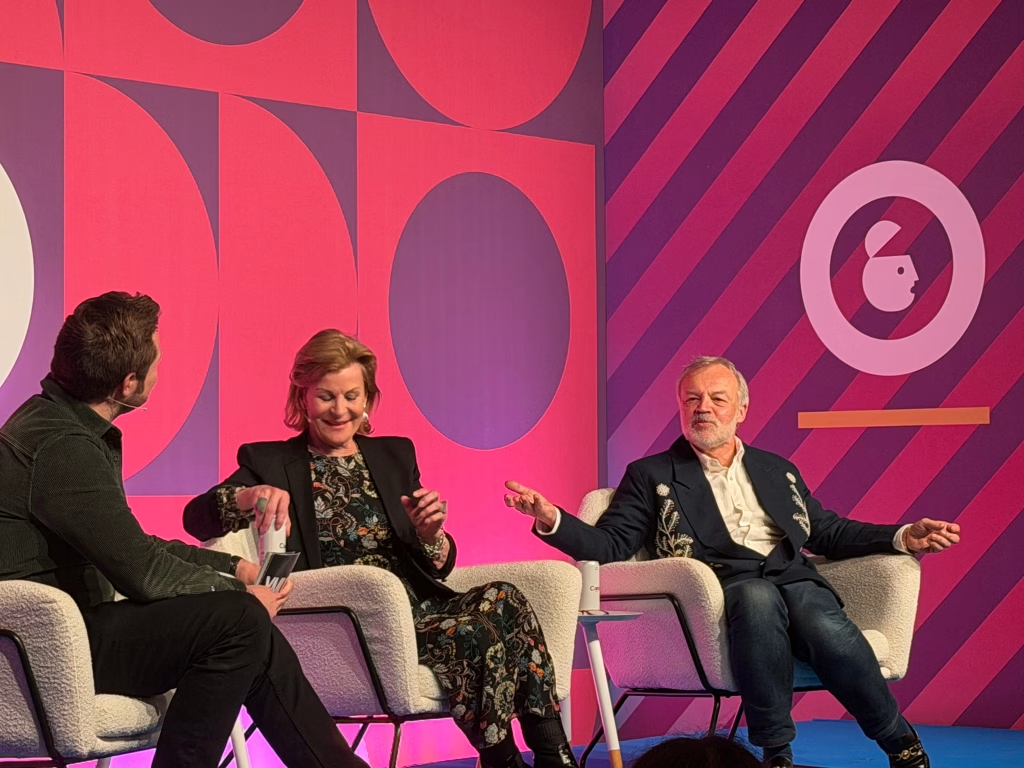
When Graham Norton and Maria McErlane launched their podcast Wanging On, it wasn’t just another celebrity project. It was the natural evolution of a long friendship and years of shared humour, honesty and unfiltered insight.
In their session at Advertising Week Europe, the pair unpacked how that authenticity has become a blueprint for successful brand partnerships in podcasting. As Norton puts it, “If you email in, then you’re part of it. Often with the serious problems, it is the audience who have genuine insight.”
The session highlighted that audiences crave the real, not the rehearsed. Podcasts offer a level of intimacy and flexibility that traditional media often can’t match. Listeners aren’t just tuning in, they’re part of the conversation. And that dynamic, Norton and McErlane argued, is exactly what brands should aim to respect and leverage.
Weaving brands seamlessly into content
The pair discussed how to integrate brands without breaking the natural rhythm of a show.
“One of the hardest things with working on a podcast is putting a brand in without disrupting the flow of the show,” Norton explained. Their approach isn’t about inserting generic ads, it’s about aligning the brand message with the conversation. For example, segments featuring products or services that relate to the problems their listeners email in feel natural and organic.
McErlane said, “If you have a problem that’s something entertaining related or dinner party related or socialising related, then it feels seamless to move into the brand discussion.”
This principle reflects a wider trend in podcast advertising, harking back to the 1940s and 50s in American radio, where hosts would personally endorse products as part of the broadcast. Norton said, “I hear ads on podcasts in a way that I don’t hear them on commercial radio, it just seems like part of it.”
The duo emphasised that authentic partnerships require careful curation. “If you say yes to them all, then you kind of dilute your brand, dilute your power,” Norton said. The lesson for marketers is that: alignment matters more than exposure. Listeners respond to hosts whose endorsements feel genuine, not transactional.
Trust, tone and chemistry over polish
The success of Wanging On illustrates a broader truth about content and brand collaboration: audiences respond to human connection. Norton and McErlane’s long friendship underpins the podcast’s charm.
“Because people have listened to us over a long time, they understand that we can be quite brutal. Equally, if people email in with good advice, we say, ‘That’s amazing. That is really good advice,’” McErlane explained. That balance of humour and sincerity builds trust, a prerequisite for any brand association.
The conversation also highlighted how authenticity evolves over time. Norton reflected on his decades in television, including The Graham Norton Show, and how fine-tuning the format, tone and approach has been a continual process.
“Every week it’s different, you learn because every week it’s different,” he said. Brands partnering with content creators should take a similar long-term perspective, focusing on maintaining trust and tone rather than forcing a one-off, polished message.
The intimate power of podcasting
Podcasts occupy a unique space where hosts and listeners share a sense of co-ownership. Norton said, “It’s interesting, because the way podcasts are now, there’s a real sense if you’re a listener that you found that podcast. You have a sense of ownership. I found that, I like that.”
For brands, this intimacy means any partnership has to feel like a natural extension of the dialogue, rather than an intrusion.
The session also touched on the broader evolution of podcasting. Shows initially confined to audio are now crossing over into live events, television and streaming platforms.
Yet even as formats evolve, the core principle remains: audiences crave connection. “You just feel that they’re talking to you directly,” McErlane said, describing why listeners remain loyal even as podcasts become more widely distributed.
Aligning purpose and playfulness
Another key insight from the panel was the interplay of creativity and commercial interest. Norton highlighted campaigns with Waitrose and Revolut, stressing that brand collaboration only works when it aligns with the host’s persona.
“You don’t want to do something that doesn’t feel comfortable. Brands don’t want to use you if you’re not a good fit,” he said.
The session also revealed that playful, imaginative content can coexist with commercial goals. Norton shared anecdotes about celebrity moments and on-air games that highlight how spontaneity and structure can exist in balance. When brands respect that balance, audiences respond positively, making partnerships not just palatable but genuinely enjoyable.