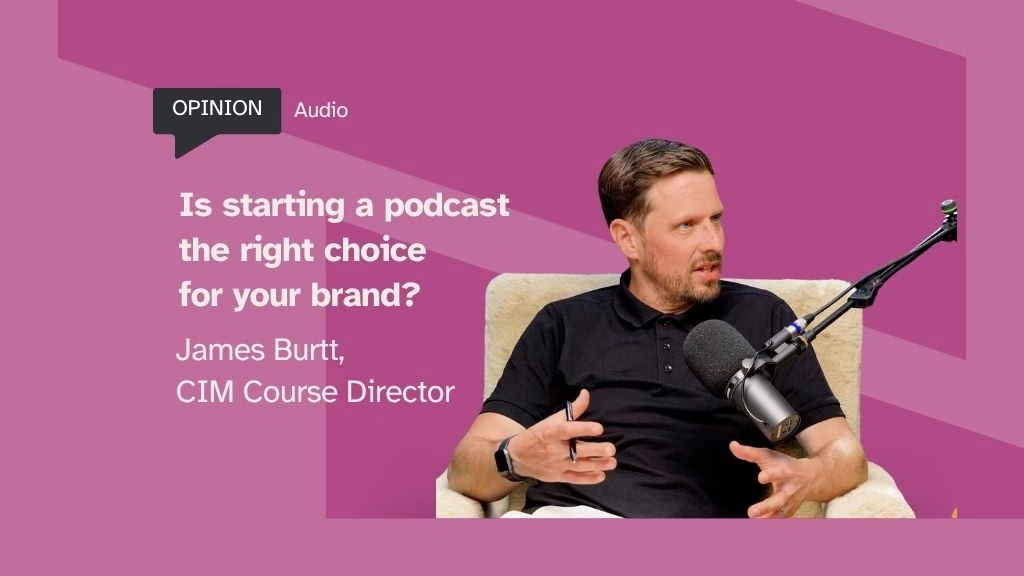
By James Burtt, CIM Course Director and award-winning Host of the ‘Building the Brand Podcast’
According to the latest figures, just 22% of podcasts make it beyond seven episodes, and for businesses, specific hurdles can prevent them from progressing.
Those that do manage to break into the podcasting world can reap serious rewards: highly engaged audiences, a direct platform to deliver key messaging, and space for targeted advertising revenue. It’s clear why we have seen so many businesses embrace podcasting.
The essential questions to answer before you hit record
However, before deciding to launch a podcast, businesses should first consider their wider content marketing strategy. A comprehensive content plan will help determine whether a podcast is the most effective way to achieve marketing objectives, or if alternative formats might deliver stronger results.
This strategic planning is where professional training, such as CIM’s Content Marketing course and Podcast Strategy and Production course, can help organisations evaluate their options and develop content that is aligned with their business goals. Businesses can invest in the latest podcasting software, but without those human capabilities, there’s little chance of success.
If a podcast is the right choice, the next question becomes the most important one: what does podcast success look like?
Many organisations skip this step and jump straight into allocating budget for a branded podcast. Some businesses aspire to create the next Diary of a CEO, but that’s the wrong move for 99.9% of business podcasts.
Having a huge audience shouldn’t be the main goal for business podcasts – it’s much more important for organisations to have the right audience. The target audience should be front-of-mind when crafting the format, structure and frequency of the podcast.
How the right podcast strategy can generate real business results
One of my clients, a high-end joinery firm, wanted to use a podcast to generate more leads. Rather than chasing a large audience, we focused on attracting the right one. We created content around crafts, building and skilled manufacturing, and invited a high-end architect to appear as a guest on the podcast, transforming them from a passive listener to an active participant, and allowing the firm to strike up a fruitful partnership with the guest.
The strategy paid off – and the architect featured on the podcast later invited the business to tender for a project, which they won, resulting in a million-pound contract. Podcasts aren’t just about broadcasting – they are also about opening doors and building relationships with potential clients.
Podcasts can also be highly effective for internal communications. For organisations with multiple sites or remote teams, an internal show gives leaders a more personal way to share updates, reinforce company values and help employees feel connected.
Once you have identified your desired outcome, you can decide what type of content will provide the greatest value through information, education or entertainment, and build your podcast around that objective.
Don’t fall into the podcasting trap
Where do many podcasts fail in B2B and B2C? Some businesses simply don’t put the audience first. Instead of treating podcasts as a storytelling platform to deliver real value to customers and prospects, many businesses use it purely as a marketing tool.
The result is often content that feels overly promotional, prioritising brand messaging over audience engagement and value. This is a surefire way to erode trust that has been built over an extended period.
Some organisations also underestimate the investment it takes to make a podcast successful. You can’t just throw money at it – it must be viewed as a time-intensive, long-term project that demands both capital and time to plan. Recording the podcast is just one part of the job – it often takes longer to edit and promote the episodes.
Those who sustain an ongoing commitment to their podcast are the ones who are most likely to be able to build their listenership over a longer period.
Instant success isn’t guaranteed, and is unlikely. When audience growth does not materialise quickly and revenue fails to follow, the C-suite can lose faith, and those at the coalface producing it can lose momentum and abandon the series altogether.
Key players from across organisations must understand that it takes time to build up a following, even when their company has already been well-established in their market for years or even decades.
What audiences want
Successful podcasts are built around authenticity. They prioritise audience value over self-promotion and instead see the latter as a by-product of a successful podcast.
The very best can demonstrate an audience-first approach, focusing on emotional storytelling, honesty and relatability – qualities that build both trust and audience engagement.
To succeed, brands must:
- Carve out their niche, often grounded in existing expertise.
- Be dynamic – think of creative approaches to deliver topics, while considering that the podcast’s presenter will be integral to engaging audiences.
- Plan ahead and be consistent whilst playing the long game – defining content based on audience feedback and performance over time.
Podcasts have enjoyed a real moment in marketing, and there is clearly a renewed interest in the podcasting medium. The CIM Marketing Podcast, recently shortlisted for the Best B2C Show Award by the Marketing Podcast Network, has gone well beyond 120 episodes, due to its ability to educate people and align with the wider company’s marketing goals.
A podcast’s value depends on how well it can align with these goals, and whether the correct strategy has been devised to achieve them. With the correct combination of audience insight, organisational alignment and long-term strategic ambition, a business podcast can be a huge asset for an organisation.