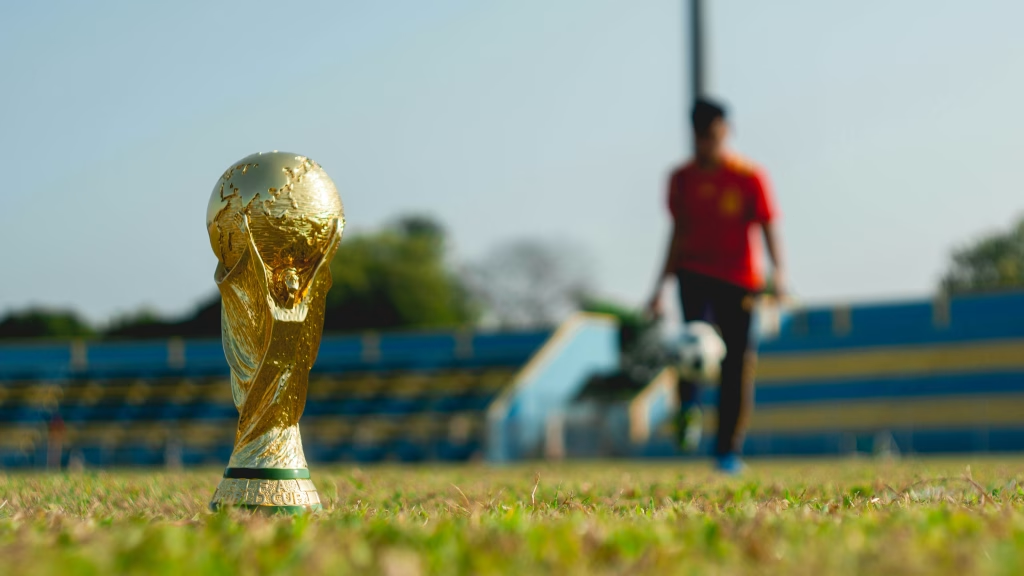
With the FIFA World Cup 2026 kicking off in Mexico, the USA and Canada, New Digital Age invited a selection of leading marketers to give their take on the significance of the tournament within the global marketing industry…
Mateusz Rumiński, VP of Product at PrimeAudience
“Despite the competition already being underway, there is still plenty of opportunity for brands to get involved in the World Cup, but the key is recognising that its audiences are not static. Interest shifts throughout the tournament as different teams, players and storylines capture public attention. Marketers that rely heavily on historical audience data risk missing where engagement is actually happening in the moment.
“At the same time, brands should be careful not to limit their reach through overly restrictive brand safety settings. Research from Euro 2024 found that a significant proportion of sports coverage was incorrectly classified as unsafe because common sporting terms were interpreted without context. As a result, advertisers can end up excluding some of the most engaged audiences during major sporting moments. The brands that succeed will be those that combine strong audience intelligence with the flexibility to respond to changing consumer interests as the tournament unfolds.”
Krane Jeffery, VP of Commercial, RAAS LAB
“The FIFA World Cup will once again prove that live sport is the most powerful arena for brands to connect with audiences, but the rules of engagement have changed. As fans migrate to streaming and interactive consumption, the goal is no longer just about buying reach; it’s about delivering relevant, timely messages that reflect what’s happening in the moment and align with their mindset.
“The advertisers that will stand out are those that can embrace uncertainty, adapt their creative to the action on the pitch, the developing narratives off the pitch and respond with speed and agility. By using AI and decisioned media, they can tap into live opportunities as they happen and turn fleeting, unscripted moments into meaningful connections that leave a lasting impression long after the final whistle.”
Shane Buckley, Head of Restaurants UKI at Uber Advertising
“International football tournaments give brands one of the few remaining opportunities to reach audiences at a genuine global scale. But the real commercial value is not limited to just 90 minutes of play on the pitch. The opportunity lies in the behaviours around matches: fans planning their evenings, travelling to pubs and watch parties, and reacting to the action in real time. These are high-intent moments which brands can weave themselves into.
“However, because attention is so fragmented across screens, fan zones, and devices, timing and context are critical. The advertisers who will ‘win’ won’t be the ones who bought the biggest ad, but those that use real-time signals to understand exactly when intent is highest, aligning campaigns with live behaviour rather than relying on static creative or traditional approaches.“
“Ultimately, this summer’s tournament should be treated as a connected set of consumer moments, not a single standalone moment. The brands that make themselves a seamless part of the experience will enjoy both immediate performance and longer-term brand impact.”
Tom Ridges, CEO & Founder, Herdify
“Personally, I think one of the biggest drivers of World Cup viewership will be the shared social moment that comes with the tournament. The further a country gets through the competition, the more people will tune in. If England makes the finals, there will be people watching who may not have even watched a single match earlier in the tournament. Interest naturally grows beyond core football fans and starts to capture the attention of the wider public. That’s the unique power of an event like the World Cup; it becomes part of the national conversation.
“And, it’s not just about the football itself. It’s about the feeling of being part of something bigger, something exciting. People don’t want to miss out when an event is this huge. It’s a shared moment that brings people together and creates a sense of community. It’s those moments, where people are sharing experiences and potentially influencing one another, that brands have the opportunity to create impact.”
Phil Duffield, VP Northern Europe, The Trade Desk
“5 billion. That’s how many people engaged with the World Cup in 2022. That’s 62% of the population. This year, FIFA is taking the tournament to new audiences in North America – meaning there are even more opportunities for advertisers. With games running late into the night in the UK and Europe, fans won’t be watching on one screen. They’ll be keeping eyes on the tournament by checking news sites on mobile, streaming via laptop while travelling, and of course on CTV either at home or at the pub. Advertising on the open internet gives brands the precision to reach the right fan at the right moment, with unmatched control and real-time measurement. The brands that come out on top this summer will be those with campaigns built to follow fans across every screen – turning peak cultural moments into commercial gain.”