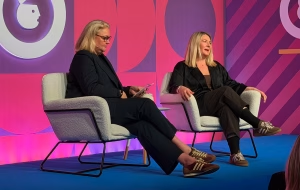
Connected TV is no longer just another digital extension of television, but a channel forcing advertisers to rethink how they plan, measure and buy premium video.
That was the clear message from a panel at Advertising Week Europe, where speakers argued that CTV is becoming both an awareness play and a performance channel, with the home screen, pause ads and smarter targeting opening up fresh opportunities for brands.
The Where Does the CTV Journey Begin? panel featured Chris Kleinschmidt, VP, Advertising Sales, EMEA, TiVo Ads; Deej Duggal, Head of CRM & Performance Marketing, UKTV; and Freddie Anderson
Managing Partner, Publicis Media.
Moderator Joanna Burton opened by setting the tone with a question about where the connected TV journey really begins, and the panel quickly agreed that the answer is more nuanced than simply “inside the app”. Freddie Anderson, Managing Partner, Publicis Media, said he sees the home screen as only part of the story, arguing that “the journey really starts before you get there” because content discovery begins in conversation, on social and through brand building elsewhere.
That broader view of the path to purchase was echoed by Deej Duggal, Head of CRM & Performance Marketing, UKTV, who said CTV should be understood as a way to “reinforce” and extend brand messaging rather than replace it. For Dee, “it always has to start with the viewer first”, with data helping to connect the full experience across apps, devices and platforms.
The home screen is gaining value
One of the liveliest parts of the discussion centred on the CTV home screen, which Chris Kleinschmidt of TiVo said has been around for years but is now moving into the mainstream. “The homepage has been an ad unit that’s been around for about a decade now,” he said, saying that it was historically reserved for media and independent clients and used largely as a performance-driven entry point into content.
Kleinschmidt said the market is changing fast, particularly in the UK. “I think it’s catching up here in 2026 in a big way,” he said, adding that the home screen is becoming more attractive to a wider range of advertisers. But he also warned that brands should not simply import digital thinking wholesale into TV:
That concern was shared by the rest of the panel. Anderson argued that if brands treat CTV as just another low-funnel digital environment, they risk missing the scale and attention that TV still offers. “TV is a shared viewing experience at the moment, and that’s what makes TV so amazing,” he said.
Creativity still matters
The panel was also keen to stress that innovation in format must go hand in hand with creative thinking. Dee pointed to a Six Nations execution as an example of a bold but thoughtful format shift.
For Anderson, the lesson is that the best CTV campaigns are not just technically clever; they are creatively appropriate. “If you do just stick on a 30-second ad there might be some issues,” he said, warning that standard TV spots may not always be the right fit for a more interactive or discoverable environment.
Kleinschmidt was similarly cautious about overclaiming precision. He said advertisers often talk about CTV as if it allows ultra-narrow targeting, but that can be a mistake. “The device is still a household screen and should be treated as such rather than as a one-to-one digital channel,” he said.
A recurring theme throughout the discussion was the tension between CTV’s role as an awareness channel and its growing use in performance marketing. Dee said UKTV sees value in both: “CTV does both an awareness-driving job for us but it’s also becoming more of a performance tool.”
Kleinschmidt added that many advertisers still default to linear-style thinking, using CTV as if it should deliver GRP-style awareness metrics. He argued that this framing can undervalue what CTV does best, particularly when it comes to incremental reach and more advanced targeting. “My fear is CTV is becoming more of a mid funnel or lower funnel type of play,” he said.
Plan holistically
If there was one piece of advice the panel returned to repeatedly, it was this: do not plan CTV in isolation. Anderson said the biggest mistake brands make is “thinking in silos”, while Dee urged marketers to take “a holistic view of all the different opportunities through the consumer journey”.
The panel also highlighted how much time viewers now spend navigating content interfaces, with one speaker citing research suggesting people spend around 15 minutes a day searching across streaming environments. Whether or not that time is spent on one screen or across several apps, the conclusion was the same: attention is valuable, and brands need to show up intelligently.