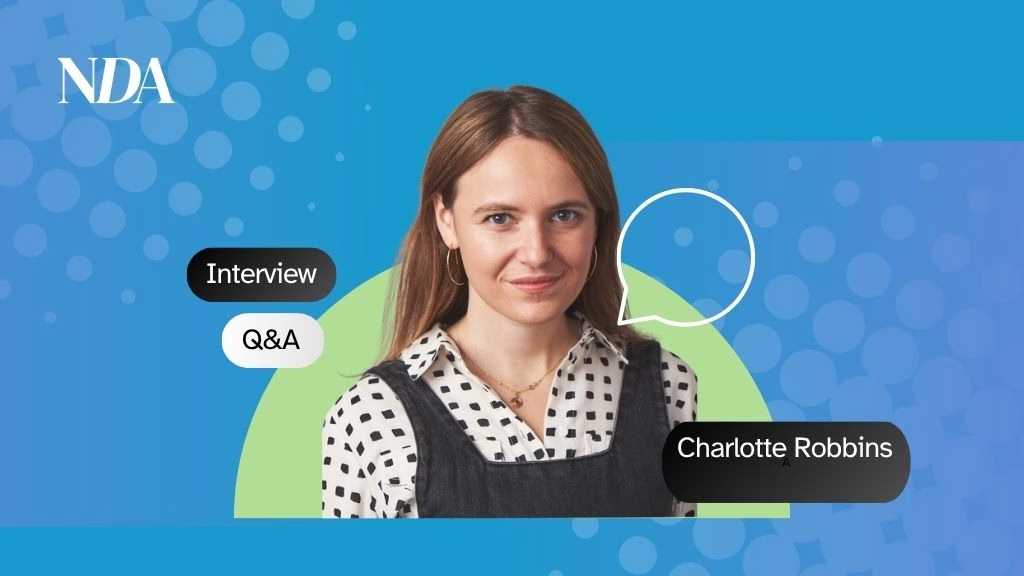
Charlotte Robbins is the Head of Partnerships at Goalhanger, where she oversees the strategic growth and brand partnerships for some of the world’s most popular podcasts. Under her leadership, the network has successfully bridged the gap between intimate audio storytelling and large-scale commercial success.
Traditional media often struggles to maintain a genuine connection with its audience, yet Goalhanger seems to have cracked it. How do you view that relationship differently?
Many traditional media businesses misunderstand the dynamic by keeping their talent in a bubble, separated from the production and commercial teams. At Goalhanger, we prioritise a close, integrated relationship.
We aim to be part of people’s daily routines, which is why most of our shows release at least two episodes per week. It creates a far stronger bond when you aren’t just an occasional guest in someone’s ears, but a regular companion.
Audiences today move away from overly formal expert interviews, they want conversations that feel like friends talking in a pub.
How has your commercial approach evolved to match that sense of authenticity?
In the early days of podcasting, commercial activities were often outsourced or treated as an afterthought. Now, brands want to be authentically embedded within the ecosystem of the show, including social media and live activations.
Because audio is such an intimate medium, we involve our talent in commercial decisions. Our hosts are never forced into a partnership they don’t believe in.
Every brand endorsement is run past them, and they have the right to reject anything that doesn’t feel like a good fit for their audience or their personal ethics.
With such a wide range of shows, from history to football, how do you maintain that authentic Goalhanger feel across the board?
It starts with the hosts having genuine relationships.
They often plan and talk outside of formal production meetings, and many of our co-hosts were actually suggested by the talent themselves, which ensures a natural rapport. We also give them true ownership.
While we use audience data to guide structures, the hosts determine the content. For example, Tom Holland and Dominic Sandbrook drive the topics for The Rest is History. It is their platform, and the audience can sense that they aren’t just reading from a script.
Metrics are always critical advertising. Beyond simple download numbers, how do you prove that your ads are actually working?
We look closely at engagement and watch time. Our average listener rate is around 40 minutes per episode, which is incredibly high for any medium.
We also track audience sentiment. It sounds counterintuitive, but we love it when fans call out the ads in the comments or on social media, because it shows they are actually listening and engaging with the host-read. For larger campaigns, we also conduct brand lift studies to provide that deeper layer of data for our partners.
You have a significant number of super fans who pay for ad-free content. How does that membership pool affect your data?
In January, we revealed that we had surpassed 250,000 paying members across the Goalhanger network.. Interestingly, when we report our statistics to advertisers, we actually exclude these club members because they listen to an ad-free feed.
It means our reach is even larger than the public numbers suggest. For instance, The Rest is History achieves 20 million monthly listens on Spotify, Apple Podcasts and YouTube, and that doesn’t even account for the private club listeners or our social media cutdowns.
The shift toward video has been a major trend recently. How has Goalhanger navigated the transition to platforms like YouTube?
We were quite proactive with video early on, so our talent was already comfortable being filmed before it became the industry standard.
With Spotify and Apple now leaning heavily into video, it has become a critical component. Shows like The Rest is Football are frequently watched on actual TV screens via YouTube.
However, we still design the content to be “eyes optional,” meaning you can enjoy the full experience without looking at the screen, as the conversation remains the core product.
Does a higher level of video production change the stripped back feel that podcast listeners love?
It’s a balance.
We are introducing more high-production elements, like animation for The Rest is History or archival footage, but we don’t want to lose that conversational essence. For a Q&A episode, you don’t need a flashy studio, but for an in-depth interview, a high-quality visual setting adds value.
The level of production depends entirely on the specific show and what the content requires.
How does the introduction of video change what you can offer to your advertising partners?
It gives us more products to sell. Audio host-reads often use dynamic ad insertion for specific targeting, whereas video ads are usually “baked into” the content, providing long-term reach on YouTube and opportunities for product placement.
Even with these new options, many advertisers still prefer the classic audio host-read because it is so effective at driving conversions.
The Goalhanger brand itself seems to referenced a lot on shows. Was that a conscious decision?
Initially, the parent brand wasn’t the primary focus, but as we’ve matured, it has become a stamp of quality.
It helps advertisers understand the full scope of what we offer, and it allows our shows to cross-promote each other effectively. This internal ecosystem reduces our need for external promotion because our listeners trust the Goalhanger name.
We’ve seen Goalhanger take over massive venues like the O2. What role do live events play in your future strategy?
Live events are a huge priority for us. We’ve toured globally, from the Sydney Opera House to intimate local venues.
This September, we’re hosting “The Rest Is Fest” at the Southbank Centre, which will be the first time we bring all our shows together for a single weekend. It’s about creating a tangible experience for our super fans and proving that these digital conversations have a very real, physical community behind them.
Finally, what is your number one tip for brands that want to produce truly authentic content?
Reduce the noise.
The best creative results come when you limit the number of people involved in the process. When you have a small core team and trust the talent to ad-lib and riff, you get something much more entertaining.
If you over-produce and over-edit, you lose the very magic that made the audience tune in in the first place.