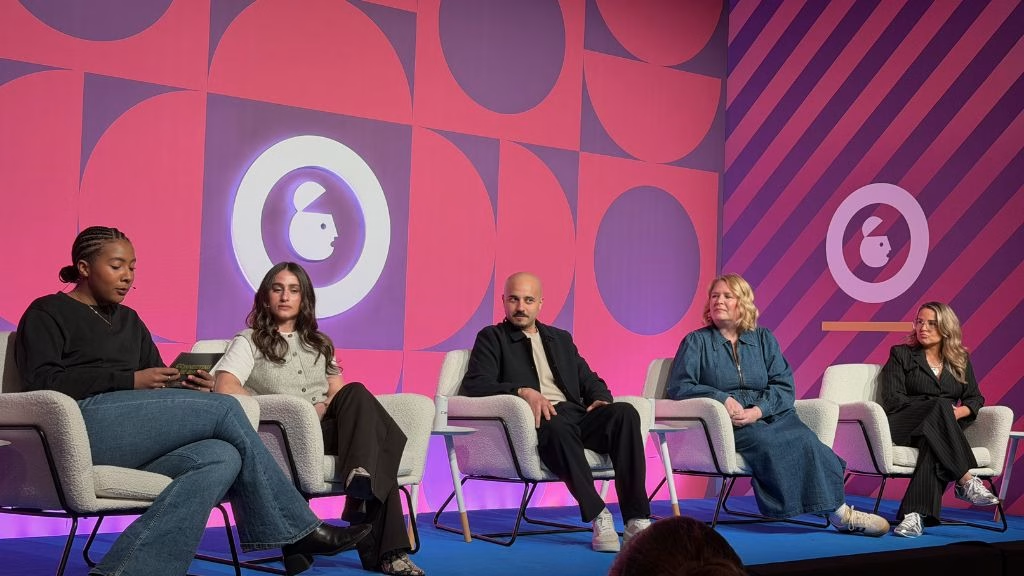
The creator economy is no longer a peripheral marketing tactic; it is a central pillar of the UK’s digital landscape. As Safiyah Bennington, Brand and Talent Director at Connect Management, said during a panel session at Advertising Week Europe, the UK influencer market is projected to top £2.5 billion by 2026.
However, with this growth comes a shift in expectations. The most impactful campaigns are no longer those where a brand dictates a script to a talent, but rather those born from a deep, three-way collaboration between brands, agencies, and creators.
The panel, titled “How Brands, Creators and Agencies Build Campaigns That Actually Work,” brought together a diverse range of perspectives, including Lotty Steel, Organic Social and Influencer Manager at ASDA, Gaby Cohen, Managing Director of Connect Management’s agency arm, and seasoned content creators Eray Beyi and Emma Conway.
The Foundation of Trust
At the heart of any successful partnership is a move away from transactional relationships toward genuine integration. For ASDA, the secret lies in treating creators and agencies as a seamless extension of their internal team.
Lotty Steel explained that at the supermarket giant, they have moved past viewing partners as outside entities. “I don’t really see them as agencies or brands necessarily, but as an extension of the team,” she said, emphasing that “trust and mutual understanding” are the currencies that drive the best output.
Gaby Cohen echoed this sentiment from the agency perspective, saying that their role is to act as the bridge that unlocks potential. By leveraging data and insights from the 150 creators they manage, the agency can ensure that a brand’s objectives align perfectly with what a creator knows will resonate with their specific community.
Bringing creators in early
One of the most significant shifts discussed was the timing of creator involvement. Traditionally, creators were brought in at the end of a campaign to “amplify” a finished concept. Today, the most successful brands involve them at the ideation stage.
“Give them the opportunity to shape it and not just execute it,” advised Steel. She stressed that creators are the true experts on their own audiences, and allowing them to provide input early on leads to stronger results. Eray Beyi agreed, pointing out that the “brief” is the first insight into whether a brand has actually done their homework.
“Have they actually put the thought into us? Have they looked into what we do?” he asked, suggesting that a little bit of research goes a long way in building a creative spark.
The power of the ‘vertical brief’
As ways of working evolve, so too must the tools of the trade. Gaby Cohen highlighted a recent innovation at Connect Management: the “vertical brief”. Recognising that creators live and work on their mobile phones, the agency shifted away from dense, multi-page PDF documents that required a laptop to navigate.
“All of the briefs our creators receive are in vertical format, they are made for mobile-first,” Cohen explained. This allows creators to access key campaign messaging and product details while they are actually in-store or on-set. This move toward agility is crucial in a social landscape where culture moves faster than a traditional corporate approval process.
Flexibility over rigidity
Flexibility emerged as a recurring theme, particularly for creators like Emma Conway, who balances her digital career with the realities of being a creator and a mother. Conway stressed that the best working relationships are those where brands allow for a bit of “back and forth” on scripts. “I was very rigid… but now you have to kind of relax a little bit both ends,” she said.
This flexibility also extends to how content is measured and promoted. The panel discussed the balance between organic reach and paid boosting. Cohen suggested that brands should let organic content “breathe” for three to five days before putting spend behind it.
This allows the team to see what is naturally performing well and then use paid media to amplify the winners, rather than forcing a low-performing post to find an audience.
Looking ahead: relatability is king
When asked about the future of influencer marketing, the panel moved away from the buzzword of “authenticity,” which many feel has become diluted. Instead, they focused on “relatability”.
For Emma Conway, the future is about the strength of niche communities. “Don’t worry too much about getting millions of followers, I don’t have millions of followers and I still get consistent work,” she said. As the industry matures, the focus is shifting toward creators who can maintain deep, personal connections with their followers, regardless of the size of their platform.
By prioritising clear communication, mobile-first workflows, and a willingness to cede creative control, brands can move beyond simple placements and create content that feels like a natural conversation rather than an interruption.