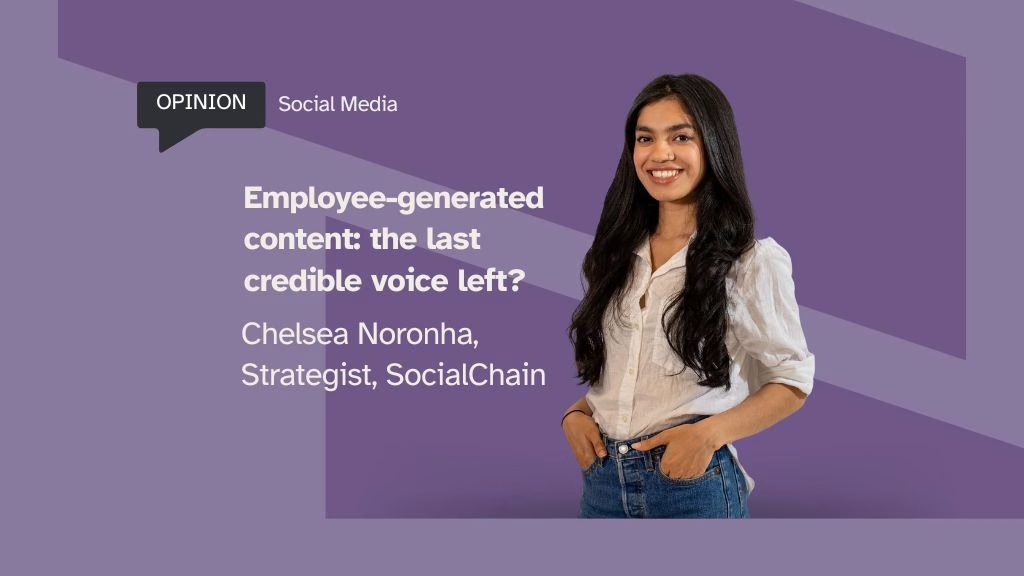
by Chelsea Noronha, Strategist at SocialChain
As our social feeds increasingly flood with AI-generated slop, there’s something magnetic about seeing a real person speak for the brand they actually work for. Not a paid ambassador, not a celebrity. Just someone who turns up to the job every day and genuinely seems to care.
That’s why employee-generated content (EGC) has become the tactic of the moment. Across industries, marketers are rediscovering the value of proximity, especially via social. The people who know your brand best are also the ones your customers are most likely to believe. Employees are among the last credible voices that haven’t been commodified into hashtags or sponsorships. Consumers see through manufactured ‘authenticity’, EGC is the real thing.
Born from necessity
For many brands, EGC was less of a strategic choice and more of a happy accident. Argos needed a way to show up on social media without relying on product-heavy content. Nobody thinks about a kettle until their old one breaks, so what’s the point in showcasing appliances? Nice Drinks needed to stand out big, without big-budget influencers. Both turned inwards, empowering their teams to become storytellers.
The result was both speed and scale. Argos describes their EGC as “a fast pass to the customer.” For Nice, it built community both online and off, turning viewers into fans who lined up for pizza in pink jumpsuits for ‘Nice and a slice’. EGC works not just because it’s cheaper. It works because it’s truer.
Build on your cultural strengths, not your corporate ones
But this only works when culture comes first. You can’t fake enthusiasm or force participation. EGC thrives in companies where creativity isn’t confined to the marketing department. When people genuinely want to represent where they work, you get energy that can’t be scripted.
That’s why a culture of “giving anything a go” matters. The question isn’t whether a brand can do EGC. The question is whether the people inside the company want to. If not, it quickly becomes an unpaid side project instead of a source of pride.
But, just because it can’t all be scripted doesn’t mean it can’t be structured. Just remember there’s a difference between helpful guardrails and creative suffocation. Clear permissions, review processes and defined objectives protect both the company and the individual employee.
The key is understanding what to systematise and what to leave alone. Have frameworks for approvals and amplification. Don’t script the actual content or mandate posting schedules. Build the frameworks that make it easier for employees to share what they care about, then trust them to show up in ways they know best.
Entertainment first, sales later
EGC shouldn’t start with sales; entertainment is the entry point and trust is the outcome. Argos took a strict “no product” approach to build community. Nice, as a growing brand, made entertainment do the selling by weaving product subtly into fun storytelling.
Either way, it’s a long game. Attention is precious. Once earned, it translates into recall, and recall into revenue. People remember who made them smile more readily than who offered 10% off.
Measuring what matters
One of the biggest misconceptions about EGC is that it’s hard to measure. Actually, it’s about looking in the right places.
When your community defends you in the comments (“I feel seen” and “I feel attacked” are equally valid!), when they visit stores to meet the employees they’ve seen online, when someone asks for more content featuring specific employees by name (“Where’s Amy?!”) – all of that is preference formation in real time.
These are indicators of brand health that eventually show up in revenue. Don’t underestimate the power of an agreed measurement model. Even if we can’t directly attribute sales uplift to a specific social post through trackable metrics doesn’t mean it isn’t true – it simply reiterates the need to get everybody on board for what we think success looks like.
What comes next
EGC will evolve. Some brands will use real employees, some will hire actors and some will build hybrid models with contracted creators playing a role. What makes it sustainable is simple: people trust people. As long as your EGC reflects your audience diversity and stays rooted in reality, it will continue to work.Whether it’s floor staff dancing between aisles or a barista showing you their work bestie, the message is the same. The most powerful marketing isn’t created for people. It’s created by them.