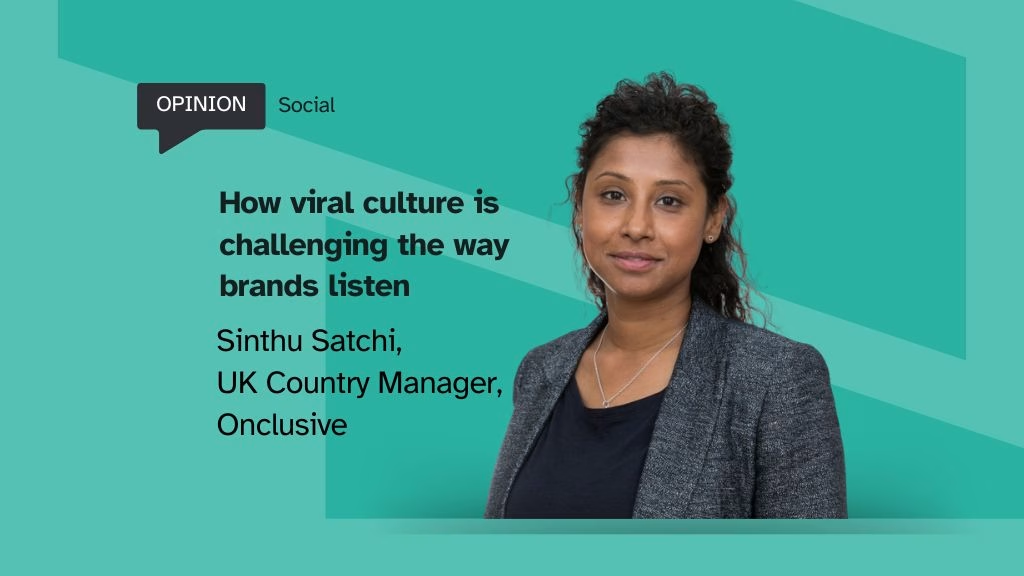
By Sinthu Satchi, UK Country Manager at Onclusive
Online communication has evolved into a complex ecosystem of irony, subtext, and cultural codes. National papers now must publish slang explainers and online jokes are as layered as onions. We’re constantly being reminded that how people speak is just as important as what they’re saying.
This evolved language landscape is posing a challenge to brands. With language rapidly changing and references snowballing, traditional brand monitoring can’t keep up, nor can businesses keep as tight control of their narrative. Just ask Jet2, whose ‘Nothing beats a Jet2 Holiday’ jingle gained virality as the soundtrack to holiday disasters. Not exactly what the marketing team had in mind.
That’s not to say all hope is lost for brands in the new world of viral culture. Get it right and you could enjoy the internet fame and presence of Duolingo, or expertly steer through a crisis like Astronomer. Yet this success relies on understanding that the rules of reputation management have been ripped up and rewritten. Brands that cling to traditional playbooks will find themselves increasingly out of step with a digital-native audience and risk seeing their customers disappear.
Traditional sentiment categories have broken down
In the past, monitoring brand sentiment was much smoother. The difference between positive and negative responses was fairly clear and brand sentiment was easier to measure. But now the complexity of online language challenges traditional sentiment categories. Heavily layered, shifting jokes, often laced with sarcasm and studded with slang, don’t fall into neat sentiment boxes. Brands must have the tools to interpret this complexity – yet too many don’t.
Social listening tools, that proactively capture quantitative and qualitative data to anticipate trends, sentiment, and consumption styles, are essential to making sense of the way consumers talk online today. Traditional social media monitoring tactics are also reactive: the conversation will have moved on, and reputational damage done, before a brand can formulate a response. In contrast, social listening tools that use automation features can be set up to create real-time alerts when peaks of negative sentiment, keywords, topics, or hashtags arise, allowing brands to nip snowballing problems in the bud.
A good social listening platform will not only leverage automation, but integrate seamlessly with other media monitoring tools, and be able to draw from platforms as varied as TikTok and LinkedIn. It’s also crucial that a brand’s social listening strategy isn’t siloed within their comms or PR department. Customer support teams, for instance, provide invaluable insight into customer attitudes and allow brands to form a holistic approach to reputation management.
Context is king
Viral culture is challenging the way brands listen but it’s also challenging the way they speak. Brands must find a way to connect personally with their audiences, while still recognising their status as businesses and the power that comes with it. Amazon recently got this painfully wrong when they reshared a woman’s engagement post on X to joke about the (small) size of her ring, in relation to their hugely popular Prime show, The Summer I Turned Pretty. The global giant, valued at over two trillion dollars, was roundly criticised and a post calling for their apology to include paying for the woman’s wedding received almost 100,000 likes.
Amazon’s mistake demonstrates the need for brands to be deeply aware of the context and community into which they’re speaking. Evolved online language has made striking the right tone more complex than ever for brands; incorporating the internet’s new language shouldn’t undermine brand integrity and jokes shouldn’t slip into jeering. Successful, strategic marketing understands that the tools of communication may have changed but brand identity and purpose must remain steadfast.
Crisis as content
Viral culture can be a minefield but it also offers unprecedented opportunities to navigate crises. Case in point is Astronomer, the US tech company whose CEO was infamously caught having an affair at a Coldplay concert. After the standard corporate damage control, Astronomer hired Gwyneth Paltrow as a “very temporary” spokesperson in a tongue-in-cheek campaign that turned crisis into cultural currency. It was a masterclass in understanding the new rules of viral culture, producing marketing gold by embracing the chaos rather than wrestling to control the narrative. What could have been a brand disaster was transformed into a triumph of promotion.
Astronomer made clear that the old rules of reputation management no longer hold. Online, digitally-adept audiences value genuine participation over carefully crafted messaging, and brands who are authentic and honest. Businesses who want to similarly shine, if the worst were to befall, must let go of traditional thinking that traps them in stale comms.
Complete coverage
All these examples show that modern reputation and brand management is fundamentally different to even a decade ago. Modern management requires a 360° integration of social listening, cultural understanding, and authentic engagement, across all interactions, if brands want to succeed. Technology becomes of vital importance here: for instance, allowing brands to crawl the internet and pick up and categorise mentions. Tech also enables brands to track opportunities, identifying internet topics and trends that can inform decision making and help with campaign optimisation. Such data, combined with professionals’ expert wisdom, is PR dynamite.
Viral culture has changed the way we communicate and, as such, it’s forced brands to change the way they listen and respond. Businesses need the tools and skills to understand online language in all of its complexity and be ready to embrace the rollercoaster of internet comms. White-knuckle control of brand narrative is neither possible nor preferable: brands must develop a communication strategy that is cohesive but not rigid, able to adapt to the rapid evolution and flow of the online world.