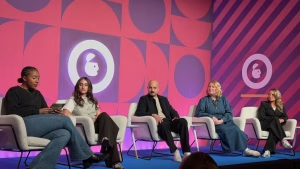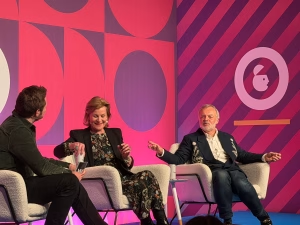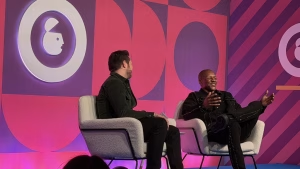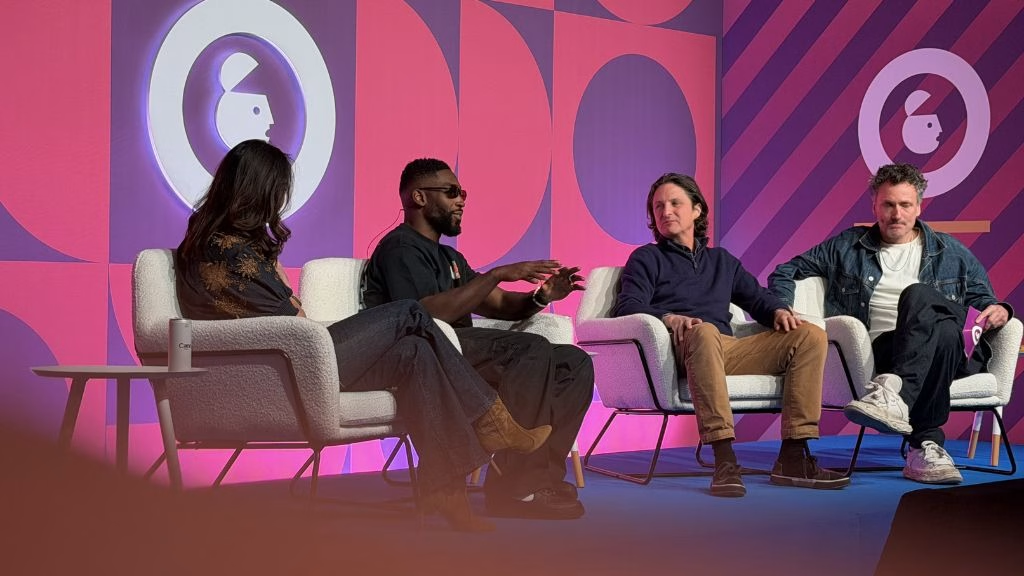
At Advertising Week Europe, a panel explored how brands can forge truly authentic partnerships, moving beyond transactional relationships to create lasting cultural impact. The session, featured musician and rapper Tinie Tempah, Stephen Greene, CEO and co-founder of RockCorps, and Cindy Tervoort, CMO of Tenzing, moderated by Thomas Kolster, author of Goodvertising.
Beyond the commercial break
Moderator Thomas Kolster opened the discussion by challenging the traditional advertising model, which he described as a “30 second prison sentence before the real content that they actually want to see”. He suggested that the industry has often failed to evolve, with much of the “doing good” in advertising feeling like a “hero trap” of hollow claims.
For Kolster, the secret to authenticity lies in moving away from the word “sustainability” and towards the word “care”, focusing on community and real connection.
Music, the panel agreed, is a powerful vehicle for this connection. Tinie Tempah highlighted how music is a “shared mission”, a “conversation between [the artist] on stage and all of the people in the crowd”. This inherent sense of participation is something brands often struggle to replicate.
Participation over attention
A central theme of the discussion was the shift from seeking attention to fostering participation. Stephen Greene explained the RockCorps model, where people “earn” a concert ticket by completing four hours of volunteer work. This model, he argued, creates an “intrinsic feeling” of agency and community that a simple ticket purchase cannot match.
“It’s about the brand inviting you to take agency in the place you live,” Greene said, describing the “magic” that happens when 15,000 people in an arena know that everyone else has also “taken some action together”. This approach transforms the brand from a mere sponsor into an “engine” for social change.
Tinie Tempah, who has been involved with RockCorps for many years, emphasised the “strong sense of community” it builds. He recalled his first RockCorps gig in Lavender Grove, where volunteers helped renovate a skate park. “It brings community together,” he said, saying that the experience allows for the building of relationships that “last a lot longer than the event itself”.
The power of a shared belief
Cindy Tervoort, CMO of Tenzing, shared how the natural energy drink brand is built on a core belief: “life is too good for bad energy”. This vision informs everything the brand does, from its clean-label product to its community-focused initiatives.
Tenzing works closely with local communities, such as the Sherpas at Mount Everest, to support environmental efforts like cleaning the “garbage trail” on the mountain. “It’s really built community out of it,” Tervoort explained, highlighting that authenticity comes from contributing to the things people already care about, whether that is climbing, hiking, or music.
She pointed out that brands often focus too much on their own message instead of asking, “why would people care?”. Authenticity, in her view, is about asking, “what can we contribute to the things people are already into?”.
Savvy audiences and the need for consistency
The panel also touched upon the increasing “savviness” of modern audiences. Tinie Tempah observed that “audiences are a lot more savvy and a lot more intelligent these days,” and they can quickly identify when a brand’s involvement is disingenuous. They are looking for “brands that have a purpose” and are “actually trying to make a difference”.
Consistency is also vital for maintaining authenticity. Tervoort noted that brands often change their approach every few years with a new brand director, but “people feel that”. Successful, authentic brands, like those built around a “real belief and a vision and a purpose,” maintain a consistent presence and message over time.
Moving from transaction to investment
Ultimately, the panel concluded that the most effective brand partnerships are those that move away from being “transactional” and start “investing in communities”. As Stephen Greene summarised, when a brand, an artist, and a charity all do “the thing that they are good at,” the result is a partnership where “the whole is much greater than the parts”. In this model, the brand is no longer just a sponsor but a vital participant in a shared cultural moment.