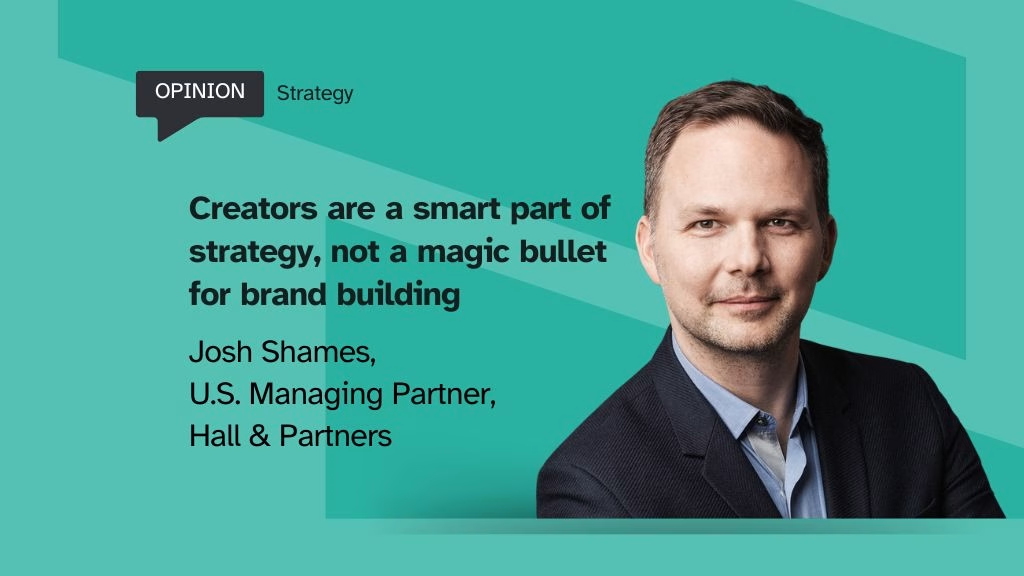
By Josh Shames, U.S. Managing Partner at brand research agency Hall & Partners
When Fernando Fernandez, CEO of Unilever, started beating the “big brand messaging is dead“ drum as the driving force behind the shift of its marketing strategy to social media influencers, marketers around the world took a collective intake of breath. The shift of budget is smart. After all, social media is where consumer attention and trust are moving as people spend more of their lives on online.
But don’t misinterpret the move “away from big corporate brand messaging” as permission to stop doing the hard work of brand building. Instead, it should be taken as a rally cry that brand building is anything from dead, it just needs new vehicles.
Brand may be a business’s greatest intangible asset, but it will only deliver business growth when marketers build a coherent communications strategy grounded in creativity and focused on being impactful, distinctive, and effective.
Once that’s in place, brand creators are a brilliant way to amplify brand ideas in an authentic voice.
Choose outcomes, not channels.
Brand growth cannot be achieved if your marketing budget is siloed into a single channel. Without the foundational and consistent beating of the brand story and meaning, influencer marketing is not anchored to anything meaningful. This is the road to a content treadmill and rising performance costs.
Mark Ritson has said that “integrated marketing communications is not just a theoretical nicety in a textbook. It is how effective advertising actually works.
Use creators where they’re uniquely strong
Creators bring depth, local relevance and trust. Regular followers can often trust influencers as much as they do friends and family for information as well as entertainment, feeling that they know them personally.
Trust is a particularly important part of brand building and even more so when consumers are increasingly suspicious of traditional corporate messaging and their trust in brands, according to the 2026 Edelman Trust Barometer, is declining.
Creators can also act as lightning rods to supercharge the emotional connection with your brand community alongside conversion to sales.
Set clear objectives
Protect the brand with clear objectives, finding the right network that aligns with the brand and supporting them with distinctive brand assets.
On Running, the Swiss-born brand with a strong U.S. following, is a standout example. Rather than relying on traditional sponsorship deals, On focused on long-term partnerships with elite and everyday athletes; runners, triathletes, and fitness influencers who genuinely live the brand’s ethos. Through authentic, athlete-led storytelling, On has built emotional resonance and trust, showing how influencer marketing can go beyond promotion to inspire real connection and community.
Not all partnerships are beneficial
Steer clear of influencers who are inauthentic or have a history of problematic behavior. Brands also have a responsibility to ensure their collaborations don’t contribute to the spread of misinformation or harmful content.
Even beloved and trusted celebrities can make mistakes, which is why it is important for brands to work with influencers who are careful when delivering their message. Microsoft surely felt they had a fool-proof partner when Oprah Winfrey shared her love of the Surface. The fact that she tweeted it from her Apple device undercut the message, though.
Measure what matters, not what’s easy
Robust measurement is critical. Don’t let codes and clicks become the scoreboard. Track whether creator activity is lifting mental availability, trust, preference, and pricing power… or quietly eroding them.
Linguistics analysis can be expanded to incorporate additional metrics such how the size or sentiment of social media chatter about relevant topics is shifting pre and post influencer engagement.
Influencers can deliver credibility, intimacy, and proof, but durable growth still requires brands to achieve broad reach, consistent brand meaning and distinctive brand assets.