Senior marketers believe AI is increasing both the carbon footprint and operational costs of their organisations, yet most brands still aren’t fully measuring its environmental impact, according to new research from climate technology and advisory platform 51toCarbonZero.
In a year marked by rapid AI adoption and increasing economic and regulatory complexity, the latest instalment of the Zeroed In: The Brand Marketing Pulse benchmark paints a picture of a sector that is becoming more sophisticated in how it approaches sustainability, but is struggling to convert intent into measurable action as new challenges emerge.
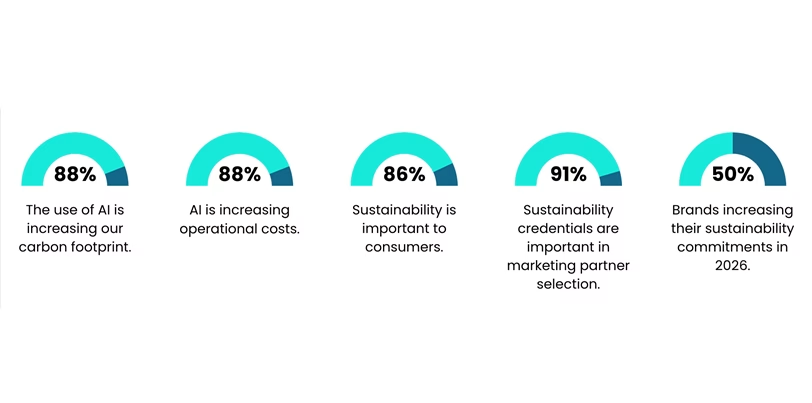
In the survey of 100 UK and 100 US senior marketers at large brands across multiple sectors – 88% said their organisation’s use of AI is increasing operational costs, while the same number (88%) said AI is increasing their carbon footprint. More than a third (35%) said AI is increasing costs significantly, while 42% said it is significantly increasing emissions.
Despite this near-universal awareness, only 36% of brands said they have fully measured the carbon impact of their AI usage. A further 56% said they had only done so partially, while 8% admitted they had not measured it at all.
The findings suggest that while AI is driving innovation at speed, organisations are still developing the frameworks and visibility needed to manage its environmental and financial impact effectively.
Richard Davis, CEO and co-founder of 51toCarbonZero, said: “AI is transforming marketing at pace, but this research shows brands are becoming increasingly aware that speed of execution alone doesn’t equal sustainability.
“With nearly nine in ten marketers acknowledging that AI is increasing emissions, the fact that only a third have fully measured its impact highlights a significant governance challenge. Businesses cannot effectively reduce what they are not measuring – and there is still work to do to build greater visibility around AI’s environmental impact.”
US marketers were notably more likely than UK peers to say AI is significantly increasing emissions, with 51% of US respondents selecting this option compared to 32% in the UK.
Sustainability becomes more embedded
The research also points to a broader shift in how organisations are approaching sustainability. Compared to last year’s findings, marketers reported significantly fewer structural barriers to sustainability action – suggesting sustainability is becoming more integrated into day-to-day business operations. In fact, 85% of respondents report significant to moderate progress towards reducing carbon emissions.
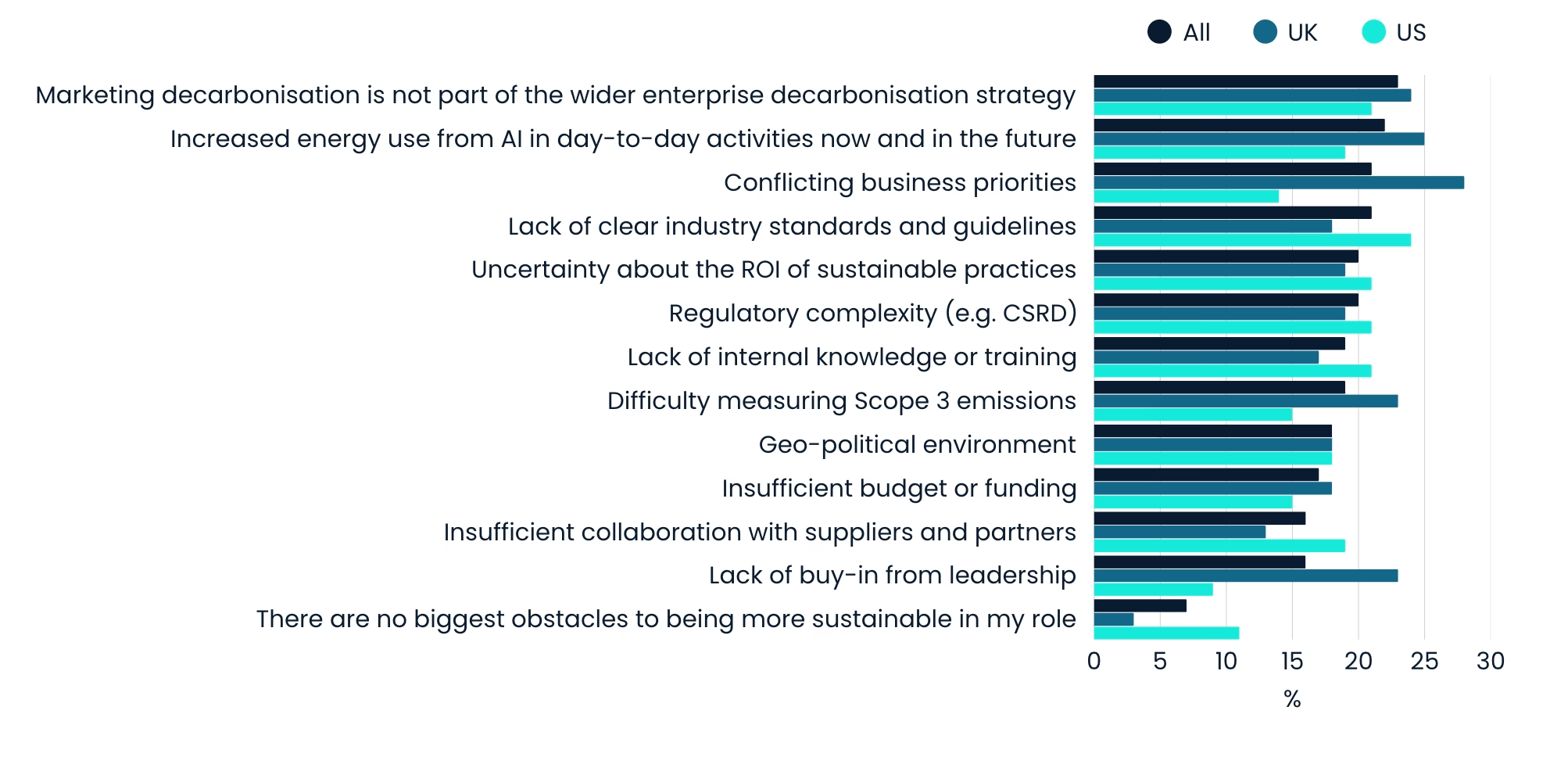
In 2025, 40% of marketers said marketing decarbonisation was not part of their wider enterprise sustainability strategy. This year, only 23% cited sustainability alignment as a major challenge. Concerns around insufficient budget have also fallen sharply, from 37% in 2025 to 17% this year, while uncertainty around the ROI of sustainable practices dropped from 37% to 20%.
At the same time, new challenges are emerging. Increased energy use from AI, regulatory complexity including CSRD, conflicting business priorities between growth and sustainability, and a lack of clear industry standards now rank among the top concerns for marketers on both sides of the Atlantic.
“This year’s results indicate a real shift in mindset,” added Richard. “Brands are becoming more operationally confident when it comes to sustainability. We’re seeing fewer organisations questioning whether sustainability matters, and more focusing on how to integrate it effectively into business decision-making.
“However, the rapid growth of AI is creating a new balancing act between innovation, operational efficiency, financial cost and sustainability goals.”
Sustainability remains commercially important
The findings also show that sustainability credentials remain commercially significant across the marketing ecosystem. More than nine in 10 respondents (91%) said sustainability credentials are important when selecting agencies, publishers, platforms or technology partners, with 41% describing them as ‘extremely important’.
Despite growing complexity, commitment to sustainability remains high. Half of all respondents said their organisation is increasing its commitment to sustainability in 2026, while only 4% said commitments were being reduced.
Neil Woodcock, Executive Chairman and co-founder of 51toCarbonZero, said: “The conversation around sustainability is clearly evolving. Last year, many marketers were still grappling with whether sustainability could realistically be embedded into business operations. This year, the challenge is increasingly about balancing sustainability ambitions with the rapid growth of technologies like AI.
“What’s encouraging is that sustainability is no longer being viewed solely as a reputational issue. It’s becoming a commercial and operational consideration that increasingly influences procurement, investment and long-term business resilience. The fact that budget concerns and strategic misalignment, which were among the biggest barriers just 12 months ago, have fallen so sharply tells us that the groundwork brands have been laying is starting to pay off.”
The research was conducted by Censuswide in June 2026. Respondents comprised 200 senior management or C-suite marketers in the UK and US working in in-house marketing departments at large brands.