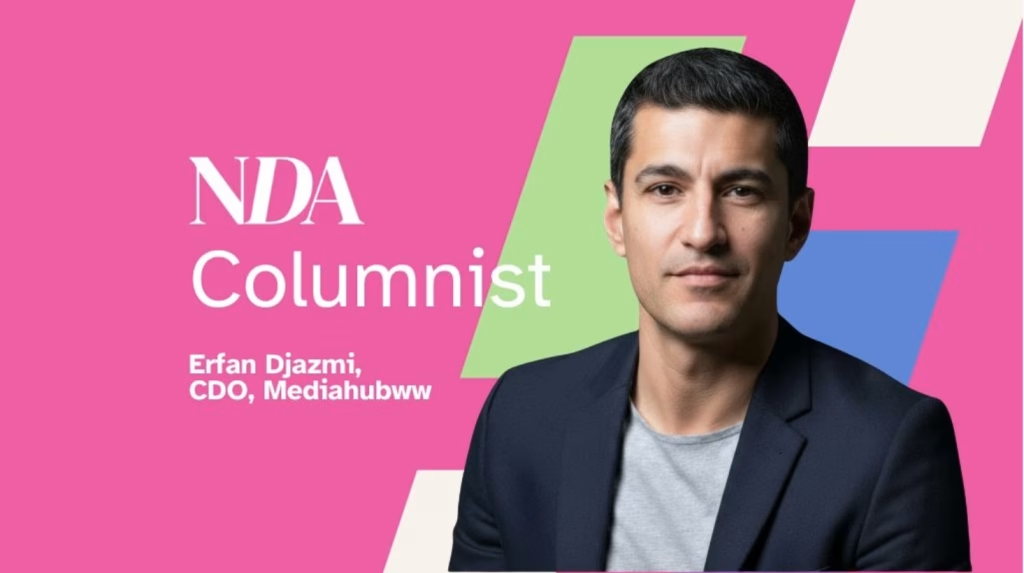
By Erfan Djazmi, Chief Digital Officer, Mediahubww
The pace of change in adtech has become fantastically and spectacularly different.
AI is already reshaping how traffic moves. Google’s AI Overviews now appear on more than 20% of UK searches. With 65% of searches now ending without a click, discovery is shifting from page impressions to answers.
From November 2024 to November 2025, the amount of Google traffic to publishers around the world fell by 33%. Publisher brands expect it to drop by another 43% by 2029. For example, rather than browsing 40+ web pages to book a holiday – comparing flights, hotels, car rentals, and activities – consumers can outsource the entire task to GPT Agent Mode.
This fundamentally changes the role of publishers. Content is no longer created primarily for humans, it’s created for agents. Publishers become a high-quality back office for AI systems that visit constantly, while people rarely do.
This is the Signal Web, where rich metadata and machine-readable structure become the currency, not pageviews. The battleground shifts from traffic to citations.
Fewer, cleaner, better
While open web pageviews are declining, programmatic advertising is exploding. Global programmatic spend is forecast to hit 400 billion in 2026 and could reach 1 trillion by 2030. The impression pool may well shrink, but the budget pool is on the rise.
And the money is moving upmarket. 91% of US programmatic display spend now flows through private marketplaces and programmatic direct deals, not open auctions.
At the same time, publishers are evolving their focus from quantity to quality with deeper first-party data infrastructure that creates audiences that are significantly more valuable than anonymous pageviews and deeper contextual signals. But this change needs upfront investment that many low to mid-tier publishers can’t afford, which could speed up consolidation instead of making access more democratised.
Enter AdCP, but with some caveats
This is where Ad Context Protocol (AdCP) comes into play. Launched in October 2025 with more than 20 founding members, AdCP automates advertising negotiation, planning, and optimisation, a much-needed disruption to the open web where plumbing is too complex and labour-intensive.
In simple terms, AI agents on the advertiser side express intent in natural language (“reach 25–40-year-old runners in the UK with high intent for performance running shoes”), and publisher agents respond with inventory, pricing, and contextual signals. The entire process happens at machine speed. AdCP wasn’t built for commoditised open web display. It was designed for premium inventory, direct deals, and non-display multi channel and walled-garden APIs.
In theory, AdCP levels the playing field. With a single implementation, even niche publishers could connect to the full buyer ecosystem. This could enable a new generation of publishers built for AI from day one, with publishers that provide the signals, structure, and metadata AI systems need.
The first sell side + agency-client enabled AdCP test from PubMatic + Butler/Till campaign for Clubtails launched in December 2025. While exciting, the test was – beyond the hype – still manual. Three fundamental challenges will determine whether AdCP becomes infrastructure or remains a niche tool.
The three tensions
First, adoption. Google and Meta control over half of global ad spend and operate closed ecosystems optimised for their own AI systems. If they decline to participate or build competing protocols, AdCP risks serving only a minority of inventory.
Second, brand safety. When AI agents negotiate placements at machine speed, who validates appropriateness before a kids brand appears beside synthetic disinformation? Trust mechanisms must scale with automation.
Third, privacy. AI agents require rich signals – user intent, behavioral patterns, contextual metadata – to function effectively. But European regulators are already questioning whether this complies with GDPR’s purpose limitation principles and diluted signals collapse the value proposition.
These aren’t hypothetical concerns; they’re the same challenges that derailed previous standardisation attempts. Protocols don’t succeed because they’re elegant or exciting, they succeed because they solve power imbalances or fail because they threaten them. Which exposes a fourth tension: who controls the automation.
Maintaining human oversight of the technology and AdCP is crucial to safeguard ecosystem value exchange, ensuring automation serves strategic, human-led goals instead of undermining the interests of publishers, advertisers, and users.
What becomes of the web
The web is changing from a place humans browse to infrastructure AI navigates, towards a Signals Web. This shift is happening regardless of any single protocol’s success.
Publishers who treat machine readability as optional will find citations in someone else’s answer. Those who build for it with structured data, clear taxonomy, consented signals may discover that fewer visitors can mean more valuable business.
The real question isn’t whether the web shrinks, it’s what it becomes. The early signals suggest something leaner, more structured, and far more valuable per impression. Getting there requires solving for power, privacy, and trust. That’s the harder problem and the one that will determine which protocols, and which publishers, thrive.
One thing is for sure: a portal into the future of advertising is well and truly open.