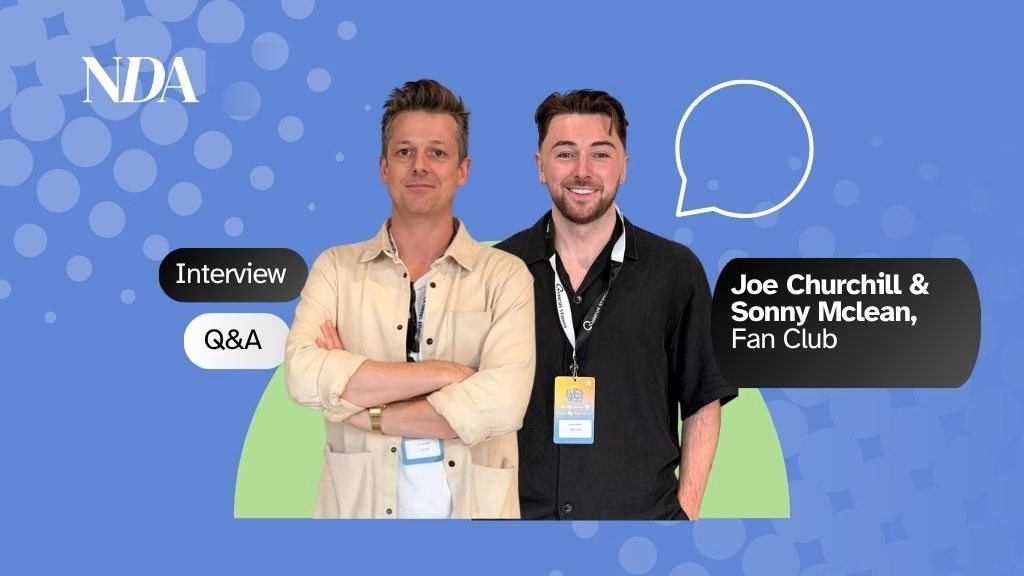
Digital entertainment agency Fan Club was founded last year by former BBC, Sony Pictures and Channel 4 executives Joe Churchill and Sonny Mclean. Fan Club has launched to help brands create and own entertainment formats designed for social platforms, developing entertainment IP with creators and producing social-first shows and formats for brands.
NDA spoke with Churchill and Mclean to find out more…
What led you to launch Fan Club?
Joe Churchill (JC): My background started in traditional TV, with roles at the BBC and Sony Pictures, before I moved into digital about 10 years ago. Over time I saw branded entertainment becoming a bigger part of the conversation, while editorial and content-led thinking was becoming more important for advertisers. I then set up a digital production company, before returning to broadcast through Channel 4, where I oversaw social branded entertainment and first worked closely with Sonny. That experience showed us there was a real gap in the market: brands wanted to build their own audiences on YouTube and social platforms, but there weren’t many end-to-end partners helping them do that properly.
So what is Fan Club in simple terms?
JC: We are a digital entertainment agency, and our mission is to turn brands into broadcasters. We bring the full partnerships model brands would usually get from a media owner, but we apply it to their own channels. That means we develop the content, create the channel identity if needed, produce the work, distribute it, and help grow audiences over the course of the campaign. The difference is that the brand doesn’t just get reach and metrics — it also builds an audience it owns, plus valuable insight, community and first-party data.
Why is this the right moment for the business?
JC: The market has moved. Brands increasingly want to behave like broadcasters, and many already understand that the future is on YouTube and social platforms. The opportunity is to help them do that with proper editorial craft, premium production values and a real audience-growth strategy. That’s where Fan Club sits — combining broadcast-quality making with a deep understanding of how social audiences behave.
We’re about eight months in, and we’ve already gone live with our second major campaign, Russell Hobbs. At this stage the priority is making great work, proving the model and getting as many new clients as possible to show the value of building your own audience on your own channels.
What kind of brands are best suited to working with Fan Club?
Sonny Mclean (SM): Naturally, people think of millennial and Gen Z brands first, because they’re already comfortable with YouTube and social as core channels. But we’re seeing audiences mature across platforms, and older audiences are spending more time there too. That means there’s an education piece for brands that haven’t prioritised social yet — because a lot of their audiences are already there, and there’s a huge opportunity if they start to invest in that space properly.
There’s a tendency to think this is only for youthful, digitally native brands, but we wouldn’t want to exclude anyone. The platforms are maturing, the audiences are broadening, and almost every brand can benefit from building a stronger direct relationship with consumers through entertainment.
What’s the biggest misconception brands have about branded entertainment?
JC: One of the biggest misconceptions is that the product has to be pushed hard for the content to work. We don’t think that’s true. Good creative wins. Audiences are highly sophisticated now — if the entertainment is strong, they’ll engage with it regardless of whether it comes from a broadcaster, a creator or a brand. The key is value exchange: if people are getting great content, they’re much more open to the brand being part of it.
Equally, audiences are not afraid of sponsorship. What matters is the way it’s done. We’re seeing great examples in football podcasts and other creator-led formats where brand partners are integrated in a way that feels natural. That’s the model we believe in: prioritise entertainment over advertising, and the brand message lands better because the audience is already engaged.
SM: In social and publisher-led environments, the question used to be how you prove the return on a brand partnership. When brands speak directly to their own audiences, the ROI becomes much easier to demonstrate because everything is happening in one place. They can take audiences through a clearer journey, from engagement to purchase, and that makes the business case much stronger.
What’s your advice to brand marketers for the year ahead?
JC: Don’t be afraid to lean into your own editorial instincts. Great creative matters more than forcing product messages into every frame. If you get the content right and create genuine entertainment, audiences will stay with you and the brand can still communicate effectively.
SM: Brands now have the ability to build direct relationships with consumers in a way they simply couldn’t 10 or 15 years ago. The best way to do that is through entertainment and through the platforms where people spend their time. So the advice is simple: use that opportunity and try to win the audience over with content that feels worth their attention.