By Gino Cettina, UK Sales Director, JOLT
The UK just hit two million battery electric cars on the road, and the pace is accelerating. April 2026 sales were up 59% year on year, the ZEV mandate now requires a third of new car sales to be zero emissions, and with petrol prices climbing amid Middle East instability, even with the government freezing fuel duty, the pressure points are stacking up.
Autotrader’s seen a 28% jump in new EV enquiries since the Middle East conflict began, with nearly one in five used car searches now electric, the highest on record.
Our own data tells the same story. In JOLT’s latest UK customer survey, 82% say rising fuel prices have reinforced their decision to go electric, and 62% report friends and family asking them about making the switch. This isn’t niche anymore. It’s mainstream momentum.
But here’s where it gets relevant for media planners and advertisers. The real opportunity isn’t the cars. It’s what happens when those drivers stop, plug in, and stay.
From modelled reach to measured outcomes
OOH measurement has come a long way. Route data, mobile location signals, and smarter planning tools have moved the industry forward. But as brands demand more accountability, there’s an opportunity to go further.
At JOLT, we’re adding a layer of confidence that traditional roadside formats haven’t been able to offer. Verified, first-party behavioural data from a captive audience that returns again and again.
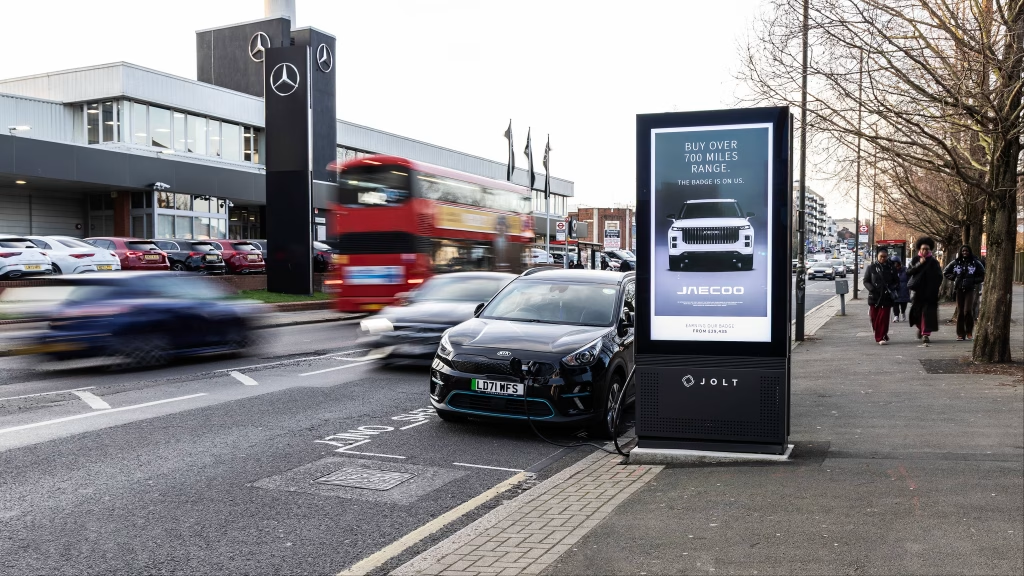
Our D6 screens deliver roadside reach to passing traffic – much like any DOOH format. But the difference is what happens at the charger itself. This is where a second audience emerges: verified, consented, and measurable at the individual level.
Sixty-four per cent of our customers charge at least once a week. Thirteen per cent charge daily. Average dwell time? Fifty-eight minutes. That’s not a passing glance at a poster. That’s someone parked up, phone in hand, actively engaged. Whether they’re shopping nearby, grabbing a coffee, or scrolling through our app, they’re present and reachable.
When drivers charge, they use the JOLT app to start and monitor their session. In-app engagement averages 3 minutes 40 seconds, with a click-through rate of 1.8% compared to an industry average of around 0.4 – 0.6% for display. And 85% of our users say they’d take up a brand offer or discount during a charging session.
That’s not passive exposure. That’s purchase-ready attention.
Our campaign data backs up the story. A recent campaign for an automotive brand delivered a 99% uplift in dealership visits, and a national retail brand saw an 83% increase in store visits during their campaign. And it’s not just footfall.
Our survey data shows 90% of JOLT users spend money in local shops and businesses while they charge, with almost half spending over £10 per charging session. When our “Stop & Shop” offering launches in July, we’ll track that impact down to merchant level, closing the loop between ad exposure and transaction.
An audience worth reaching
Around 18% of JOLT’s users plan to change their car within the next 12 months. Among those with a petrol or diesel car at home, 57% plan to replace it with an EV within three years. Independent YouGov research backs this up: 37% of UK consumers planning to buy a new car are now considering electric.
Independent research by Norstat found campaigns running across JOLT’s network delivered a 30% uplift in purchase intent, a 12% increase in brand awareness, and a 12-point lift in sustainability perception. Eighty-four per cent of respondents said the advertising stood out from other formats nearby.
Where the market’s heading
This isn’t happening in isolation. The latest AA/WARC Expenditure Report shows UK ad investment grew 6.4% year on year to reach £46.7 billion, but the fastest-growing channels all share one thing: measurability. Retail media surged 30.5% in Q4 alone. Addressable TV grew 37%. The common thread is verifiable audience data and closed-loop attribution. That’s exactly what infrastructure-led DOOH is now bringing to out-of-home.
The funding loop that makes it work
JOLT deploys charging infrastructure at zero cost to councils and landowners, funded by advertising revenue. Drivers get up to 7 kWh of complimentary energy per day, roughly 30 miles of driving. It’s the kind of model the Ofgem Review is calling for: commercial innovation that funds essential energy infrastructure without public subsidy, while delivering measurable value to brands.
As adoption accelerates, the loop reinforces itself. More drivers need charging. More sessions generate verified data. Better data attracts ad investment. Ad revenue funds more infrastructure. Our Q1 2026 figures back this up: new user registrations grew 36% year on year, with March delivering our strongest month on record.
For an industry asking how OOH can deliver digital-style precision without surveillance or invasive tracking, the answer might already be on your local high street. Plugged into a charger.