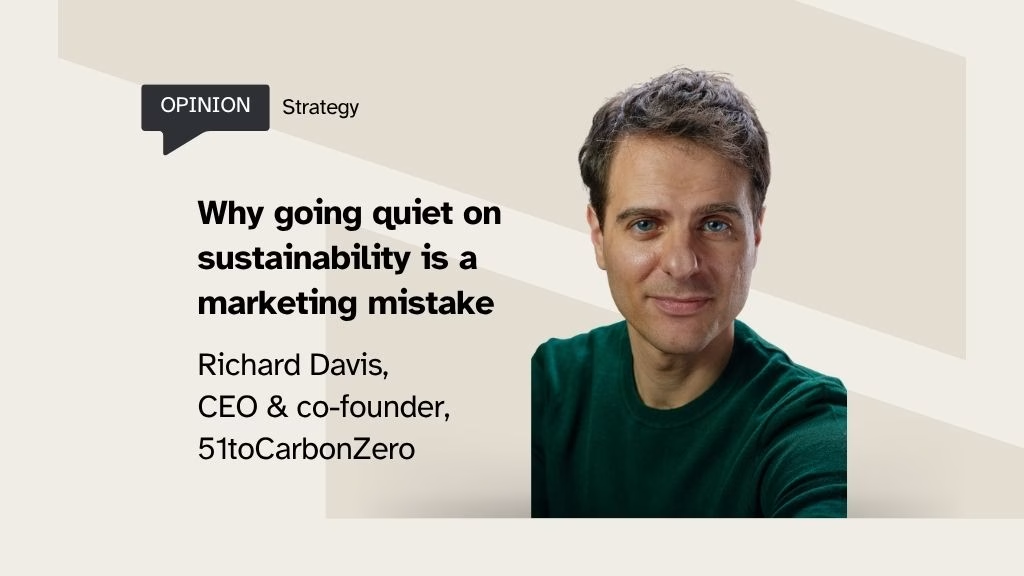
by Richard Davis, CEO and co-founder of 51toCarbonZero
At Cannes Lions this year, one thing stood out to me. Climate barely featured in the keynote sessions or on the main stages, yet it came up repeatedly in conversations throughout the week. With Cannes taking place during a European heatwave and school closures in parts of the UK and France, there was a growing sense that one of the biggest long-term challenges facing businesses deserved far more attention than it ultimately received.
That disconnect isn’t unique to Cannes. It’s happening inside brand marketing teams too.
Companies haven’t stopped investing in sustainability. They’re still setting science-based targets, measuring emissions and working through the operational challenges of decarbonisation. What has changed is their willingness to talk about it.
Marketers are increasingly being asked to downplay sustainability messaging or remove it from campaigns altogether. The fear of greenwashing accusations, political polarisation and ESG backlash has created a new wave of what has become known as “greenhushing” – where organisations with genuine progress to report choose to stay silent instead.
The cost of staying quiet
The instinct is understandable. I also think it’s a mistake. A recent South Pole study found that 81% of companies believe communicating their climate goals benefits the bottom line, yet 58% admit they are deliberately saying less. That’s a remarkable contradiction. If sustainability contributes to customer trust, commercial performance and competitive advantage, choosing not to communicate it doesn’t reduce risk – it creates a different one.
The most important point is that corporate climate action hasn’t stalled. By the start of 2026, more than 10,000 companies had validated net-zero targets through the Science Based Targets initiative, almost 40% more than the previous year. A 2025 EcoVadis report also found that, despite the current US political environment, companies were quietly maintaining or boosting sustainability investments, with 65% viewing supply chain sustainability as a competitive advantage.
The work is continuing, but the communication isn’t.
Sustainability isn’t a finished campaign
Marketing has always been about telling stories. But many organisations still approach sustainability as though they need a perfect ending before they can start telling one. That works for product launches. It doesn’t work for sustainability.
Unlike a finished product, sustainability is an ongoing process. Regulations evolve, supply chains change, methodologies improve and targets shift as organisations learn more. Customers don’t expect perfection, but they increasingly expect honesty about progress. For marketers, that’s a much more achievable brief than trying to tell a flawless sustainability story.
Instead of waiting until every target has been achieved, marketers should focus on showing the work. Explain what has been accomplished, acknowledge where progress has been slower than expected and be transparent about what’s happening next. Credibility comes from openness, not from presenting a flawless story.
Trust is built through transparency
Oatly provides a good example. Its latest Sustainability Plan shares successes alongside setbacks. The company reports reducing water withdrawal, eliminating production waste to landfill ahead of schedule and sourcing renewable electricity across its operations. It also openly discusses where emissions increased, explains why, and outlines what it plans to do differently. The result isn’t a perfect sustainability story. It’s a believable one.
In crowded markets where products and services are increasingly similar, trust becomes a competitive differentiator. Sustainability increasingly influences customer perception, employer brand, procurement decisions and investor confidence. Staying silent doesn’t make those expectations disappear. It simply leaves space for competitors to shape the conversation instead.
From working with organisations across multiple sectors, we’ve seen this tension become increasingly common. Marketing teams are often caught between wanting to communicate genuine progress and concerns about saying the wrong thing. But there is a middle ground between greenwashing and greenhushing.
It’s called transparency.
Silence is still a marketing decision
Brands don’t need to make bigger sustainability claims. They simply need to communicate progress honestly, provide evidence where possible and acknowledge that the journey isn’t always linear.
If Cannes reflected anything this year, it’s that the conversations marketers are having privately about sustainability are often much richer than the talks taking place publicly, and there is a clear impetus on the marketing industry here to close that gap.
Where sustainability is concerned, silence isn’t a neutral position – it’s a marketing decision. And increasingly, it’s the wrong one.