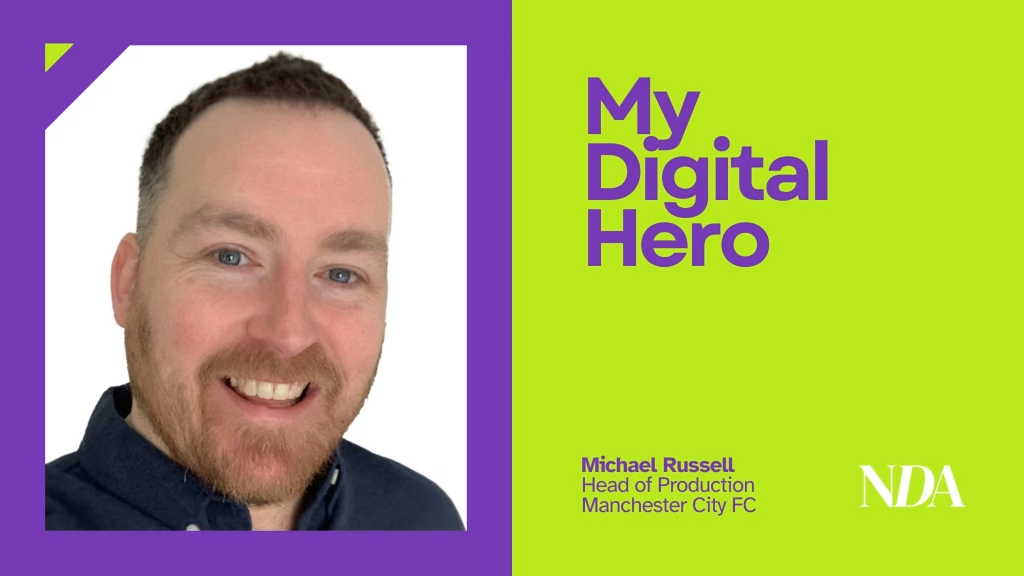
Michael Russell is a seasoned producer and digital content leader who has spent more than 17 years at City Football Group. He has played a pivotal role in building Manchester City’s global content ecosystem from the ground up. He now oversees City+ and YouTube, City Studios’ two biggest digital revenue drivers, as well as the non-live matchday content team and the Esports and Gaming division (17 people altogether). Having been involved in esports for more than a decade, he is focused on legitimising the space within the world of football and exploring new ways to capture and harness fandom.
Here, Russell names the people who have inspired him most in his career as a digital marketer…
Who is your digital hero?
My digital hero isn’t one person, it’s the Sidemen as a collective. We’ve worked directly with JJ (KSI), Simon (Miniminter) and Harry (W2S) over the years, and I’ve also worked with Manny and Cal (Calfreezy) from the wider “Sidemen Cinematic Universe”. Seeing them up close gives you a different appreciation for what they’ve built.
What I find most inspiring is how far they’ve taken it. They didn’t settle for being “just YouTubers”. They went from bedrooms and webcams to running an entire digital entertainment ecosystem from studios, clothing lines, nationwide food brands, stadium charity matches, long-form productions and genuinely global businesses. That kind of ambition goes way beyond any platform. I’m a massive boxing fan. My 15 year old son has spent his entire life watching me scream at the TV whilst watching my favourite fighters. The first time he ever asked to sit down and watch a fight was when JJ fought Joe Weller. He’s been hooked since.
Crucially, they understood they couldn’t do it alone. They surrounded themselves with talented people, producers, editors, directors, project managers, and built a proper production culture around their ideas. That’s the part people underestimate. Yes, the Sidemen are self-made, but they’re also smart enough to trust teams, empower specialists and evolve their operation as it scaled. Creativity got them started, but collaboration kept them growing.
As someone who’s spent 20 years in media, their journey is energising. It’s a reminder that if you have the right ideas, the right people and the right attitude, you can build something far bigger than anyone expects. They’ve shown that digital storytelling has no ceiling when you combine ambition with the humility to build a strong team around you.
What have they done to win hero status in your eyes?
For me, they’ve achieved hero status because they turned consistency, creativity and friendship into one of the UK’s most successful digital brands. They proved that ideas matter more than budgets, and that personality matters more than polish. Their early videos were raw, chaotic and human, but they always had a story at the centre, and that instinct has stayed with them as they’ve scaled.
What sets them apart is their ambition to keep evolving. Most creators plateau; the Sidemen kept building. They created formats people return to every single Sunday, expanded into events, businesses and charity matches, and kept raising the production value without losing their identity. And having seen some of them at work, you understand quickly that this is intentional. There’s a huge amount of discipline, planning and team effort behind what looks spontaneous. They’ve turned digital creativity into a proper organisation, and that’s no small thing.
How has their heroism helped drive digital?
They’ve changed expectations. The Sidemen showed that digital content can be long-form, narrative-driven and genuinely event-based, something people sit down to watch, not just scroll past. They helped shift the industry from quick hits to proper entertainment. Their Sunday videos are essentially digital TV shows, produced on their own terms.
They’ve also championed the idea that creators can build their own infrastructure rather than relying on traditional media. Studios, editorial pipelines, post-production teams, partnerships, product lines, they built it all themselves. That’s influenced how brands, clubs and production companies think about digital. They’ve made it clear that creator-led operations deserve to be taken seriously, and the ripple effect has changed the entire landscape.
What’s the biggest challenge in digital we need another hero to solve?
The biggest challenge now is protecting authenticity as the industry becomes more polished, more algorithm-driven and more commercially pressured. As digital matures, there’s a real risk that everything starts to feel the same, safe, predictable, optimised for “performance” rather than meaning.
We need new heroes who put story, personality and trust back at the heart of digital. People who aren’t afraid to take risks, try new formats, and be human. We need leaders who value their teams, build sustainable creative cultures, and don’t lose the spark that made audiences care in the first place. The Sidemen succeeded because they kept their voice and built the right people around them. The next hero will be someone who does the same in a much noisier, more demanding landscape.
What is your most heroic personal achievement so far in digital?
It’s helping to build City Studios into what it is today. When I started, we were working on small-scale ideas with small-scale resources. Over more than 15 years we’ve grown into a team that produces global short-form content, documentaries, long-form storytelling, live shows and everything in between. What makes me proud is that we’ve managed to scale without losing the heart of what makes great content work: people, personality and purpose.
Being part of a creative team that has remained grounded, collaborative and ambitious over such a long period is something I’m really proud of. City Studios has been trusted to tell stories at the highest level of football, we’ve adapted constantly, and we’ve continued to care about the craft. That, for me, is the achievement, building something together that still feels human.