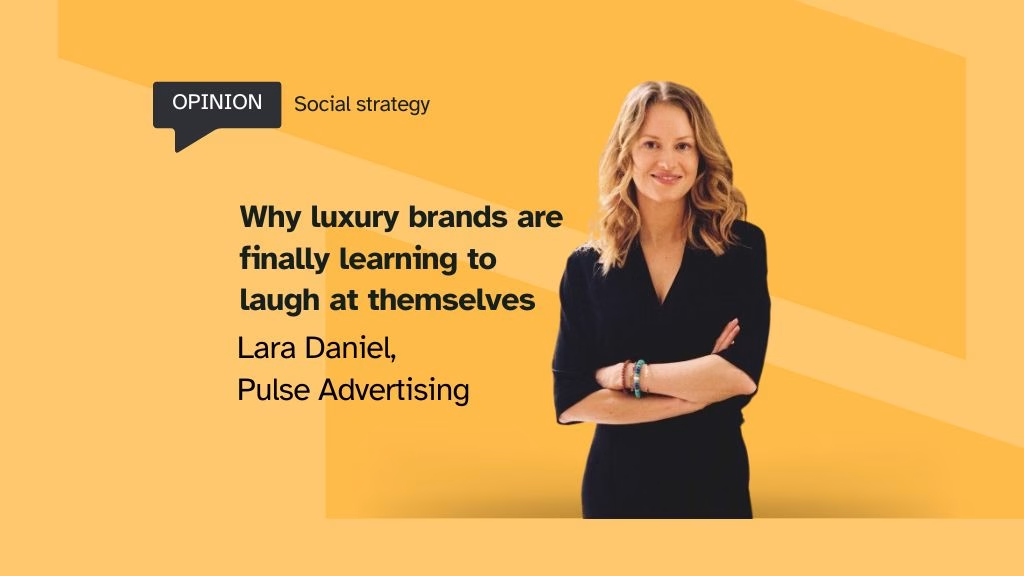
By Lara Daniel, Co-Founder and CEO of Pulse Advertising
For decades, luxury brands operated under a sacred rule: maintain mystique at all costs. The formula was predictable – moody cinematography, unattainable glamour, and a communications strategy that kept consumers at arm’s length. But scroll through social media today, and you’ll find Burberry posting cheeky postcards and Loewe turning fashion into cultural commentary. The luxury sector is undergoing a profound shift, and humour is leading the charge.
Burberry’s “It’s Always Burberry Weather: Postcards from London” campaign marks a turning point. Instead of the brand’s typical heritage-heavy messaging, they’ve embraced playful, self-aware content that acknowledges the British obsession with weather while celebrating London’s eccentricities. The campaign doesn’t undermine the brand’s prestige. Rather, it demonstrates confidence – the kind that only comes from truly understanding your cultural position.
This isn’t accidental. Luxury brands are finally recognizing what we’ve seen in our work with global consumer brands: social media rewards authenticity over aspiration. The platforms themselves are designed for conversation, not monologue. When heritage brands try to maintain the traditional luxury distance on social media, they don’t come across as exclusive – they come across as irrelevant.
Loewe has taken this evolution even further. Under Jonathan Anderson’s creative direction, the brand has transformed its social media into a masterclass in cultural fluency. Their content strategy blurs the lines between high art and internet culture, mixing Renaissance paintings with contemporary absurdism. It’s smart, unexpected, and deeply shareable. More importantly, it positions Loewe not as a luxury brand speaking down to consumers, but as a cultural insider inviting them into the conversation.
The strategic brilliance here lies in understanding that humour on social media isn’t about being funny for funny’s sake. It’s about demonstrating cultural intelligence. When Loewe posts content that plays with art historical references or internet memes, they’re showing they understand the visual language of their audience. When Burberry leans into the stereotypes of British weather, they’re acknowledging shared cultural references rather than pretending to exist above them.
This shift reflects a broader truth about how luxury operates today. The next generation of luxury consumers – particularly Gen Z and younger millennials – have fundamentally different expectations. They grew up with social media. They can spot inauthenticity instantly. They value brands that feel culturally relevant over those that simply signal wealth. For these consumers, a brand that takes itself too seriously doesn’t command respect – it invites ridicule.
The metrics support this approach. Content with personality consistently outperforms traditional luxury advertising on social platforms. Campaigns that invite participation generate exponentially higher engagement than those that simply broadcast. Brands that demonstrate cultural awareness build communities, not just customer bases.
But there’s a fine line to navigate. The luxury sector’s embrace of humour only works when it comes from a place of confidence rather than desperation. Burberry can make jokes about British weather because the brand has 168 years of heritage behind it. Loewe can play with internet culture because their creative vision is unquestionably strong. The humour enhances rather than undermines their positioning.
This is where many brands stumble. They see competitors embracing humour and attempt to replicate it without understanding the strategic foundation required. Humour without substance becomes cringe. Playfulness without craft becomes cheap. The brands succeeding in this space aren’t abandoning luxury positioning – they’re evolving it for platforms where traditional luxury marketing simply doesn’t work.
The implications extend beyond social media strategy. This shift signals a broader redefinition of what luxury means. Exclusivity is no longer about distance – it’s about insider access. Prestige is no longer about unattainability – it’s about cultural relevance. The brands that understand this are the ones building loyalty with the consumers who will define luxury for the next generation.
Burberry and Loewe aren’t just experimenting with new content formats. They’re pioneering a new approach to luxury communication that recognizes social media for what it is: a cultural conversation where brands can either participate meaningfully or risk irrelevance. The choice to embrace humour isn’t a departure from luxury values. It’s an acknowledgment that in 2025, cultural intelligence and authentic engagement are the new markers of prestige.
The question isn’t whether luxury brands should embrace humour on social media. It’s whether they can afford not to.