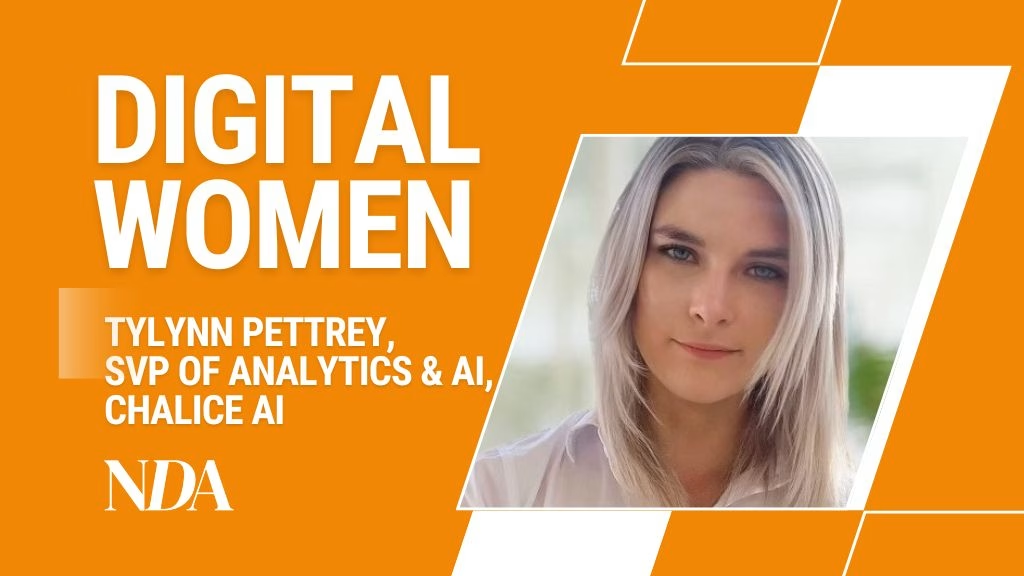
In our latest Digital Women interview, New Digital Age speaks with Tylynn Pettrey, SVP of Analytics & AI at Chalice AI.
Pettrey specialises in applying the latest data science techniques to large, complex data sets. After earning a master’s degree and completing the coursework toward a PhD in applied mathematics, she transitioned to Chalice in 2021, where she leads the data science team…
What are the biggest opportunities for women in your sector of the digital industry right now?
The shift toward AI-driven decisioning is creating roles that didn’t exist five years ago, and those roles don’t fit neatly into the old boxes such as “technical” or “strategic.” That’s a huge opportunity because the skill set that matters most right now isn’t purely one or the other. People who will have the most impact aren’t just the ones who can build the models. They’re the ones who understand why a model is making a decision and whether that decision is the right one for the business. That’s a judgment layer, and it requires fluency across data, strategy, and communication simultaneously. It’s a capability that gets developed by people who’ve had to earn credibility across multiple functions, and there are a lot of women in this industry who have done exactly that.
The organisations winning with AI aren’t necessarily the ones with the most engineers. There’s a real opportunity for women to influence not just how marketing performs, but how the underlying technology evolves, especially as companies rethink how decisions get made across the ecosystem.
What are some of the challenges that you still see for women in the industry? Any advice as to how to overcome those challenges?
One of the ongoing challenges is visibility, particularly in more technical or emerging areas like AI, where expertise is still being defined. It can sometimes feel like you need to prove credibility before being invited into the conversation. The most effective way to navigate that is to step into those spaces early, even if you’re still learning, and contribute a point of view. Progress tends to come from participation, not perfection, and building a track record of impact over time. Given the emerging skills, I’ve also seen a shakeup in the technical space. People who have been doing this for years are not always keeping up with the newest technology and its impact. It’s a great opportunity for your voice to shine if this is an area of expertise for you.
What support structures and organisations are most important and effective to you as a woman in the digital industry?
Peer networks and conference exposure have been the most valuable, especially those that are informal and built on shared experience rather than hierarchy. Having access to people who are navigating similar challenges creates a space for honest conversations and practical advice. Mentorship is important, but so is sponsorship, having leaders who actively advocate for your growth and create opportunities for you to step into larger roles.
What is the biggest misconception (a) about women in the digital industry, and (b) by women in the digital industry?
A common misconception about women in the industry is that they are less technical or less suited for data-driven roles. In reality, the work today requires a mix of analytical thinking, adaptability, and strategic perspective, and women are contributing across all of those areas. Women excel technically all the time and provide much needed diversity of opinion.
A misconception women sometimes hold themselves is that they need to feel fully prepared before stepping into new opportunities. In fast-moving areas like digital and AI, very few people have all the answers. Being willing to step into evolving roles, even when there’s a learning curve, is often what accelerates growth the most and presents the best opportunities.
What one piece of advice would you offer a woman starting in the digital industry today?
Focus on building a point of view, not just a skill set. The industry is changing quickly, and technical tools will evolve, but the ability to interpret change, connect ideas, and speak confidently about where things are going is what sets people apart. Don’t wait to have a perspective, develop it as you go.