The European Association of Communications Agencies (EACA) has announced a three-pronged programme to improve standards in influencer marketing as the channel attracts an increasing share of marketing budgets.
The drive will seek to improve best practice among agencies and brands, share knowledge more widely about the rapidly changing regulatory requirements and encourage more creators to take training on #ad declaration rules.
It will be led by a new Influencer Marketing Council with a brief to create common standards and identify challenges that run across the channel. The council will be chaired by Thomas Angerer, co-founder & Chief Creative Officer of BeInfluence Europe, and other members of the committee will include: John Harding Easson, Global Influence Growth & Client Lead of Influential (Publicis); Ainoa Brenes, Global Head of Influencer Marketing of Samy; Emma Odendaal, EMEA Head of Influence of Dentsu; Miguel Vara, Head of Content Studios of McCann; Iulia Boncan, Global Social Media Manager of MCI Group; and Steffen Pferr, Business Director Social Media & Digital of Innocean.
To aid improvements in best practice, EACA has published a guide for brands, agencies and creators. The Influencer Marketing Rules Across Europe – A Practitioner’s Guide for EACA Members guidelines will allow anyone working in influencer marketing to stay on top of EU legislation, national requirements and best practice, bringing together the key legal requirements, practical guidance and country-specific developments in one easy-to-use resource.
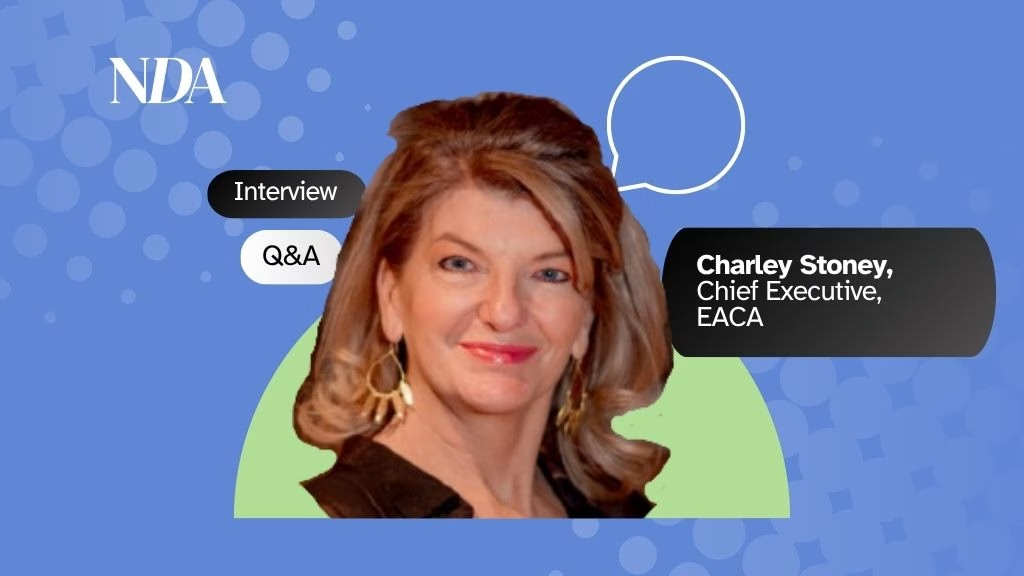
New Digital Age spoke with Charley Stoney, CEO of EACA, to find out more…
Tell me about the EACA and its goals.
The EACA has been around for decades. It was established to unify the European communications industry through the national associations. Organisations such as the IPA in the UK, GWA in Germany and AACC in France are all members, so we began as what I call ‘the association for associations’ – the mothership.
Today we work across 33 European regions, not just the EU. We identify the issues that matter most to different parts of the agency world – whether that’s creative agencies, media agencies, healthcare communications or, now, influencer marketing – and develop projects, initiatives, awards and guidance that benefit those sectors.
A big part of our role is sharing best practice. If one agency or association develops something that works really well, we encourage others to ‘steal with pride’. It’s a collaborative organisation where members learn from one another for the benefit of the wider industry.
Being based in Brussels also means we act as the bridge between the communications industry and European policymakers. We produce practical guidance on issues such as AI transparency, political advertising and accessibility, distilling complex legislation into straightforward guidance that agencies can actually use. We’re also regularly asked by the European Commission to recommend industry experts for specialist working groups, whether that’s political advertising, brand safety or other emerging issues.
Why the new focus on influencer marketing? What prompted this latest programme of activity?
To be honest, we probably could have established the council last year, but we wanted to wait for the market to mature. We wanted the major influencer agencies to have a genuine European footprint, rather than just one or two offices, so that they could really benefit from collaborating with one another.
At the same time, it became obvious that influencer marketing was becoming an increasingly important part of mainstream advertising. Looking at the Effie Awards, none of the winning campaigns in 2023 included an influencer marketing strategy. In 2024 it was around 7%, and by last year it had risen to around 20%. The direction of travel is very clear.
We’re also seeing major brands such as Heineken and L’Oréal committing significant budgets to content creation. As influencer marketing grows, so do the risks around poor practice, consumer complaints and political scrutiny.
From our perspective, it was important to bring influencer marketing firmly into the wider advertising industry, ensuring it follows the same advertising codes, self-regulatory principles, transparency requirements and EU policies as every other discipline. Equally, the influencer agencies themselves wanted to come under the EACA umbrella because it gives them a stronger and more established position within the advertising ecosystem.
What is the purpose of the newly formed Influencer Marketing Council? What does it hope to achieve?
The first thing we’re producing is a practical influencer marketing guide for the industry. It will explain the basic definitions, clarify issues such as when content should be declared as advertising and provide links to the relevant national regulations across every EACA market. It’s designed to be a practical resource that agencies and creators can actually use.
The second priority is research. At the moment there’s no comprehensive picture of influencer marketing across Europe, so we’re developing a major research programme that will provide a state-of-the-industry view. The council will determine exactly how that research should be structured and who needs to be involved.
We also wanted the council itself to reflect the wider ecosystem. Alongside specialist influencer agencies, we’ve brought in representatives from major creative agency networks that manage influencer campaigns for brands. That mix means both sides can learn from each other and helps ensure influencer marketing becomes better integrated into the wider communications industry.
Are there any other trends in the influencer marketing space that we should be keeping an eye on?
One of the biggest trends is the rise of influencers as celebrities in their own right. At Cannes, you could walk down the street and see people being stopped for autographs, only to discover they were well-known influencers rather than traditional celebrities.
Many of those creators have built their audiences outside Europe and aren’t necessarily familiar with European advertising regulations or transparency requirements. That isn’t their fault – nobody has explained those rules to them.
The challenge is that brands increasingly work with celebrity influencers in a much more informal way than they would with traditional advertising talent. That makes it even more important that everyone understands and follows the same standards around transparency and responsible advertising.
What other issues are most important to EACA members right now?
Our biggest focus at the moment is the new agency value model. Through VoxComm, the global alliance representing agency associations around the world, we’re developing practical guidance that helps agencies move away from charging purely on time and materials.
The traditional time-based model has never really reflected the value agencies create, and it’s becoming even less sustainable as AI enables agencies to work more efficiently. Greater efficiency doesn’t automatically mean agencies should simply charge less.
The challenge is helping agencies define and communicate their value based on outcomes and impact rather than hours worked. That’s probably the single biggest issue affecting our members today.