The BBC recently announced a landmark deal with YouTube, which will see the UK media giant create original tailor-made content for the video streaming service. The new move will see the BBC make content primarily aimed at YouTube’s digital-native younger audience, with some also being made available on the BBC’s iPlayer and Sounds platform.
The new programmes will feature adverts when viewed from outside the UK, generating extra funds for the corporation at a time when its future funding model is being debated.
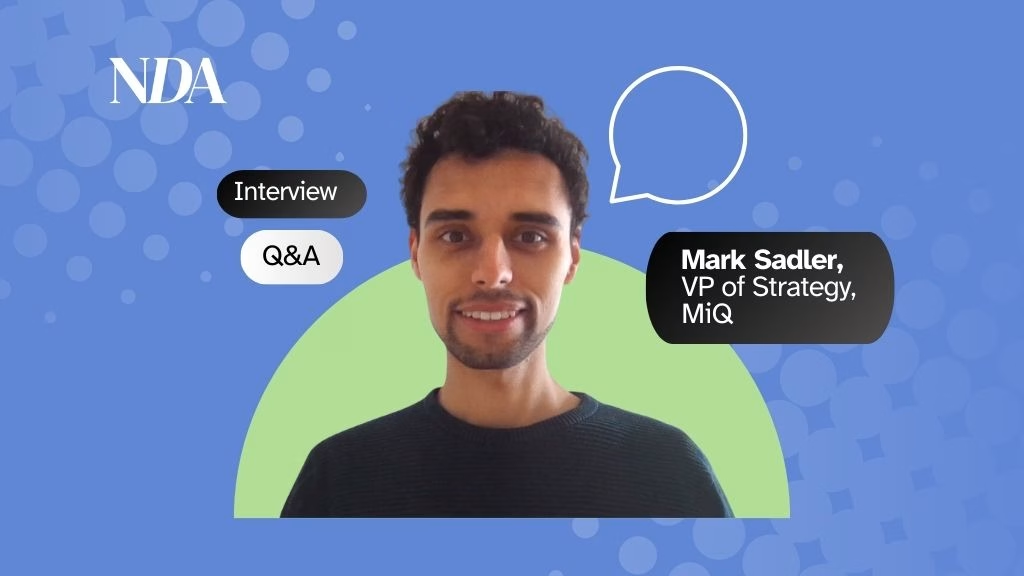
New Digital Age spoke with Mark Sadler, VP of Strategy for MiQ, to find out more about the deal and discuss its wider implications for digital marketers…
How does the BBC’s move to commission original content for YouTube create new opportunities for the broadcaster?
When we think about the context of the deal, putting original content commissioned directly for YouTube on the platform is a complete change in the BBC’s strategy in terms of where they’re placing content.
Why that matters massively is access to audiences that currently don’t watch BBC content. It’s a recognition that the BBC isn’t necessarily reaching all audiences across the UK, particularly those skewing towards younger demographics.
At the same time, it’s a commercially sensible decision. It allows more opportunity in international markets to monetise BBC inventory, while still complying with the licence fee model and leveraging the heritage of the BBC brand to drive increased revenue. It also potentially future-proofs them for any decision that comes out of the Royal Charter in terms of how the ad-funded model might evolve.
So it’s good for promoting content to new audiences, and commercially sensible in both the short and long term.
How might YouTube-first BBC content differ from traditional broadcast output?
Time will tell based on what they commission, but if I had a crystal ball, I’d start with the audience this content is being created for. YouTube delivers mass reach, but when we look at time spent, it indexes much higher towards younger demographics. I’d expect the content to align with that: potentially faster-paced, designed to keep audiences engaged in an attention era where everyone is fighting for eyeballs and time.
We may also see content becoming more descriptive in nature, particularly as people second-screen on devices while watching YouTube on CTV.
Importantly, it’s not just about the screen — it’s about the signals and data that sit alongside it. With YouTube and Google’s wider ecosystem, we can think about audience behaviour at any moment in time, connect that with viewing habits and even buying behaviours further down the line.
What is the advertising opportunity emerging from this deal?
We’re moving away from channel-led media planning towards signal-led decisioning, and that’s a welcome shift. Many advertisers are already adapting based on the data they’re seeing.
In terms of the advertising opportunity here, it’s important to remember that within the UK, BBC-commissioned YouTube content isn’t ad-funded, and that remains true for the foreseeable future. The real opportunity exists internationally for brands that want to access quality broadcast content outside the UK. Using YouTube’s global mass reach to tap into broadcast-quality content with hard-to-reach audiences is a recipe for success and a way to drive incremental reach for brands across the globe.
Are there implications for measurement, signals and brand safety?
By nature of the content being on YouTube, we’ll see more signals around the audiences engaging with BBC content. That’s incredibly helpful for planners and buyers, enabling them to direct investment towards CTV environments that are driving value and outcomes. It also reinforces that YouTube and CTV continue to become more premium in terms of the content available. We can move away from channels being the first principle of TV planning.
The world of digital metrics has opened up further to include attention, Brand Lift and other outcome-based measures. Planners will have more data and more signals available to drive better results from TV investment.
Will the BBC focus purely on younger viewers, or also cater to broader YouTube audiences?
The BBC will definitely cater to the full spectrum of audiences on YouTube. One of the benefits of this deal is that the BBC has the power to create content that resonates across multiple demographics. We only have to look at a recent series like The Traitors to see how that connected households and became a real cultural moment.
There may well be YouTube-commissioned content tailored specifically to younger audiences, but I’m sure there will also be content that speaks to all demographics and potentially shifts behaviour among older audiences in terms of where they consume TV.
Could this shift elevate presenters into global influencers?
This approach puts content creators at the forefront of TV and provides more opportunity through a YouTube-first lens. From what I’ve read, some of this content will also appear on the BBC’s BVOD services. So it works both ways: audiences who may not traditionally watch the BBC could be introduced to the brand via YouTube and then access other parts of the BBC catalogue. That familiarity across platforms should pay dividends for the brand.
What advice would you give digital marketers for the year ahead?
The CTV and TV environment is only becoming more fragmented in terms of where content lives and where audiences consume it. Planning and activation are increasingly complex.
Working with just one TV partner, or thinking in rigid channel terms, doesn’t work optimally in today’s world. Advertisers need to approach TV planning with signal-first decisioning. That includes using data around viewing behaviour and audience behaviour to plan effectively across the full spectrum of TV environments.
What are MiQ’s priorities for the year ahead?
At MiQ, we’re confident in following consumer behaviour and making sure investment decisions reflect where audiences are actually showing up to consume TV content.
That means investing in measurement that delivers clear outcomes and using all the available data and intelligence to drive faster, smarter investment decisions. Through our TV intelligence solutions, we’re focused on demonstrating the benefits across streaming TV, YouTube and broader CTV environments.