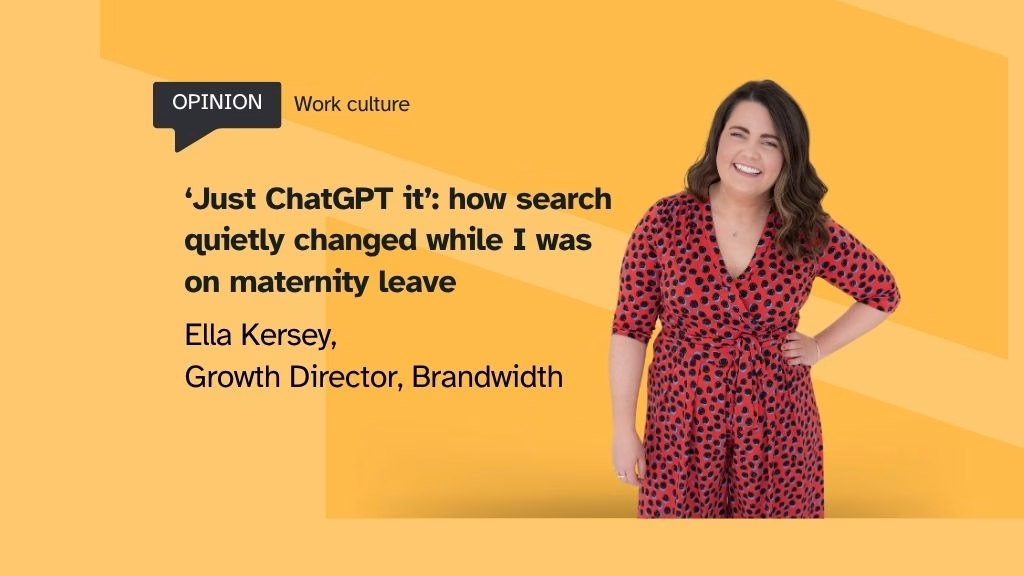
By Ella Kersey, Growth Director at Brandwidth
Coming back from maternity leave, I expected change: a chaotic inbox, a few organisational updates, new faces and that strange feeling that the world had carried on moving whilst I’d been living off cold tea and negotiating bedtime with a cute but unwavering tiny dictator.
What I didn’t expect was how drastically the way we work and exist online had changed. I’ve worked in digital for over 15 years and I’m used to fast-paced environments. But returning after 12 months felt like I’d missed a decade, not a year.
The strangest part? I hadn’t missed the shift entirely; I’d actually been part of it. Somewhere between asking ChatGPT how to transfer a sleeping baby into a cot and calculating safe exposure limits to The Happy Song, I realised something fundamental had changed.
Somewhere along the way, I stopped Googling
Without consciously noticing, I’d stopped searching in the traditional sense. I wasn’t typing fragmented keywords into Google anymore. I was asking full, messy, human questions and expecting answers that felt contextual, personalised and useful.
The more I reflected after returning to work, the more it clicked: what I’d noticed in my own behaviour wasn’t a one-off. It was the shift.
When I went on maternity leave, AI still felt relatively experimental. It was something people were testing, debating and occasionally panicking about. Fast forward 12 months and it had embedded itself into how we work, search, create and buy.
Honestly, feeling overwhelmed was an understatement. I was trying to remember how to be a working mum, surviving on very little sleep and worrying that I hadn’t kept up professionally. But the more people I spoke to, the more I realised lots of people feel the same.
What surprised me most was how much customer behaviour had changed. People aren’t just Googling anymore. They’re asking AI for holiday itineraries, capsule wardrobes and 2am reassurance about whether a baby rash looks normal.
So what happens when people just ask?
People are searching conversationally now, and they increasingly expect instant, personalised answers. More importantly, they’re starting to trust AI to filter information and shape decisions on their behalf. Which means brands face a very different challenge.
How do you stay visible when people are no longer searching, but simply asking?
Brands need to understand whether their content, customer experience and wider digital presence are discoverable, usable and trusted within AI-powered ecosystems too. That has implications across SEO, paid media, content strategy, UX, CRO and customer experience.
Brands need to think beyond keywords and campaigns and consider how they appear in AI-generated recommendations, conversational search journeys and decision-making moments that may never reach a traditional results page.
The relevant brands are building useful, well-structured content, strong first-party data strategies and digital experiences that AI systems can interpret, trust and surface confidently.
Despite the noise around AI replacing jobs, the businesses doing this well are using AI to strengthen human thinking. AI can summarise research, identify patterns and draft content quickly. But it still lacks commercial context, emotional nuance and the ability to connect dots across an organisation in the way people can.
That’s where the real competitive advantage sits: understanding how customer behaviour is changing because of AI, then adapting brand, experience and marketing strategies around that shift.
Trying to catch up with something that keeps moving
Once I stopped trying to keep up with every new AI tool, trend and prediction, I realised three things kept coming back.
First, don’t try to catch up on everything. When you return after time away, there’s a temptation to consume every webinar, podcast and “Top 100 AI tools you need to know” article. You don’t need to do that. The landscape changes too quickly to ever feel fully caught up. Focus on the fundamentals: how customer behaviour is changing, where people are searching, and which parts of your role AI can support.
Second, use AI like a strategic thinking partner. The biggest shift for me was using it less like a search engine and more like something that could help pressure-test ideas, structure proposals and challenge assumptions. Sometimes it’s brilliant and sometimes it confidently produces absolute nonsense. The skill sits in knowing where it adds value and where human judgement matters more.
Finally, give yourself permission to learn differently. Most of my learning has happened in snippets: listening to podcasts whilst walking with the dog and the pram, testing prompts between meetings and reading articles during nap time.
And actually, that’s been enough. Nobody has fully figured this out yet. The people who seem like they have usually just started experimenting earlier.
Coming back into work during such a huge technology shift could easily have felt paralysing, but instead it made the industry feel exciting again. Search is changing, discovery is changing, and expectations are changing. The brands that succeed will be the ones that adapt around real human behaviour rather than simply chasing shiny AI tools.