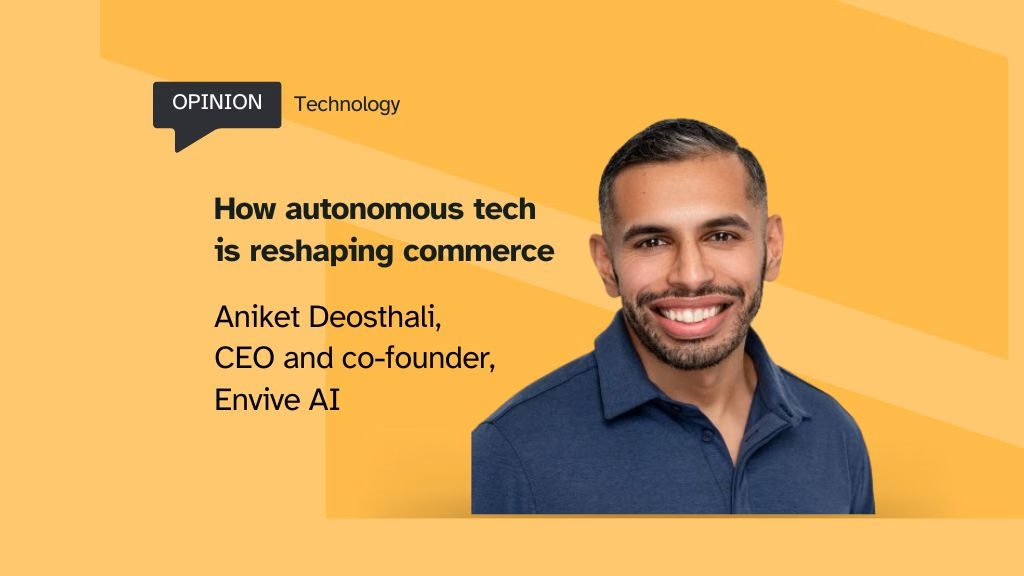
By Aniket Deosthali, CEO and co-founder, Envive AI
Autonomous systems are beginning to shape how products are discovered, compared, recommended, and ultimately purchased.
The conversation around “autonomous commerce” is growing quickly, but much of it focuses on chatbots, AI assistants, or conversational shopping interfaces. The deeper transformation is happening somewhere else: inside the systems that determine which products are surfaced in the first place.
Throughout the history of modern commerce, brands have optimized merchandising for people. Category structures, promotions, search placement, and product content were all designed around how a human shopper navigates a page or a store.
That’s all changing. Now, product discovery is moving into answer engines, copilots, and shopping agents, often before a consumer ever reaches a retailer site. In many cases, software systems now determine which products are shortlisted, summarized, and framed as relevant long before a person makes a final choice.
The new gatekeeper in commerce is no longer just the consumer. It is the machine acting on the consumer’s behalf.
Merchandising is moving from marketing to infrastructure
This shift is not about generative copy, AI images, or conversational interfaces. Those are visible surface changes. The real transformation is happening deeper in the stack, inside the systems that determine relevance, ranking, availability, and product fit for a specific situation.
In an agent-driven environment, merchandising becomes a continuously learning system where relevance is learned directly from behavioral and transaction signals and decisions evolve continuously, not seasonally.
In short, merchandising is becoming autonomous and the change is already showing up in how visibility is earned and lost.
What this means for marketers right now
Optimize for decision systems, not just digital shelves
The first audience for your product information is increasingly an automated system deciding whether your product belongs in a recommendation set at all. Marketers must ensure that product attributes, use cases, and positioning are structured in ways machines can interpret, not only designed for human browsing.
Shift from keyword strategies to intent strategies
Answer engines and shopping agents respond to nuanced, situational questions. Visibility now depends on how well a product maps to real customer needs and contexts, not just a narrow list of search terms. This requires marketing, merchandising, and analytics teams to align around the real moments and problems customers are trying to solve.
Treat first party behavioral data as a merchandising signal, not only a media asset
Click paths, comparisons, dwell time, and conversions increasingly train automated systems on which products deserve to be surfaced next. If first party data only flows into advertising and CRM systems, its role in automated product selection and relevance is being ignored.
Build feedback loops instead of static playbooks
Autonomous merchandising depends on continuous learning. Product positioning, use case content, and product relationships must be able to update dynamically based on live performance signals, not quarterly reviews or seasonal resets.
The public debate around autonomous warfare is raising a question that I believe will become relevant across all aspects of our lives: How comfortable are we allowing machines to make high-impact decisions?
Commerce is answering that question quietly by deploying those systems anyway. When two brands compete for similar customers with similar products and similar budgets, the advantage will increasingly belong to the brand whose merchandising system can learn and adapt faster than a human team can plan. That’s not because it produces better campaigns, but because it can update product strategy continuously, at machine speed.
The use of Automated technology continues to be debated in some contexts, but in commerce, it is already becoming the infrastructure layer that decides what gets seen and what gets sold.