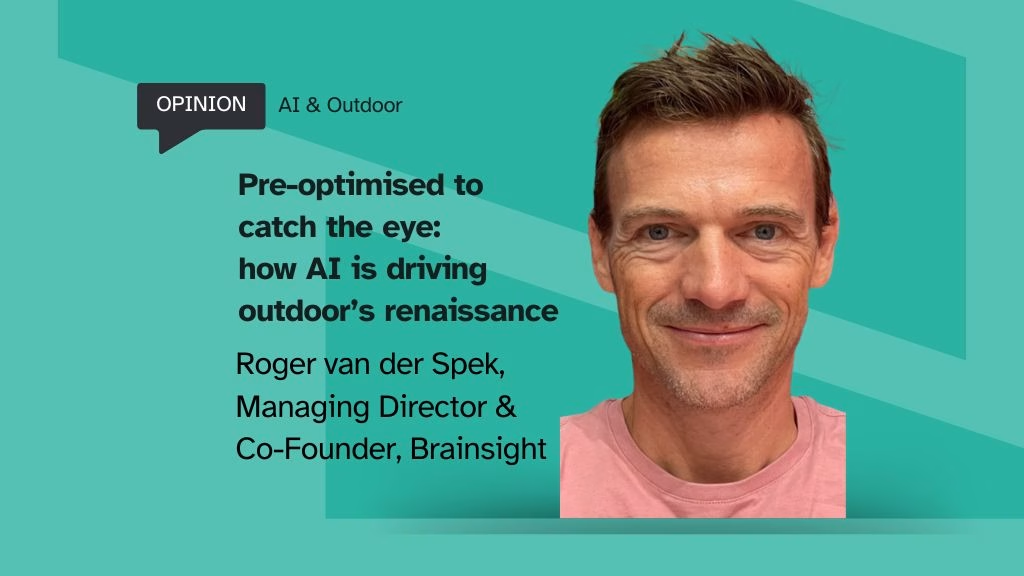
By Roger van der Spek, Managing Director & Co-Founder, Brainsight
Outdoor is at the start of a renaissance, and it’s not solely because of digital out of home (DOOH) bringing the medium into the modern, programmatic age. That’s important, but there’s also a trend for advertisers to accept the channel as a privacy-safe means to reach large, targeted audiences in-situ during shopping sprees, commutes and leisure time.
Perhaps even more importantly, the heightened interest we’re seeing is being driven by technology helping to combat the issue of no return path. In a digital age of click throughs, the lack of feedback from the channel is often seen as a week point. It does, of course, offer QR codes for the public to find out more information, but there is no equivalent of a ‘like’, recorded view or website visit to measure a campaign’s success by.
However, agencies are now starting to investigate how AI can be used to ensure an outdoor advert stands the best chance of being noticed and, even more crucially, remembered. By using predictive AI eye tracking advertisers and their agencies can understand where a person’s gaze is likely to go as they approach and pass by a screen.
More than branding
The requirements are likely to change from one campaign to another. With one piece of creative, it may be all about making sure the product is seen in its optimal setting. With another, it may be about an offer, a promotional performance campaign designed to drive footfall to a nearby shop. In another, it may be an extra layer to amplify branding campaign running on tv and digital channels, so the brand name and the strapline are the most important elements.
The fast-moving, performance campaigns now possible with DOOH are relatively new. Outdoor was traditionally a static medium used, in the most part, for branding. However, now we have DOOH, creative can be updated with offers and even combined with third party information, such as the weather. If it’s a hot day, maybe a pharmacy group will want to advertise sun cream, if it’s raining, it’s probably a day for umbrellas and cold remedies. These may be brand adverts but increasingly we’re seeing companies seeking the option of running performance campaigns too with offers and promo codes, even directions on screen to the nearest store.
This flexibility in tactics and messaging is one of the main drivers for the brands opting to use predictive AI eye-tracking. Outdoor is well known for not being a budget route to market. It has to be impactful, but the desired effect can change from one campaign to another. Knowing what the public will notice, what will ‘land’ first when they glimpse at the screen is now more essential than ever.
Growth at 5% – the future’s bright for outdoor
This renaissance in outdoor we’re starting to see was recently highlighted by AA/WARC figures which revealed outdoor spending was down by 1.2% in Q2, although the DOOH part of the industry was down by 0.7%. However, this downward shift is forecast to be cancelled out by a similar level of growth in Q4 for Christmas with the very positive news that next year will see a 5% growth for digital outdoor.
One of the reasons for outdoor’s journey from recovery starting in Q4 this year is likely to be that it is not subject to the HFSS product advertising ban. Although the law does not being until early January, most brands have informally agreed to observe the new rules in the last quarter of the year as we approach Christmas.
Regulation is not the only reason, though. DOOH is thriving because it’s clear that it’s not only effective, but it has also positioned itself as a completely privacy-compliant channel. There was talk over the past couple of years of tracking people’s gaze from cameras within poster and screen sites. There was even talk of using mobile app data from people passing a screen to find out more about audiences and attention. Both were clearly invasive.
This is why we’re seeing so much more interest in getting campaigns pre-optimised, through predictive AI eye-tracking. It’s privacy-compliant and ensures the creative and messaging that goes on a screen stand the best chance of having the desired impact before a single ad is even run.