Audience measurement, data, and media intelligence company Nielsen recently launched its 2026 Annual Marketing Report: Navigating the AI era: Accuracy, outcomes, & shifting trends. Based on a survey of 1,200 marketers across six key economies—including the UK, Germany, France, and Italy—the report points to strong commercial confidence, modernised channel experimentation, and cross-platform growth across the region.
The report identifies five major pillars defining marketing across the EMEA region in 2026, including: accelerating investment in AI; budget resilience, with 80% of EMEA marketers expect advertising budgets to grow or hold steady; full-funnell retail media expansion; plus significant increases in the budgets directed towards creator campaigns and sports-related investments.
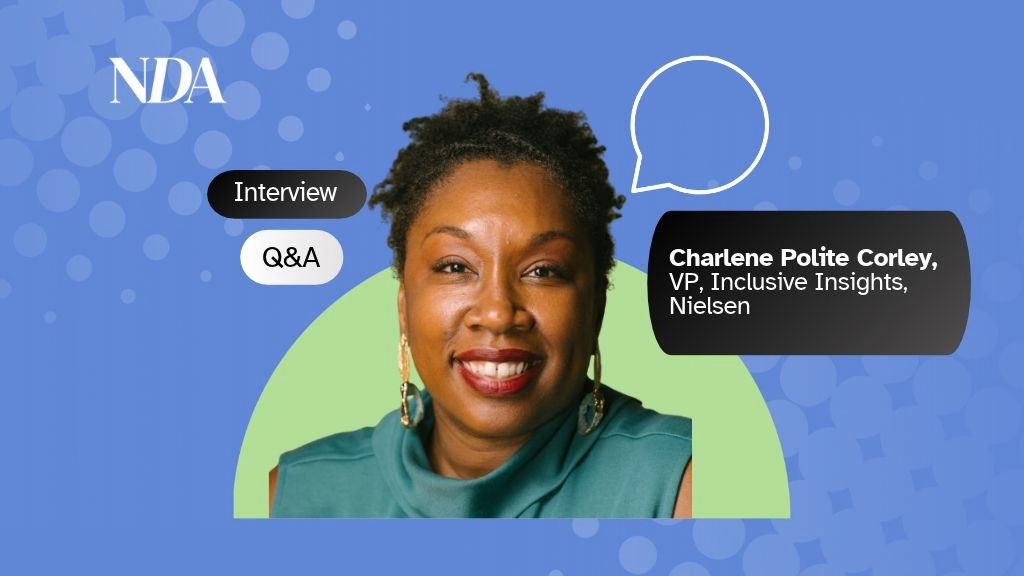
New Digital Age spoke with Charlene Polite Corley, VP, Inclusive Insights at Nielsen, to find out more…
Why did Nielsen commission this new report, and what were you hoping to achieve with it?
We’ve done this report for several years, but like many organisations, we’ve been going through a transformation. One of the areas we’ve been looking at is how we bring our content and insights to clients to help them solve the problems they’re facing.
We sat down with some of our commercial leaders and got feedback on how we could reimagine the report. One of my goals was to make it as relevant, timely and forward-thinking as possible.
Rather than just having a survey about what marketers were thinking or considering, and saying, “Here are all the problems”, how could we also show some of the ways we’re helping to solve those issues, or at least ease some of the breakneck pace that’s out there?
You can’t really do anything these days without mentioning AI, so that was definitely top of mind for us. But we also wanted to look at how marketers are navigating that age-old tension between building brands and focusing on performance, and how all of that is playing out across more media channels than ever as they try to connect with different audiences and consumers.
It was really interesting to pull together all these different Nielsen insights and measurement pieces across six markets, and then hear directly from more than 1,000 marketers in those countries. It was important to hear from our clients and put all of that to work, hopefully for the betterment of the industry.
What were the headline findings that stood out for you?
The piece that keeps ringing in my ears is what we found when we asked marketers not just whether they were using AI, but how they were using it and how much they trusted it.
We found that less than 2% of marketers globally had no AI implementation at all. But what was really interesting was that one in three marketers we spoke to fully trust AI, have it automated and don’t interfere with the recommendations. Their systems simply allow that action to take place.
For most people, though, there is still a human in the loop – that sort of “trust but verify” mindset. I think, at the end of the day, that’s still really critical because, at least for now, we are still marketing to humans. We are still representing human experiences, so that nuance and context, and that final check of expertise, remain really important.
We also asked where AI implementation was showing up in the workflow. It’s a very small percentage that hasn’t got on board yet, but it will be interesting to watch where that implementation continues to take place, and how trust evolves.
The other thing that really stood out was the importance of accuracy. We saw accuracy as a priority jump significantly year on year to become the number one priority in measurement tools. That signalled to me that, as we’ve been moving at record speed implementing artificial intelligence solutions, the foundations those solutions rely on have got to be accurate.
The partners, vendors and data sets we rely on have to be accurate if we’re going to continue moving at this pace. It was so interesting to see accuracy move to the very top of the list, from 21% last year to over 40%, at 47%, this year. The earth has shifted under our feet, and we’ve got to be able to rely on where those systems are pulling their information from.
Another interesting trend was the creator economy. There is near-universal consensus that social media is among the most effective channels, and creators in particular are now commanding dedicated line items among many global marketers, with budgets earmarked for them.
But measuring the impact on the business hasn’t quite settled yet. There are various levels of measurement when it comes to the effectiveness of creator partnerships, and I think we’ll continue to see that evolve.
As we outsource and trust partners such as creators to carry the message, how we assess what makes a successful partnership, what the impact on the business has been, and how consumers react to different types of content and partnerships will remain really important.
Were there any findings that surprised you or that you hadn’t necessarily expected?
One thing I found surprising was the level of consensus around the importance of brand building.
In recent years, as a marketing industry, we’ve had so much focus on performance. We want to jump straight to ROI: did you click, did you purchase, did you add to cart? Is it something I can easily show my CFO or the C-suite to demonstrate that we made a difference and had an impact?
But I do think there’s so much changing, particularly when you look at consumer engagement with AI. Around 50% of consumers in the US are using a large language model or an answer engine for product and brand discovery, and even more are using it for content discovery.
There’s a new gatekeeper between the work of marketers and brand leaders and the consumer that we’ve got to continue to break through. I think that makes brand awareness, and what we say is true about our brand, very important. How that shows up in the new normal is really critical to keep tracking.
There was a distinct focus on brand awareness, brand building, brand health and customer advocacy, alongside, of course, the continuing focus on sales lift and return on investment. But there is a lot of attention on brand and how we build it in this new normal.
Are there any emerging trends that aren’t fully developed yet, but which you think could become more important in the coming months?
A personal favourite of mine is sports, and how that landscape is changing, especially here in the US where I’m based.
When it comes to women’s sport, we have some incredibly important tournaments coming up, including the FIFA Women’s World Cup in Brazil next summer. That will be a really big opportunity for brands to show up in a powerful way.
The global game has shifted so much. There are new fan bases developing, as well as long-standing, die-hard fan bases, and brands need to talk to them and acknowledge their experiences differently.
I do think there are so many untapped opportunities for brands to show up in women’s sports that we have to continue watching. It was encouraging to see so many brands and brand leaders in the survey earmarking budget and anticipating increases.
There are at least three World Cups coming up, including women’s football, as well as cricket and rugby on the men’s side, and then straight into an Olympic year. There are lots of opportunities around those big global moments, in addition to all the regular seasons taking place.
Sports is always an important area to watch. There are new ways to show up with new fans, new leagues, and places and players that brands might not have considered before.
Are there common areas where clients are looking for support at the moment?
From my perspective, Nielsen is definitely focused on how we can help bridge some of the gaps that exist in today’s fragmented media landscape.
There are all these different places where brands have to show up, and all these different places where consumers and audiences are engaging. How can we make it easier for clients to understand those trends, get a faster response to insight, and take action based on data they can trust to inform a successful strategy?
Another important thing I learned from this project, working with the incredible experts around the world at Nielsen, is just how diverse each market can be.
Of course, there are commonalities in our shared business, but there are also significant differences. The UK leads in optimism, budget and AI implementation, whereas in some other markets, perhaps France, there is a little more hesitancy or additional nuance.
Being able to navigate all of that is really critical, and we’re trying to show up in lockstep with our clients as much as possible.