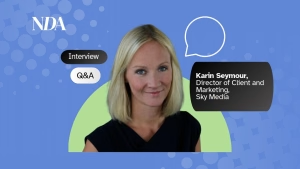
By Jon Manning, Converged Media Lead EMEA at PMG
Channel 4 is coming to Disney+. From early next year, subscribers in the UK and Ireland will be able to watch its live channel, browse a curated selection of programmes and catch new shows simultaneously with their broadcast release. France offers a precedent: TF1’s integration into Netflix has reported encouraging early numbers. You can see why other broadcasters are tempted to follow.
I’m a big advocate of British television and want Channel 4 to succeed. But I’m struggling to share the unreserved enthusiasm for this particular deal.
Take the argument around ease of access. For anyone watching through a regular television, Channel 4 already has an unbeatable shortcut: pick up the remote and press 4. Putting it inside an app is hardly an improvement on that.
Of course, that misses the point of the target audience. Some viewers never venture beyond streaming apps, and plenty don’t have an aerial plugged in at all. Reaching them is a sensible goal, but availability alone doesn’t mean they’ll choose to watch. For advertisers, the distinction is between making content more accessible and reaching genuinely new audiences.
Viewers come to Disney+ with specific expectations shaped by its brand: major franchises, animation and broad entertainment. While British programming clearly works in that environment, with Rivals being an obvious example, I am less convinced that a standalone Channel 4 section will meaningfully alter viewing habits.
The French comparison also requires caution. According to Digital i, TF1 content reached 2.9 million Netflix accounts, representing 30% of active accounts in France, during June and July 2026. However, that doesn’t tell us how much of the viewing was genuinely incremental. TF1 brought domestic daily habits to Netflix, such as news, sports and soaps, filling a genuine void in local-language utility. The UK landscape is vastly different. Disney+ already carries an enormous English-language catalogue competing directly for the exact same evening attention span. Channel 4 must prove what its presence adds beyond simply giving subscribers more things to scroll through.
Discovery matters more than the broadcaster badge
There is also a counterintuitive tension around the broadcaster badge itself. British shows have found successful second lives on streaming services for years, with viewers falling in love with a drama while remaining oblivious to where it originally aired. That distance may actually help. Younger audiences often attach a degree of cultural cachet to content discovered within a global streamer that they wouldn’t grant the same show on a traditional linear channel. An algorithmic recommendation serving up a great British drama natively could drive far more discovery than a branded hub audiences are expected to actively seek out.
The real test is incremental reach
For advertisers and media buyers, the stakes are equally clear. We have talked about aggregation for years, but this deal represents only a partial, fragmented step. The critical commercial question is whether this partnership delivers genuinely incremental reach, or simply shuffles Channel 4 viewers between screens. Media buyers will also need clarity on how audiences are measured across both platforms and whether duplicated viewing is being accounted for. Without clear data showing net-new audiences and additional viewing time, there is a real risk of mistaking broader distribution for actual advertising value.
Channel 4 makes programmes people love, and testing alternative distribution models make sense. But a new shop window is not the same as new customers. Until we see verifiable evidence of audience growth and commercial impact, we should be cautious about calling it a ‘game-changer.’ For now, it simply offers another place to find Channel 4 content, with far less certainty about how many people will go looking.