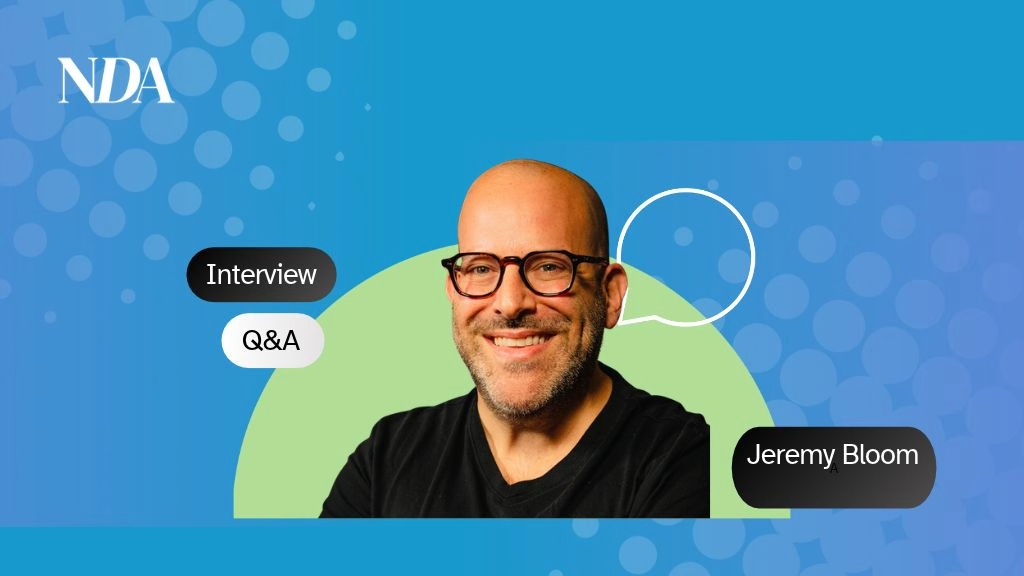
Jeremy Bloom is co-founder and CEO of Marketecture Media, the creator-led B2B media company behind Marketecture Live, and founder of the mentorship platform OhHello. An early TubeMogul employee who helped write its S-1 before the 2014 IPO, he became head of North America for Adobe’s advertising division after the 2016 acquisition. He is now building one of the most influential media companies in our industry.
Tell me about Marketecture Media and why you decided to launch it. Did you feel other trade publications were getting something wrong?
No, I have tremendous respect for them. They have featured me and my co-founders and helped educate us on the space.
The origin story came together from a few different places. I was bootstrapping my own startup, initially called OhHello.io, which transitioned into OhHello.ai, and I realised how lost, disconnected, and lacking in community so many people in advertising, marketing, media, and tech felt post-pandemic.
While building OhHello.ai, I reconnected with a friend who had created the AdTechGod account. With the person behind AdTechGod, I helped bring the voice to life and commercialised video content around that broader ecosystem.
Together, we started creating this irreverent video content on LinkedIn called The Advertising Forum. It had a cheeky, late-night style, like Adult Swim meets Late Night with Conan O’Brien, built specifically for Gen X and millennial industry audiences, yet creating cheeky content for Gen Z as well.
Ari, who had started a subscription product of long-form conversations with adtech executives, saw what we were doing and reached out saying, “What the hell are you guys doing over there? I want to buy you.”
We told him he couldn’t just buy us outright, so we went through due diligence together. We realised that while we had completely different skill sets, we shared the exact same vision for building community and content.
So instead, we merged our properties to build a modern, creator-led B2B media company of real operators, former CEOs, CMOs, and CROs, who create content to help people in the trenches get smart fast.
You have made several micro-acquisitions already. What is the long-term vision for the business?
When we started, we were having fun and bringing in revenue, but we quickly realised we were building something genuinely distinct. Across our first year and a half, we completed about six to eight micro-acquisitions.
These included AdTech Explained, David Berkowitz’s Serial Marketers, the AI Marketers Guild, and Adland.tv, a legendary, cult-classic repository of classic commercials that started out as a blog.
We brought these under our umbrella to build a unique creator B2B media ecosystem. We also developed homegrown tools like MadJobs.ai, which we built and released for free as the largest advertising job database because we saw how many peers were struggling to navigate career moves in this climate.
The long-term goal is to keep growing, keep building products that serve our community, and eventually get acquired by a larger entity. Both Ari and I have built and sold businesses before.
I was an early employee at TubeMogul, where I helped write the S-1, went through the IPO in 2014, and then stayed on when Adobe acquired us in 2016 to lead North America for Adobe’s advertising division. Life is short, and our goal is to make a major impact in B2B media before eventually taking that next step.
As practitioners rather than traditional journalists, how do you balance commercial drive with editorial integrity and independence?
We do have a dedicated Editor-in-Chief who manages and fine-tunes our newsletters, including The Refresh by AdTechGod on Thursdays, our Marketecture newsletter on Mondays, and updates from the AI Marketers Guild, making sure everything is finessed.
At the same time, we are transparently a commercial company working with other growing commercial businesses. The level of trust and transparency we have with our audience comes from our team’s background.
We have built companies, sold them to Comcast, helped take companies public, and served as CMOs. Because we have operated in the trenches at the highest levels, we are afforded the ability to call BS on what is BS in the industry.
What is changing in the balance of influence between individual personal brands and traditional media brands today?
There is nothing more powerful than the individual voice.
How consumers absorb, retain, and engage with content has completely transformed compared to 5 or 10 years ago. While legacy institutions like The Wall Street Journal, Vogue, or The Guardian still hold broad reach, they cannot be all things to all people.
Niche B2B audiences rely heavily on subject-matter experts they trust. In our business, every leader brings a distinct voice. Jackelyn Keller’s experience as former CMO of Comscore gives her a different perspective from Sam Khoury’s background or Amelia Tran’s, which is different again from mine.
Putting yourself out there as an individual creates a personal brand that gives you long-term defensibility that no single employer can take away from you.
What needs calling out or fixing most in the advertising industry right now?
First, the lack of basic human helpfulness and humility. With so many restructurings and cuts across media and tech, people get defensive and put their guards up. But relationships matter immensely. Taking two minutes to share a job lead, make a double opt-in intro for a colleague who was made redundant, or offer advice costs nothing and goes a long way.
On the industry side, I call BS on the total devaluation of brand building in favour of pure performance media. Performance matters, but if you do not build brand equity at the top of the funnel, customers will not have recall or come back to buy again.
What is your advice to a mid-level agency or adtech professional looking to build their personal profile?
Just do it. Take the swing. The worst thing that happens is a moment of mild embarrassment, but more often than not, someone will message you saying your insight meant something to them.
Whether it is writing, short video commentary, or launching a podcast, quality beats quantity every time.
Second, cultivate your weaker ties and acquaintances. People always rely on their top 10 closest contacts, but it is usually the random acquaintances in your broader network who open doors, introduce you to investors, or point you toward your next career move.
What role can AI play in this process, in a an era of AI slop?
Everyone can read through the BS when someone copy-pastes raw output straight from ChatGPT, Claude, or Gemini without adding their own spin.
When people depend on AI for everything, it just sounds like gibberish. AI should be an accessory and a tool, not a crutch.
Where AI excels is in operational business intelligence. At OhHello.ai, we use AI to connect mentees with mentors, and then aggregate and anonymise real-time transcript data across dozens of participating companies into secure data lakes for each customer..
This creates an intelligence hub for Chief People Officers and CEOs to understand employee needs and organisational health. Using AI to diagnose your business makes complete sense; using it to sound smart on LinkedIn when you have nothing authentic to say does not.
Events are a major part of your ecosystem. How are you approaching live experiences?
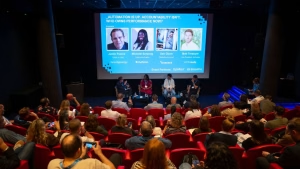
Through Marketecture Live, we want to bring thinkers and doers together in rooms where people actually want to be. We curate high-value, FOMO-inducing events, such as Marketecture Live in New York at the Glasshouse, which brought together 1,000 people over two days in partnership with Adweek, Variety, TVRev, and UTA.
We brought in brand leaders from organisations like the NFL, Molson Coors, United Airlines, Dick’s Sporting Goods, WeightWatchers, and Cameo.
While our roots are in adtech, we frame these conversations around broader marketing and media so it is relevant across the ecosystem. People are yearning for community and reasons to leave their houses. We keep our live gatherings tightly curated and limit their frequency so we never saturate or water down the brand.
When you look back at your career and at the industry as a whole, what is the biggest lesson you have learned?
Life moves fast, and at the end of the day, we are not curing cancer.
Relationships matter, looking out for each other matters, and having a bit of fun along the way is what makes it all worthwhile.