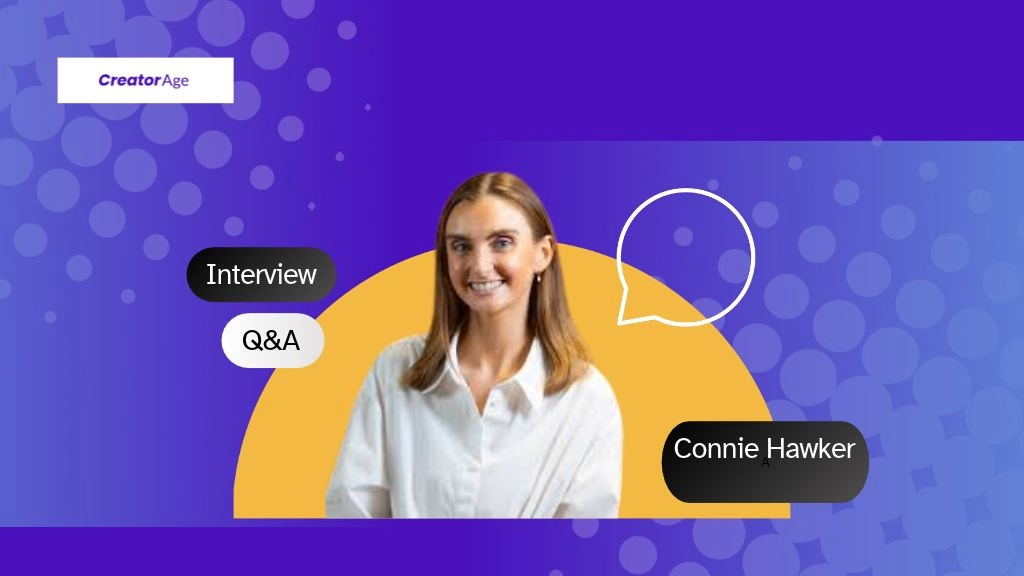
With UK creator spend reaching £1bn this year, compared to over $40bn in the US, the sector has hit a critical inflection point. Connie Hawker, TV+ and Creators Lead at IAB UK, discusses the push for industry standards, the danger of treating human creators like traditional media channels, and why advertisers must look beyond vanity metrics.
How has the IAB’s focus on the creator economy evolved recently?
I have been at the IAB for just over five years, and about 18 months ago I moved into a new role as TV+ and Creators Lead. Those two areas are merging together more and more.
Creators have largely grown up outside of the traditional advertising industry, coming from PR or sitting in-house at brands rather than with media agencies.
We saw the exact same trajectory with podcasting, gaming, and CTV. The sector has reached a tipping point where it has the potential to scale, but to do that, it needs to come inside the fold of the wider advertising industry.
It has to sit higher up on media plans as a core channel in the mix rather than an occasional add-on, and that requires standardisation.
How do you standardise a space built on individual personalities without losing what makes it work?
It is tricky. We often hear that creators are the new media channel, and we even said it in our own Futurescape report. While the biggest creators operate with the teams and infrastructure to rival broadcasters, the long tail of thousands of niche creators do not have that setup.
On a recent call with our creator community, someone from a media agency said they actually dislike calling creators a media channel because they are individual human beings. They have their own vulnerabilities, they might miss an email, and they cannot be treated like an automated media pipe that is always switched on.
Many started making content out of pure passion, suddenly got approached by brands, and simply do not understand advertising rules, usage rights, or the CAP Code.
We have to put guard rails in place without squashing the authenticity that makes creator marketing magical.
What is the IAB doing to help bridge that knowledge gap for creators?
Earlier this year we launched our Creator Qualification as part of a wider European ad ethics programme, working closely with the ASA. It teaches creators when their content becomes an ad, how to label it properly, how money flows through the industry, and red flags to look out for in contracts.
So far, we have promoted it directly to creators through events like Creator Fest and Meta campaigns. However, in markets like France and Spain, where 7,000 people have completed it, uptake really accelerated when major advertisers endorsed it.
Next year, we are pivoting to educate brands and agencies so that major spenders like Unilever or L’Oréal actively prioritise working with qualified creators.
Beyond compliance, what are the biggest hurdles to getting more brands to invest at scale?
Measurement and planning are huge priorities. In mid-December, we are publishing a joint report with ISBA on the state of creator marketing measurement.
Relying purely on vanity metrics like likes, comments, and shares sells creators short on their brand-building capabilities. We want to show brands how to measure effectiveness across every stage of the funnel, moving away from just last-click attribution.
For next year, we are also looking at bringing creator planning in line with traditional media planning. Global teams at WPP approached us with a framework to help advertisers calculate audience overlap, how many creators to book, for how long, and what incremental reach they add to a wider media mix.
We are exploring developing this with IAB US so it becomes an open industry standard.
How does the UK market compare to the US, and what are you learning from them?
The US has really embraced the space, with revenue sitting at over $40bn compared to around £1bn in the UK this year.
Because so many agencies and creator audiences are global, we are collaborating closely with IAB US to align on definitions, taxonomies, and best practice around ethical AI use and disclosure.
One thing we are both focused on is breaking down silos. We are actively bringing our creator community together with legacy publishers, such as Mail Metro Media, whose multimedia journalists are also major social creators.
We are doing the same across commerce media, gaming, and podcasts, especially as Tesco is now putting creators on in-store screens and podcasts have become video-first.
What are media agencies and brands asking the IAB for right now?
They want independent, verified insight and industry-backed frameworks so they can go to their clients and say, this is not just our agency view, this is the industry standard.
At the same time, legacy publisher teams and creator agencies have historically spoken completely different languages. Just as digital planners and AV teams had to learn each other’s terminology when silos came down, the media industry and the creator PR world now need to speak the same language to unlock real growth.