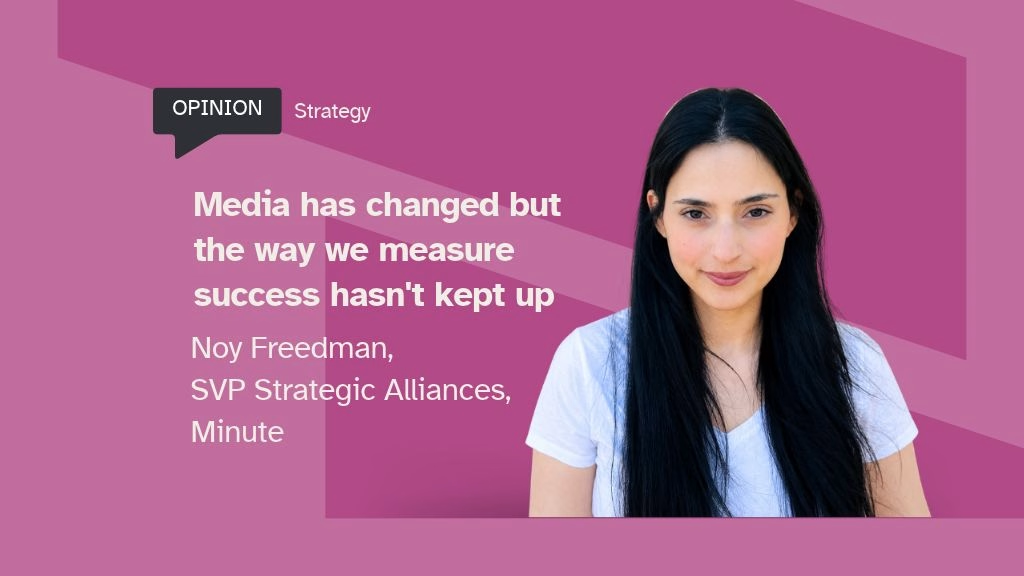
By Noy Freedman, SVP Strategic Alliances, Minute
We can tell you how many people visited our websites yesterday. But ask how many people engaged with our brands and the answer gets more complicated. That gap matters. Website traffic tells us who directly came to us, but less about the audiences we reach, the relationships we build, and the value those relationships create.
Today’s media brands exist across an expanding mix of social platforms, websites, streaming channels, syndication partnerships, and live experiences. Yet website traffic remains one of the industry’s dominant measures of success. We’ve fundamentally changed what it means to be a media company without changing how we measure one.
Consider Sports Illustrated. Audiences engage with SI through articles, audio, social media, its SI TV FAST channel, live events, and more. They may never visit SI.com, but they’re still part of the SI audience. We can measure many of these interactions individually. What’s harder is understanding how they connect: who we’re reaching across platforms, what those audiences care about, and how their engagement contributes to the brand’s value.
Traffic tells only one part of the story
Traffic became the industry’s default measure for a reason. Pageviews and impressions have long been tied to advertising revenue. More traffic generally meant more inventory to monetize, making it a convenient way for advertisers, executives, and investors to evaluate performance. But traffic was never a complete measure of audience value, and today it’s an increasingly incomplete measure of the business itself.
I spend much of my time working with distribution partners and see firsthand the value these relationships create. Through content aggregators, syndication partners, social platforms and connected TV, publishers can reach audiences where they already spend their time. These partnerships are essential to building reach, engagement, and revenue. The challenge is that audience insights vary considerably from one platform to another. We can see pieces of the picture, but rarely the whole thing.which makes it harder to assess their true commercial value.
Are audiences on one platform more interested in the NFL or the PGA? Which writers do they return to? What keeps them engaged, and how do their interests differ across platforms? These aren’t just interesting questions. The answers can inform editorial investments, product development, distribution strategy, and how we build relationships with advertisers and partners.
We don’t need every platform to measure everything identically or share every piece of data. Different environments have different capabilities and privacy considerations. But more consistent reporting, greater transparency, and clearer definitions would make the information publishers do receive far more useful.
Take a hypothetical situation: A sports publisher sees declining website traffic to its soccer coverage and concludes that interest is waning, prompting it to reduce investment in that area. But, what if that same content is actually attracting more interest through a syndication partner or on CTV? Without connecting those signals, the publisher risks making an editorial decision based on an incomplete picture. The audience may not be disappearing. It may simply be consuming the content somewhere else.
AI is exposing the cost of the gap
The decline in search referrals and the rise of AI-generated answers have made this challenge harder to ignore. Publishers that built significant portions of their businesses around search traffic are facing real pressure. But AI didn’t create the measurement problem. It exposed how much our understanding of audience behavior has depended on getting people to our websites.
Much of the industry’s AI conversation rightly focuses on licensing and compensation. Publishers also need to understand what happens to their content and audiences when distribution takes place in environments they don’t control. That requires being more deliberate about the information they collect, the reporting they expect from partners, and how they use that intelligence to make commercial and strategic decisions.
Better intelligence, stronger businesses
The goal isn’t to turn every interaction into a single metric. Watching a full episode on CTV, reading an article, and attending a live event are different experiences with different audience insights. The opportunity is to connect those insights well enough to make better decisions.
A clearer understanding of audiences can help publishers demonstrate their value to advertisers, assess distribution partnerships, identify commercial opportunities, and make smarter choices about content and products. It can also reveal where they’re creating and capturing value and where opportunities may be going unrecognized. Reach matters, but reach alone doesn’t tell us whether we’re building a stronger business.
Better audience intelligence won’t eliminate platform dependency or give publishers control over third-party distribution. But it can help them understand who they’re reaching, what those audiences value, and where they’re building meaningful relationships. That knowledge can reduce strategic blind spots and guide decisions about where to invest and grow.
The media business has changed, but the way we evaluate success remains rooted in an earlier version of it. We have an opportunity to build a more complete understanding of the audiences we reach, the relationships we create, and how those translate into business value. If we want to build stronger media businesses, we need to get better at measuring the businesses we’ve actually become.