What relevance does a simple web address have in maintaining authenticity against AI slop?
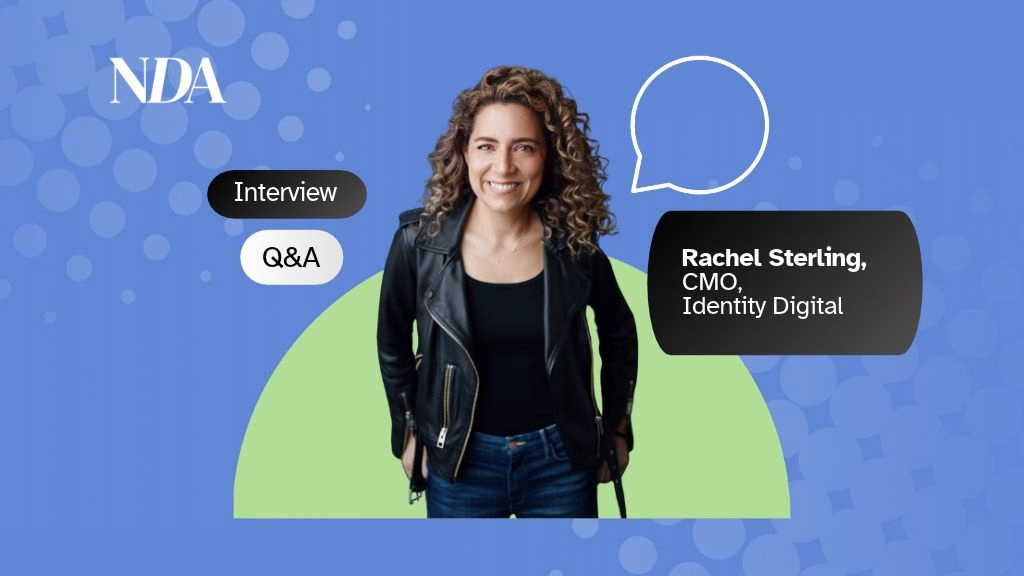
New Digital Age spoke with Rachel Sterling, CMO at Identity Digital (and formerly a Global Director at Instagram and Twitter) to find out why a registered domain provides a dedicated space for your authentic brand voice…
What does authenticity and trust mean to marketers in 2026 and why are they important?
For marketers in 2026, authenticity means a brand stays consistent everywhere its audience encounters it. Brands then earn trust by staying consistent over time.
AI has become one more place buyers encounter a brand. In an Eight Oh Two survey of 500 consumers who use AI tools, 37% said they begin their searches with an AI tool and 47% said AI influences which brands they trust.
Buyers then verify what AI tells them. In the same survey, 85% said they double-check AI answers against other sources. When a brand’s channels agree with the AI answer, the answer holds and the buyer’s confidence in the brand grows.
The platforms where brands publish keep changing, which makes that consistency harder to hold. Social platforms adjust how they rank and distribute brand content, and AI tools adjust which sources they cite and how they describe brands. A registered domain name is one of the few brand assets a company manages directly, so the brand decides how its identity and message appear there.
With more automated content, synthetic brands and lookalike experiences, what steps can brands take to build a credible and authentic identity from a forgettable one?
Four steps build a credible identity. The first two secure the domain name, and the last two fill the site behind it with a clear message and the stories that support it.
- Choose a name that says what the brand does. A short, descriptive domain name with an extension that signals the industry, such as .legal for a law firm or .studio for a design studio, makes the brand’s relevance clear before anyone reads a word of content.
- Protect the name so audiences find the real brand. With lookalike experiences easy to produce, a well-managed domain portfolio gives customers and AI systems a verified home for the brand. Defensive registrations claim the variations and extensions a lookalike might use, and registry locks prevent unauthorized changes to a domain name.
- Say what the brand stands for in plain language, and back it with original content. A clear point of view gives audiences something specific to remember, and practical insights show them what the brand knows.
- Show the people behind the brand and the stories that support it. Leader and customer stories on the brand’s registered domain name help audiences and AI tools confirm who runs it.
What role can AI play in building a brand’s credibility and authenticity?
AI plays two roles in a brand’s credibility: it shapes buyers’ first impression of the brand, often before they visit its website, and it gives the brand a way to check that impression.
The first role is growing fast. In a WebFX analysis of 2.3 billion site sessions from January 2024 to December 2025, AI tools accounted for 0.18% of the sessions in 2025. Sessions from AI tools grew about 796% and led to an action, such as a form submission or quote request, about 1.2 times as often as organic search sessions. WebFX reads the higher action rate as a sign that many of these visitors have already researched their options and arrive to confirm details such as pricing and credibility. For those visitors, the brand’s registered domain name is where they confirm what the AI told them.
The second role is a check: brands can use the same tools to see that impression for themselves. WebFX recommends regularly auditing how a brand appears in AI answers. Comparing those answers with the brand’s website shows where the story holds up and where it needs more detail.
How challenging is it to establish a unified brand and voice across all channels?
It is demanding. Many teams and tools now produce brand content, and they need shared guidelines to stay aligned. In a 2025 Wynter survey of 100 marketing leaders at B2B SaaS companies, 44% cite a well-documented brand strategy they actively use, 35% have informal guidelines, and 19% are currently developing one. Only 10% maintain true consistency, which leaves most of the companies surveyed room to strengthen their guidelines.
Good guidelines define what stays constant and what adapts. Personality and core messages stay the same in every channel, while tone and format change with each one. An Instagram caption and a whitepaper sound different, and a reader recognizes the same brand in both.
Consistency pays off in loyalty. Capital One Shopping’s branding statistics roundup reports that 79% of consumers are more loyal to brands with consistent communication across departments.
Consistency matters more now that people cross-check AI answers: when a brand’s channels tell the same story, the check confirms what the AI said. A registered domain name gives channels one place to send visitors, which gives the cross-check one source to land on.
What can brands do to build trust online?
Brands can take two important chances to build trust online: explaining how they use AI and keeping people in charge of the brand’s voice.
The first thing is clear AI disclosure. In a YouGov and Meltwater survey of nearly 10,000 consumers across seven markets, 86% said brands should disclose AI-generated content.
The second is cultivating a human voice. Reactions to AI-generated content vary: in the same survey, 15% said they would trust a brand more if it used AI to generate content, but 32% said they would trust it less. Disclosure helps, as mentioned above, but a brand voice that comes from real people speaks to the 32% who have less trust in AI-generated content. The values and positioning that make a brand recognizable should stay at the center of its content, with AI in a supporting role.
The brand’s registered domain name is the natural place to act on both of these opportunities. It is where the brand states its approach to AI in its own words, and shows the people behind its voice. It’s also where a buyer who cross-checks an AI answer goes to confirm it.
Decisions about the name and how the brand protects and uses it reach every channel that points to it, so domain strategy belongs on the leadership agenda.