Ozone, the digital advertising business created by leading publishers, has launched OzoneOS, a new technology suite designed to help publishers unlock more value from the audience relationships they’ve built by bringing first-party audience intelligence directly into programmatic decision-making.
As search-driven traffic has declined over the last 18 months, the known, loyal audiences who visit premium publishers directly have become increasingly important. Yet the legacy tools publishers rely on were built to monetise volume rather than audience value, leaving first-party intelligence largely disconnected from revenue decisions beyond direct sales.
OzoneOS addresses this challenge by pairing direct control of the ad stack with Ozone’s cross-network intelligence, designed to bring publishers’ understanding of their readers closer to the point of transaction. By providing deeper insight into what different audiences are worth and which buyers value them most, OzoneOS seeks to put control back in publishers’ hands, enabling them to make more informed decisions about pricing and how first-party signals are made available.
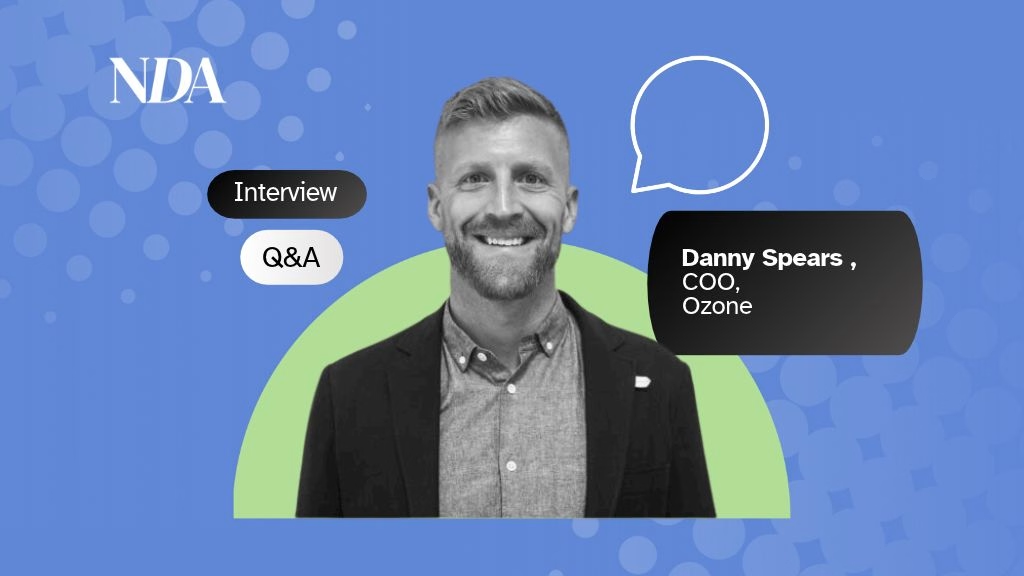
New Digital Age spoke with Danny Spears, Chief Operating Officer at Ozone about the changing media landscape and why it demands a different approach to programmatic advertising…
What prompted the development of Ozone OS? What problem were you looking to solve?
We’re working in a changing landscape, and at the heart of it there’s a real problem: most publisher ad stacks are built around inventory. Inventory is the central concept, which means publisher decision-making is defined by ad slots.
Meanwhile, on the other side, many steps removed, you’ve got buyers who have a completely different perspective. They’re interested in people, in users, and in the performance attached to those users.
If you zoom back out, you’ve got publishers selling boxes and buyers seeking audiences. That’s a long-standing disconnect in the programmatic market from a publisher perspective.
What’s changed most recently is AI being injected into that landscape, which has made that consideration even sharper. I characterise it as an oil-and-water split in the publisher market.
At one end, you’ve got what I’ll call audience publishers. They create original content, have loyal readers and tend to have diverse business models. They’ll have advertising alongside subscriptions, licensing and potentially commerce as well.
At the other end, you’ve got inventory publishers, who have historically capitalised on referral traffic. They invest less in content and have specialised in monetising passing traffic.
Irrespective of which side of that fence a publisher fell on, both were served by the same technology. But because of AI and that polarisation, they’re now in fundamentally different positions.
Most publishers have been challenged in terms of traffic volumes and audience. But I’d argue that audience publishers have retained a core, loyal audience who are actually more engaged. They come to the site directly, visit regularly and are worth even more than before to advertisers because of that level of engagement.
So, who is Ozone OS for? We’re focused on audience-first publishers, helping them bring their first-party audience intelligence and understanding of their users back to the heart of the programmatic decision – which, again, has been limited by a focus on ad slots.
How does Ozone OS fit into the changing content discovery landscape, particularly with the impact of AI search?
We’re seeing AI search and, behind that, a shift in consumption behaviours. More publisher content is being consumed on other surfaces, away from the publisher’s own domain. That’s had an impact on the amount of traffic reaching publishers.
But again, I’d draw out that distinction. Publishers with a differentiated proposition, who have nurtured direct relationships with their consumers, are in a much stronger position.
They’ve probably lost some of their referral traffic, as is the case across the board. But they’re left with a core of very engaged, very loyal and high-value users.
These publishers already had different profiles, but as the landscape has changed, the contrast is more stark than ever before. I think this is the point where that group of publishers needs to be thinking about different technology choices. Up to now, everyone’s been using the same capabilities, irrespective of their proposition.
The early deployments of Ozone OS appear to have delivered some strong results. What have you seen so far?
We’ve got some really strong headlines. I’d emphasise that Ozone OS is a publisher product, a publisher capability, but one that also benefits brands.
We’ve had two early deployments. In one, with a global publisher, we were able to reduce the number of ad requests being shown. That meant focusing on the highest-quality tranche of its advertising opportunities.
Through that process, viewability increased and revenue per page rose by 63%, despite showing far fewer ads.
I think that also talks to the benefit for the user, the reader. Fewer ads mean better cut-through, and of course that delivers brand benefits directly to the advertiser.
We also saw a shift in buying behaviour. The price buyers were willing to pay increased significantly after we made this change. In fact, the price they were willing to pay increased threefold, while the number of brands increased by 15%.
So it shifted buyers’ perception of the publisher’s value. I guess that’s driven by their belief in performance, and it brought new advertisers into that publisher’s marketplace as well. They’re really strong early results.
Looking ahead to 2027, what developments or trends do you think will come to the fore in the publishing and advertising markets?
The backdrop is one of a changing landscape. There’s uncertainty on all levels, from geopolitics and the economy, all the way through to AI and what that means for the ad market.
There’s profound change, and the pace of change has accelerated significantly as well. That leaves the publishing market with challenges, but also real opportunity.
The thing we’re particularly excited about is the opportunity around agentic advertising. That’s both in terms of how AI can be applied to internal processes to streamline and augment products, and the extent to which agentic technology can be applied to the transaction itself. That speaks to my belief in where the market is going, but also to our roadmap for Ozone OS.
Irrespective of Ozone, I think this forces both sides of the market to think about how their systems are built today. What does that mean from a data perspective? Do they have clean, structured datasets that are AI-ready?
We’re seeing some very interesting movements and strategies emerging in that space. I think agentic advertising is going to be an important area of development as the market works out how to respond to the changes ahead.