For decades, the digital advertising ecosystem accepted a fundamental disconnect. CRM systems sat in one silo, email platforms operated in another, ad activation ran through disconnected DSPs, and measurement was pieced together after the campaign ended.
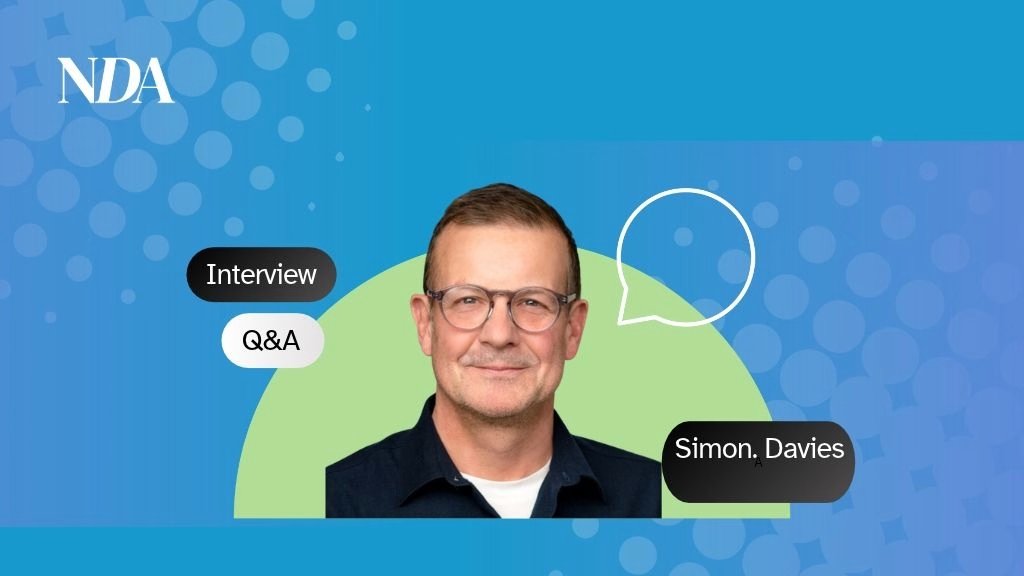
Simon Davies, Senior Vice President EMEA at Zeta Global, believes that fragmented era is rapidly drawing to a close. With a long career launching and expanding US challenger brands across the globe, Davies arrived at Zeta in early 2025 to build out its media and activation proposition across the UK and other EMEA markets.
NDA sat down with him to discuss the importance of breaking down silos between martech and adtech, how agentic AI is transforming marketing from simple automation into real-time decisioning, and what it takes to scale a US giant across Europe.
You spent nearly three decades launching and growing challenger brands, notably taking US businesses overseas. What brought you to Zeta Global?
I discovered ten years into my career that I really enjoyed launches, relaunches, and challenger brands. For the last 15 years, that focused on US businesses that had established strong footprints domestically and wanted to build their business internationally.
That started at The Week in New York, then Quartz, and later The Washington Post, where I helped establish their international proposition and ended up leading the US team as well.
Coming from a publishing background, adtech was an adjacent discipline that always intrigued me. When the opportunity at Zeta came along, it ticked all the boxes. It meant entering a space where I could learn again, build a clear proposition, and shape a team to deliver it.
Zeta had employees across Europe for years through various acquisitions, but there had not been a dedicated effort to define our unique offering here, identify what translates from the US market, and scale a focused team around it.
Zeta is well established in the US, but the European landscape is crowded. What is the fundamental problem Zeta solves for partners over here?
The activation team works closely with agency partners, holding companies, independents, and brand-direct clients alongside our CRM teams. What convinced me to join after six months of conversations was how the Zeta marketing platform eliminates traditional operational silos.
Instead of having your CRM in one place, email servers somewhere else, data sitting across multiple buckets, and analytics managed separately, a single platform brings it all together.
We can match our identity graph with a client or agency data cloud and create unified customer IDs. Because it operates within a single closed-loop ecosystem that we own, there is no data loss jumping between third-party systems.
Measurement is far more accurate, and execution happens instantly. Everyone knows the frustration of buying a pair of shoes only to be retargeted with ads for those exact shoes for the next six months. Unified systems resolve that by reacting to live customer behaviour rather than stale data pushed between isolated tools.
How does that offering adapt between large agency holding companies and independent agencies?
Our approach differs depending on operational needs. Independent agencies are competing against holding groups that have built their own data graphs and CRM capabilities.
We can work with independent agencies to white-label elements of our platform or give them access to tools and deep measurement through our insight studio, effectively levelling the playing field so they can compete for major pitches.
With agency holding companies, the conversation is rarely about replacing existing infrastructure. They have already invested heavily in their own products. We never claim our data is better than theirs; instead, we look at how our data can enrich theirs and make it work harder.
For brands direct, it becomes an enterprise conversation around breaking down entire organisational silos. We operate with genuine flexibility, offering tailored components rather than forcing clients into rigid, all-or-nothing software workflows.
The boundary between martech and adtech seems to be disappearing. What role is agentic AI playing in that shift?
AI has been an integral part of our platform since 2017, functioning quietly behind the scenes. The recent shift to agentic AI changes the paradigm entirely.
For years, the industry focused heavily on automation to make repetitive tasks faster or cheaper. Agentic AI shifts that to ask: what is everything we know, and how does that inform what we should do next at incredible speed?
In an interconnected ecosystem, that decision-making extends beyond typical marketing metrics. For instance, if severe weather hits a region and you want to run a campaign for waterproof clothing, an agentic system does not just identify relevant consumers.
It can connect directly with the brand’s supply chain to determine where stock is physically available before deploying media. It links marketing actions directly to commercial reality.
Looking ahead, what presents the greatest challenge and opportunity in scaling across EMEA?
The growth potential for our partnerships and products across the UK and Europe is massive. The primary tension is managing the balance between rapid innovation and flawless execution.
While Zeta is an established enterprise in the US, we are functioning in many ways as a fresh entrant across this region. When introducing sophisticated innovations to clients, you cannot afford operational errors.
It is much harder to earn a second chance than a first, which is why having the right team and delivering reliable execution alongside innovation is everything.