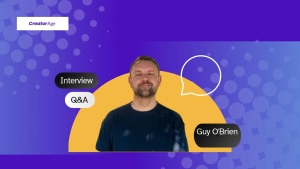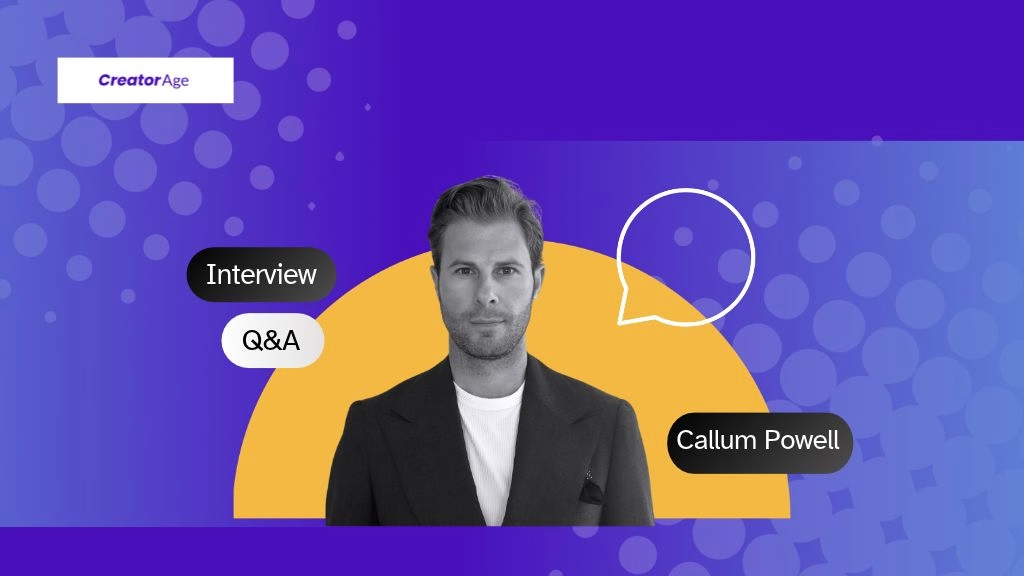
As creators evolve from social media talent into fully fledged media channels, brands and agencies are rethinking how they brief, measure and integrate creator campaigns. Creator Age sat down with Callum Powell, Head of Brand PR and Influence at M+C Saatchi Talk, to discuss why beauty led the charge, how to balance brand compliance with creator freedom and why the industry must guard against creator saturation and
How has your background shaped your approach to leading creator work at M+C Saatchi Talk?
My career spans about 15 years across beauty, grooming, lifestyle and fashion within PR and influencer marketing. I started with an internship at L’Oréal before moving to agencies like Hill+Knowlton Strategies and Weber Shandwick, working across P&G and Unilever portfolios. I then returned to L’Oréal for six or seven years, right when influencer marketing was really taking off.
Beauty has always been a trojan horse within consumer marketing for creators. When I started, traditional media took about 80% of a PR budget, and by the time I left L’Oréal, 60% to 70% of my annual budget was spent on influencers and advocacy.
After working on global portfolios for Bacardi and Coca-Cola at Ogilvy, I joined M+C Saatchi Talk nine months ago to evolve our creator offering. While every agency talks about storytelling, we are moving toward community-led story making.
Creators grew up outside traditional advertising. How are you seeing the industry professionalise around them?
It depends on the individual creator and the category. Beauty creators have been doing this for a long time and are very sophisticated in their ways of working, whereas the talent pool in other categories is still catching up.
There has been a major step change in how we brief talent and bring them into the wider marketing ecosystem. We are moving away from one-off partnerships toward multi-post, long-term collaborations.
Building that kind of relationship requires a real level of counsel between the agency, the agent, the creator and the brand from the very beginning.
How do you balance giving creators the freedom to be themselves while keeping brands confident around compliance?
It is very brand specific. From a client perspective, we are clear about compliance regarding the product and what can and cannot be said.
However, when it comes to tone of voice, creative execution and language, we have to rely on the creator. We work in a sophisticated market, and creators will push back on a brief if the scripting does not match their natural voice, because their audience will call them out immediately. The key is getting everyone into a room at the outset to look at the brief together and have open conversations, rather than waiting until content is delivered for a client to say it does not work.
How are client expectations changing when it comes to metrics and proving commercial return?
Proving commercial sell-through can be challenging, though platforms like LTK allow us to track click-through rates and see where a customer comes from on a transactional level.
The expectation to include trackable links has been baked into beauty briefs for years, especially when working with retail partners like Lookfantastic. At the same time, we have to be mindful that creator activity rarely works in isolation.
It sits inside a wider marketing ecosystem alongside PR coverage, paid media and above-the-line campaigns, so direct traffic links only tell part of the story.
What role is AI currently playing in the creator space, and how do you expect it to change the market?
AI is an efficiency driver, not a replacement for genuine creative work.
We all have to be mindful of contributing to AI slop, and that responsibility sits with brands, agencies and creators alike. Content has to feel real.
Creators do not want to lose the loyalty or respect of their followers by misusing AI, so there needs to be an open dialogue between brands and talent about how these tools are being used.
How are creators being integrated across wider channels like out-of-home, retail and CTV?
We are seeing multi-touchpoint integration across almost every category now. Content created for social media is being pulled through into paid advertising, in-store shelf talkers and bricks-and-mortar retail environments like Boots.
Even traditional media is becoming digitally advanced in its own way through streaming platforms and social presence. Look at someone like Princess Andre, who is traditionally seen as a social influencer, now appearing in major advertising campaigns for brands like Garnier.
To cut through when consumers are bombarded with content, brands have to sweat their assets and show up consistently across multiple places at once.
With the creator economy growing rapidly, what is the biggest challenge that could stall that momentum?
The biggest challenge ahead is saturation.
There are so many people operating across every creator category, making it harder to stand out. For agencies, the priority is ensuring our approach becomes more sophisticated so we do not stagnate and can help clients genuinely cut through the noise.