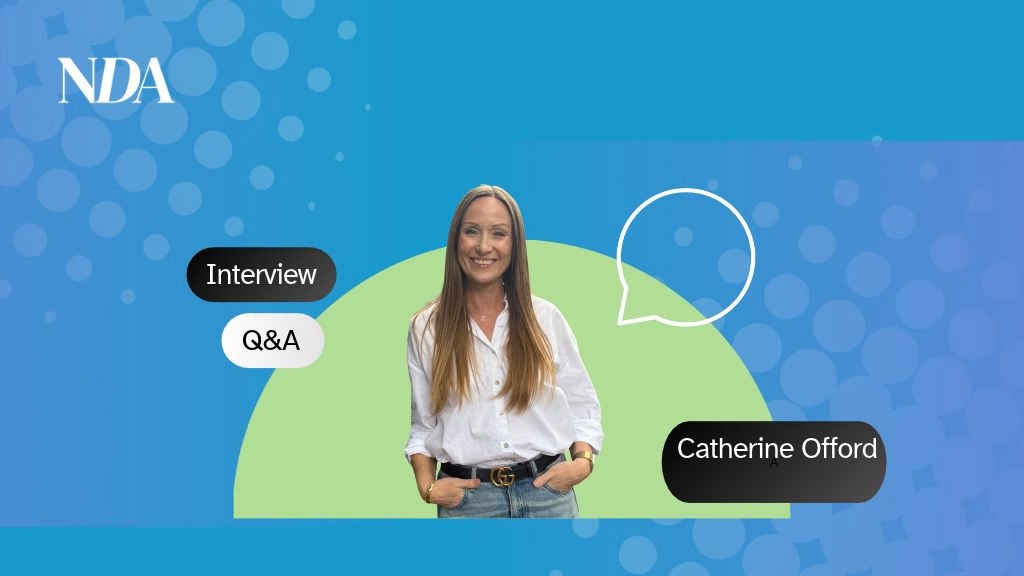
Following 20 years in the media agency landscape, Catherine Offord has launched Bicycle Manchester. Powered by London-based agency Bicycle, the new independent outfit aims to offer northern brands a fresh alternative, combining media, creative, and performance to help businesses push past performance plateaus.
In conversation with New Digital Age, Offord discusses the agency’s roots, the state of the Manchester agency market, and why the evolving video landscape makes brand building more accessible than ever.
What was the primary motivation behind launching Bicycle Manchester?
Having spent around 20 years in the industry, mostly in Manchester, I know the business landscape, the talent, and the opportunity here. I saw a clear gap for businesses that wanted to grow beyond the channels they were comfortable with but needed help taking that next step.
My goal was to build an agency around that challenge with client growth right at the centre. Our particular focus is helping scaling businesses move beyond a reliance on performance marketing, using premium video to reach new audiences and deliver measurable growth
I love Manchester. It is an amazing city, scrappy, highly entrepreneurial, and very personable. But for a while, it felt a little out of favour with major brands and agencies, and I want to change that perception. I wanted to build an agency where people genuinely want to work and clients want to partner with us.
How are you structuring the plans for growth, culture, and team?
When launching, I was very clear that this is not just a London agency sticking “Manchester” on the end of its name. I chose to partner with Bicycle because I believe in their approach.
I’m building Bicycle Manchester with its own identity, clients and team, rooted in the North. Being part of Bicycle means we can combine that local knowledge and personal service with the expertise across media, creative and performance in the wider business.
What really drew me to them during my time consulting for them earlier this year was how they bring media, creative, and performance together under one roof instead of leaving them in silos. I have seen firsthand how that integrated approach delivers tangible results for clients, and I really believe in that proposition.
As an independent agency, what does that independence mean for you and your clients?
Being independent means being totally free from network deals or pre-existing agency commitments. It allows us to make decisions purely in the best interests of our clients.
Too often, agencies put their own financial interests or preferred partner deals ahead of what the client actually needs.
Independence allows us to tear up those rules and start with a blank slate. We look directly at the client’s core business challenge and build a bespoke solution specifically to address it.
You mentioned the agency landscape in Manchester earlier. How do you view the market dynamics between Manchester and London right now?
Having spent years working at large network agencies like Dentsu, I had a brilliant career, but I saw how regional offices can sometimes be dictated to by London. I think the real success of an agency fortunate enough to have a footprint in Manchester lies in leaning into those regional differences.
It should not be an “us versus them” mindset; it is about combining the strengths of both regions. There are fantastic northern brands that felt compelled to go to London agencies because of a perception that London is inherently better.
I want to change that mindset. Northern brands should have the option to partner with high-calibre northern agencies where you can meet for a quick coffee at ten minutes’ notice rather than constantly travelling on a train.
What kind of talent and mindset are you looking to bring into the team?
Right now, I am keeping an open mind as we build the talent pool around our client base and core offering. Beyond skill sets, I am looking for people in Manchester who are not afraid to challenge how things are traditionally done.
Creating a standard media plan is easy; any agency can do it. I want our strategy to be less formulaic and less dependent on pre-packaged agency tools.
I want team members who think differently, challenge the status quo, and focus on making life easier for clients. Managing multiple separate agencies for creative, performance, and media is inefficient. Bringing those disciplines together simplifies things for the client.
Looking at the wider media landscape, what areas are you most excited about right now?
Having started my career as an AV planner and buyer, I believe strongly in the power of video to help brands grow. For a long time, TV buying was quite static, involving the same annual negotiations and routines.
Today, the landscape has evolved dramatically, and there is something new to explore every month.
What excites me most is that advertisers no longer need millions of pounds to run a highly effective video campaign. Market changes, consolidation, and new platforms have lowered the barrier to entry, allowing businesses with modest budgets to tap into video execution.
How are you approaching emerging technologies like AI in your operational strategy?
AI is essential, and it can certainly make us more efficient. However, I believe AI must always be powered by humans. It cannot feel emotion or build authentic relationships.
Where AI excels is in making high-quality creative assets more accessible and affordable, which is something we leverage through Bicycle Studios. But that technology is always applied alongside human strategic oversight.
A lot of scaling businesses hit what you describe as a “performance plateau.” How do you help clients navigate that?
We are never advocating for clients to turn off their performance channels. Direct response channels like Meta and PPC serve a crucial purpose in early growth stages.
However, many scaling businesses reach a point where their return on ad spend looks great, but they are primarily converting people who would have bought from them anyway.
When a client hits that performance plateau and needs to reach new audiences, video provides a way to move further up the funnel and build true brand equity. We call that crossing the chasm.
We make that leap of faith less daunting by testing campaigns on a smaller scale first, measuring results, and then scaling once performance is proven. When client brands grow, we grow together, and that is what genuine partnership looks like.