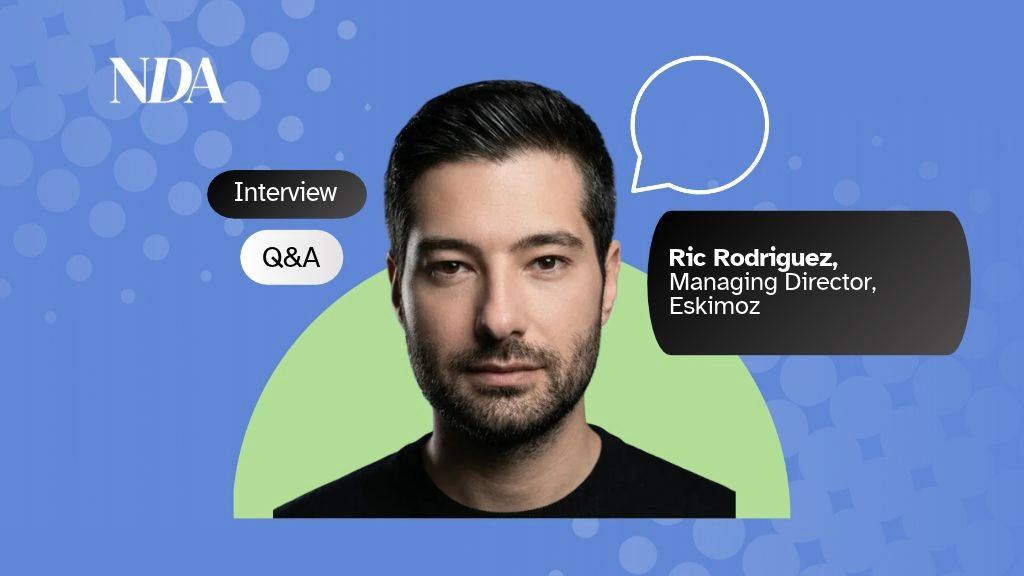
Ric Rodriguez, Managing Director of Eskimoz UK, a global growth consultancy, believes that Apple’s recent decision to shut some providers out of using email data to build identity graphs, is a sign of a wider shift that signals the return of through-the-line brand storytelling.
New Digital Age spoke with Rodriguez to find out more…
Can you explain what Apple has done in the identity space, and why it is causing ripples across the ad tech industry?
Historically, we used third-party cookies as an advertising industry to match people across the online web. There have obviously been steps to change the tracking around those, based on privacy legislation and businesses wanting to shift and be more privacy-centric.
Collecting email addresses became a way of creating a similar digital identity that could then be used within ad tech to find and match different people as they travel around the web. That allows advertisers to target them with specific messaging and measure and track their activity across the web.
That identity-based piece is really important in ad tech, particularly for measurement, but also for things like sequential messaging and making sure the right message lands with the right person at the right time. It’s very hard to do that without cookies.
Platforms such as The Trade Desk and LiveRamp have historically provided a way for third-party advertisers to use that identity data in a privacy-centric, compliant way, and activate it across third parties. Rather than giving the data directly to publishers, these systems sit in the middle and act as that privacy-centric layer.
So what exactly have Apple done? What restrictions have they put in place?
In order to create that identity, an advertiser needs someone’s email address, telephone number or other personal information. That information is often freely given. For example, someone signs up to a newsletter or creates an account. When they do that, the information can be translated into a digital ID that can be used across third parties. Sometimes that happens automatically.
What Apple have done is stop that automatic transformation of an email address into an ID. Unless you, as a consumer, explicitly state that you want that to happen, it shouldn’t happen anyway. Apple, through its own privacy technology and systems, has now guaranteed that is the case, or at least taken steps to guarantee it.
What’s really important here is what it looks like on the surface. We need to get further into the details, but it appears that Apple is simply going to block it by default. It’s not even so much a case of having an opt-in or opt-out. Even if you opt in, Apple looks as though it will just not allow it. It’s part of the tech stack rather than a choice.
Who is likely to be most affected by this move?
It’s hard to say how much advertisers are affected at this stage, because it’s a new change. Certainly, the platforms that allow this ID to be used to identify people across the programmatic web are the ones likely to be impacted most.
The extent of that impact is yet to be answered. Again, it comes down to Apple’s market share in terms of users and devices. But, in essence, it could stop companies such as The Trade Desk or LiveRamp from using their identity-based services.
This means running programmatic media based on audience data could become less effective and harder to do.
From a brand marketer’s perspective, is there anything they should be discussing with their supply partners in relation to this?
Our perspective is that this is part of a much larger shift we’re seeing in the industry.
If you go back a few years, personalisation was one of the key topics. It was all about one-to-one messaging, making sure people had individual creative in front of them and that they were very highly targeted.
More and more, what we’re seeing is that the capability to have that one-to-one conversation with consumers is being lifted. In terms of storytelling, that’s both a good thing and a bad thing.
It’s bad because if you’ve historically relied on getting the right message to the right person at the right time, you’re losing the ability to do that. But, on the other hand, it forces marketers and advertisers to think about the brand story they want to tell. What’s the big-picture creative, and how do we get people to feel, be inspired and engage? The creative itself has to do the heavy lifting, rather than targeting.
If I was a brand marketer at this point, I wouldn’t look at this as one specific problem and say we should be asking our partners to do certain things differently. I’d look at it as a sign of a wider trend.
Going into 2027, how are we telling incredible stories that our audiences really value and that drive them to act, as opposed to relying on the one-to-one messaging approach we’ve historically used?
In my view, that approach has led to less exciting and, dare I say, lazy creative. Ultimately, if you’re putting the right message in front of the right person, you’re thinking less about the bigger story you’re trying to tell.
Can you tell us a little about your role at Eskimoz and the work the business does?
I’m managing director at Eskimoz. We’re a full-service digital agency operating across Europe and North America. There are around 300 of us, and we have a turnover of about 35 million.
We work with clients in pretty much every vertical, from retail businesses to travel brands – Skyscanner is the headline example, and we’ve just started working with Airbnb.
On the B2B side, we have a really large book, covering everything from manufacturing and professional services through to enterprise frontier SaaS and a lot of businesses in the AI space. We have a really good breadth of visibility across lots of different sectors and industries.
In terms of the work we do, we offer a full range of media services. We’ve come from the performance world, so search and social, but we’re also buying programmatic media, physical and outdoor advertising.
As managing director, my role is to make sure the business runs in the right way and continues to grow year on year. But I’m also a marketer through and through. I’ve spent many years in brand-side roles, been a CMO, worked on the technology side, and built and sold businesses.
I’m an evangelist for our business and the work we do, but I’m also someone with strong opinions about what happens in the media and marketing space. I’ve always liked sharing those opinions.
One thing I really care about is taking what the industry often presents as really complex topics and trying to make them simpler for businesses and senior leadership teams that don’t necessarily have the technical knowledge to understand what they mean.
The Apple example is a good one. If you read Apple’s announcement, they’ve done a really good job of making the content very simple. But unless you understand what WebKit is about and the intricacies of the ID graph, and why it’s so important, you might miss what this is really doing.
Historically, you could have one-to-one marketing, and your activity was built around that. Now, that’s going to become less easy, so the smart bet is to invest in creative that is really compelling and interesting.
If you’re a CMO, you might not recognise that shift because you don’t know anything about WebKit or the ID graph. You need someone who can help bridge that gap and explain what it means for your business. That’s what takes up most of my day.