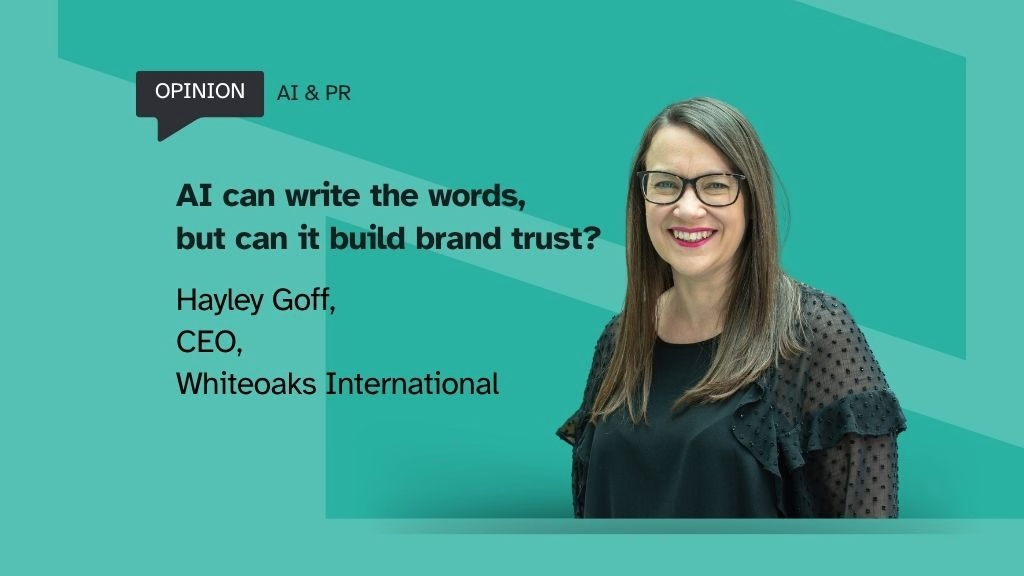
By Hayley Goff, CEO at Whiteoaks International
Should we believe AI now writes content so engaging that human-written content struggles by comparison?
Thankfully, that would be an overstatement, but as The Guardian reported, research in the US found readers thought AI-written short stories were better than those written by humans. Many could not say which stories were AI-generated.
It is worth remembering this was about creative rather than commercial writing, so there are limits to how far we can apply the findings to brand communications. Even so, we should not be surprised because AI is constantly improving with every update. Applications like ChatGPT and Claude can rapidly generate content with flawless syntax and increasingly convincing structure and pacing.
AI is also a helpful companion when it comes to the more mechanical parts of content creation, including accelerating desk research, summarising large documents and suggesting a structure for a long-form piece, even if it still needs double-checking for hallucinations.
However, in PR and marketing, good communications are about far more than the right words in the right order. AI-generated content tends to be slick and highly polished, and undoubtedly there’s a time and a place for that. Yet the problem many professionals in the communications industry have started to pick up on is that a lot of it sounds remarkably similar, and somewhat generic.
When similarity becomes a brand reputation problem
Putting yourself in an average decision maker’s shoes, that adds an unexpected step into the buying process. If every provider is talking about the same issues using the same phrases and a similar tone of voice, it becomes increasingly difficult to compare solutions and find out how, if at all, vendors can tackle very specific business challenges.
In the tech sector, where buyers often choose between companies that, on paper at least, appear to offer comparable products and services, communications have an important role to play in helping a brand stand out and accurately demonstrate where its expertise lies.
When there are thousands of brands competing for attention on every channel, AI-generated content can sink in a sea of sameness. Even when companies use AI to make bold claims, the results carry little conviction. In addition, that same bold, absolute language can cause miscommunication and create expectations amongst buyers that no product or service can guarantee. As a result of disproportionate, inaccurate or overly-simplified messaging, brand credibility and trust can easily be damaged.
Beyond the previously mentioned US study, there are also signs to suggest that audiences themselves are becoming more conscious of AI-generated content. For example, LinkedIn has recently removed its AI post-rewriting feature and introduced a “Seems like AI slop” reporting button, allowing users to flag posts they believe rely too heavily on AI.
According to LinkedIn’s Chief Product Officer, the feedback option was used over a million times during the first two weeks after launch. For a platform where businesses and senior leaders are working hard to build professional authority, that is certainly telling.
Credibility and trust have a human element
The sense there is a human behind the message still seems important. The academics conducting the US writing research found people placed real value on knowing a human had written one of the stories they were reading (even if they didn’t guess which story it was). This works in the commercial world too. An Ipsos poll in the US last year found two-in-three consumers want marketing content to be made by fellow humans.
If audiences believe content of any kind is essentially human, it will always have more credibility. Readers want to know the real brand is communicating with them, that the people behind it mean what they say and that they truly understand their market, their customers and the pain-points they face.
But we do not get to that point by accident or with a few AI prompts. Content is only one part of a marketing and PR strategy. Deciding what that content should say, where, how and to whom requires a strategy devised with human expertise and years of experience. Those decisions are made long before anybody starts writing.
Someone has to decide why the brand should enter a particular conversation, what it can credibly contribute and where there is an opportunity to say something others have missed. They also have to understand what different audience segments will care about the most, how far a complex point can be simplified without causing miscommunication and whether the resulting message supports the reputation the business is trying so hard to build.
Keeping human judgement in charge
AI is a great tool to accelerate the early stages of content creation and generate different structures or provide examples to work from. There’s no doubt that it can save a huge amount of time and stimulate ideas. But the obvious danger of over-reliance is that AI use becomes a substitute for originality and judgement. If it begins to influence too much of the strategy, the outcome is going to be a piece of content with limited value that can quickly lead the brand up a marketing cul-de-sac.
Even in the data-driven tech world, audiences want the full flavour of brand, meaning they want to understand the character and the expertise behind the business.
For communications to hit the mark, real people need to use AI responsibly, ensuring it works in line with much broader PR and business strategies. That requires an understanding of context, the market nuances and specific audiences. It demands the ability to formulate a plan that will give a brand a distinctive voice and trigger debate for the right reasons. Only humans can do that.