A new UK company, Orison Screens, is preparing to launch a digital advertising network integrated into London black cabs later this year.
The format combines the physical environment of taxi advertising with digital capabilities. Creative can change depending on location, time of day and weather, campaigns can be updated throughout, and advertisers have access to a live reporting portal showing when and where their advertising has been displayed.
Ahead of the launch, New Digital Age spoke with Jack Angel Barwick, Founder & Managing Director at Orison Screens to find out more…
What was the original inspiration behind Orison Screens?
I had no prior experience in advertising, but I’ve always been able to spot a gap in the market. One day, I was in a London black cab wondering how the city had managed to fall so far behind the rest of the world. I’ve travelled extensively and I’ve seen digital screens in use in cabs all around the world. I was aware that there had been some limited efforts to install digital screens before, but that they had basically involved slapping a tablet on the back of a headrest and weren’t very.
I thought it was time that London had a properly integrated HD geo-targeted screen in the back of black cabs.
When did you start developing the idea?
I began in 2024. The first thing I did in the first week was run the numbers on what one could make from these screens. Once I identified that it sounded like there was a margin in there, I spent the next year getting to know everyone I could in the industry and making that headway.
I spent the next year or so making routes into the industry. I got to know fleets. I got to know TfL, working closely with them. I spoke with agencies, learning the problems, the challenges, what they want and why it didn’t work before. I even reached out to the taxi-top company that tried to do digital screens on top of the cabs previously and found out their struggles.
Then, in 2025, I registered the limited company of Orison Screens, raised the funding, brought some shareholders on board and began commissioning design engineers and getting screen built screens built in Taiwan.
What does the Orison Screens proposition offer that previous in-cab digital screens didn’t?
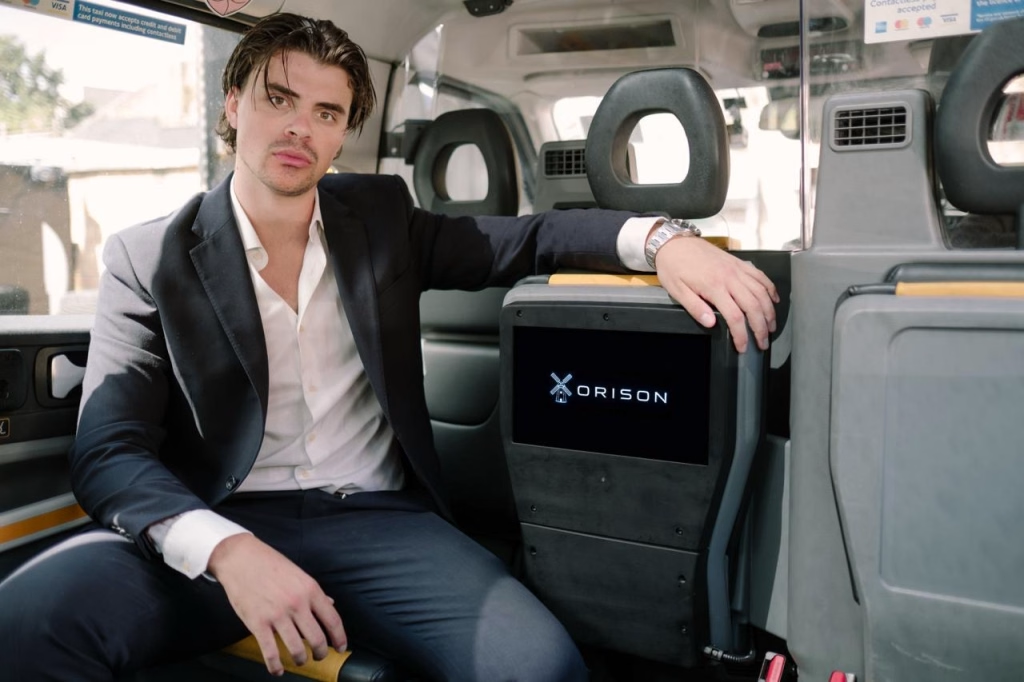
What we have is a 13.3-inch digital HD screen, which is larger and higher quality than anything the cab has seen before. But more importantly, it’s completely integrated within the cab itself.
It’s integrated into the tip-up seat, the central tip-up seat facing backwards, so all the passengers facing forward get to view it, replacing the static sticker that’s currently covering a tip-up seat in the black cab. It offers geo-targeting, location services, as well as time of day and weather.
We have a partnership with TWC, The Weather Company, and they are going to be supplying our live weather reporting and graphics. So, in between the advertisements, passengers can enjoy live weather news and, more importantly, advertisers themselves can have weather triggers — whether it be sun, rain or wind — to trigger different sorts of advertisements.
When are you planning to launch?
We are launching at the end of this year. It’ll be at the end of November or the beginning of December. We’re getting together a list of launch partners. We’ve got a lot of commercial terms agreed with various different companies and brands through various industries. We’re going to remain confidential on that at the minute because we offer category exclusivity for our launch for the first three months.
We’ve got a pilot which we’ve agreed with TfL for 30 cabs for three months. That will be with 10 launch partners to occupy those 30 cabs for three months. After that, we’ve already got 500 cabs signed up, which is very important. We have the financial support and the backing to be able to scale quite aggressively after that pilot test into the other 500 that we’ve already got contracted.
Will the initial rollout be focused entirely on London?
At the minute, looking just over the next three to six months, it’s going to be London-focused.
However, we understand that there is a lot of demand for out-of-London black cab services. We’ve already been approached by various media agencies that we’re talking to, which have clients who want to run on our screens in Manchester and similar.
We’re not there yet, but that’s something we’re definitely going to be looking to do within 12 months of launch.
Could the technology eventually be used beyond black cabs?
Absolutely. Both the hardware and the software is transferable.
We spent a lot of time developing a really complicated backend, which learns, and the screen itself knows where it is. It doesn’t have to report to the server every time.
That’s quite an intelligent piece of software that we’ve developed, and we’ve been speaking informally with a wide range of various transport mediums which we’d like to integrate it in.
But right now, we’re keeping our full attention on London black cabs, and we want a successful launch.
What would success look like 12 months after launch?
A successful 12 months would look like Orison becoming a standardised, recognised out-of-home digital advertising medium that was on the radar of every media agency and brand. There would be no need to explain what it is, what it offers or what the benefits are.
It would be a very traditional, normalised method for brands to reach AB1s and hyper-target digital advertising in the best media format possible for that specific outreach in London and the rest of the UK.
How has the market responded so far?
In terms of the market, there’s a few different aspects of it.
From the fleet side, they’re super excited. We’ve signed up 500, and they’re contracted on commission contracts because we make sure that everyone’s reaping the benefits of this project.
We really feel strongly about black cab drivers and how integral they are to the integrity of London. So we’re looking to support that trade in every way possible.
We’ve also donated a slot on our launch. We’re partnering with the Great Ormond Street Hospital charity. It made so much sense for us to give it to Great Ormond Street because we could formalise the informal relationship that’s been going on between Black Cabs and Great Ormond Street for over a century, giving free rides and so on.
We’re really excited to launch, and we’re really proud of that.
What conversations are you having with media agencies and advertisers?
We’re in conversation with all sorts of branches of WPP and Dentsu. We’re talking with the big boys, but we’re also working with all their smaller independent specialists as well.
For example, we’ve got a real estate agent, just to give an example of how our technology can be incorporated into a company. As the cab drives through different areas of London and enters different patches, it can push the hot properties of the week, whether that be for sale or rental.
And if it’s the wealthier clientele taking the black cab, either going from home or to home, you couldn’t really be reaching much more of a relevant audience.
Which sectors have shown interest in the proposition?
We’ve had a really positive reaction from the market. We’ve got tourism boards interested, property development, makeup and fashion. Everyone seems to take to it quite well.
We’ve got commercial contracts agreed from direct outreach and also through media agencies.
If anyone reading your articles is interested in exploring a potential campaign option, they’re more than welcome to get in touch. We also have a website with a contact form, and we’ve already had outreach from that.